
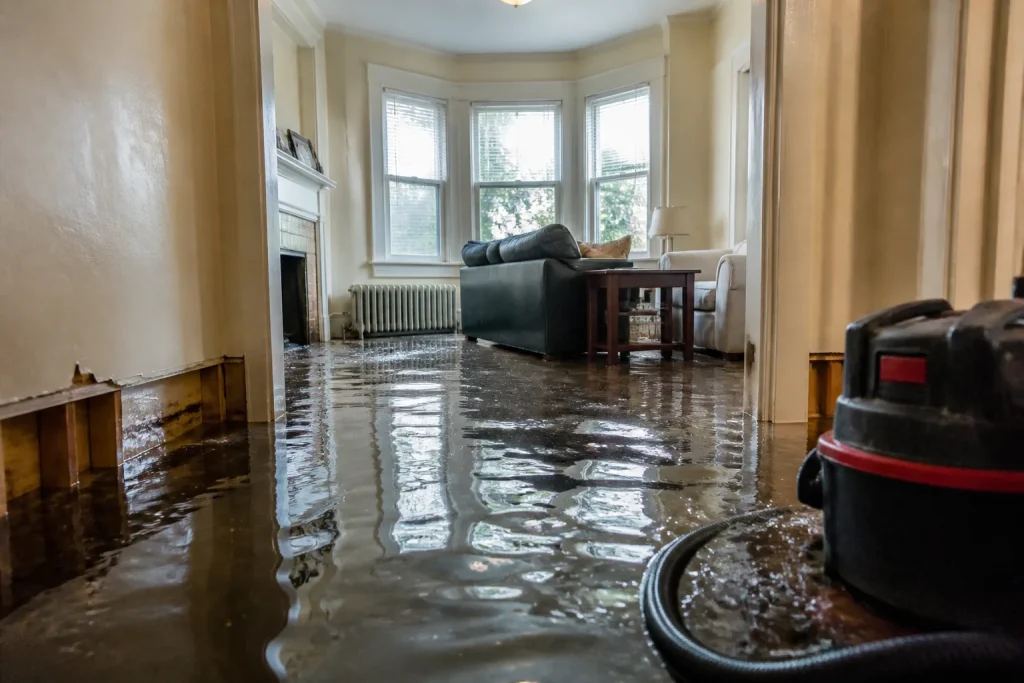
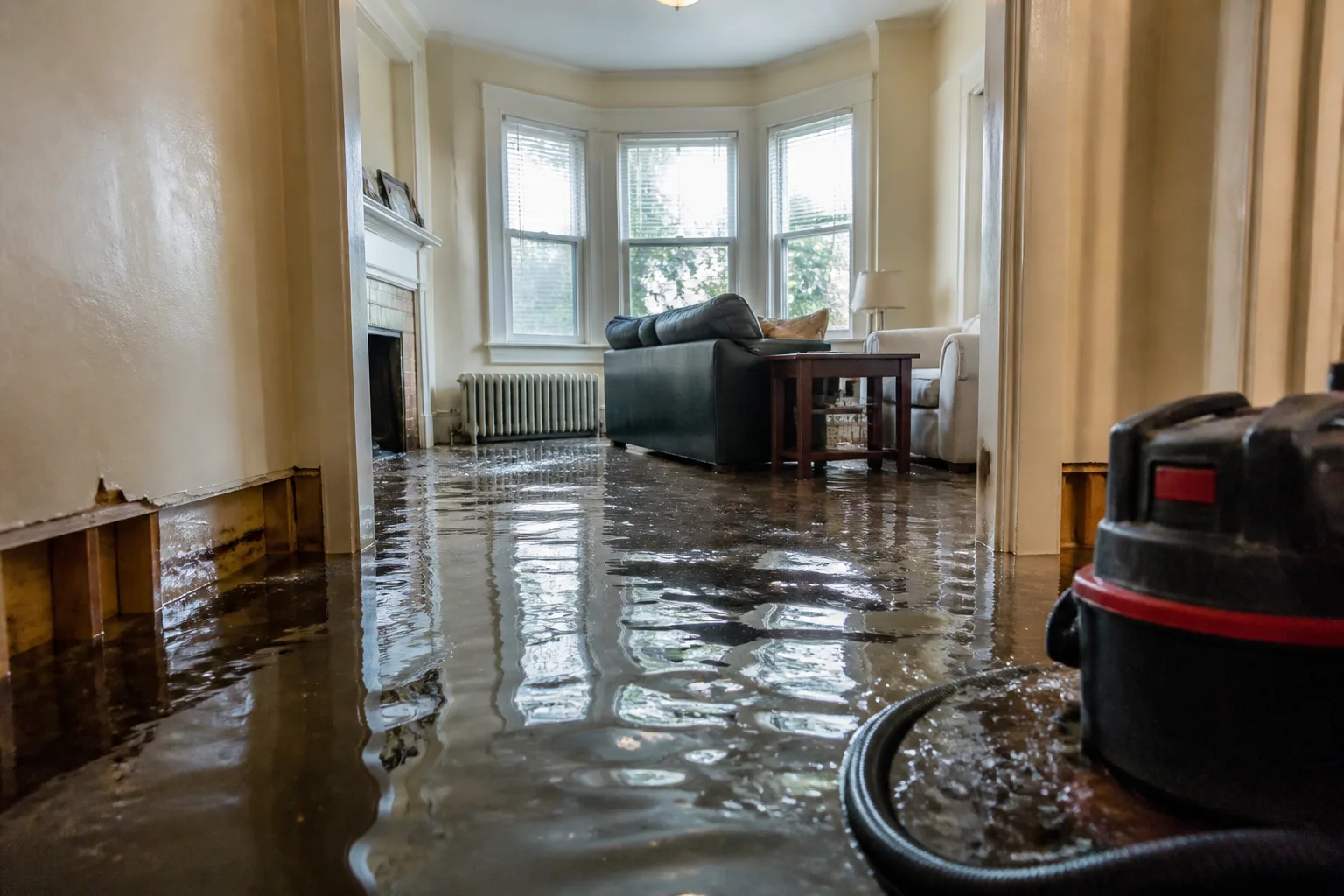
Emergency Water Damage Restoration Near Me: What Flushing Homeowners Should Do First
If you’ve just discovered water in your Flushing home, the first thing to do is protect your insurance claim, not your furniture. Shoot a slow video walking every affected area before you move a single item, then stop the water at its source if it’s safe to reach. After that, call a restoration company that answers with a live person at (518) 872-6111. The first 30 minutes genuinely decide how much this costs you and whether your claim sails through or stalls.
Mold colonies can establish on wet drywall in 24 to 48 hours, but the coverage dispute that costs Flushing homeowners the most money usually starts in the first hour. Specifically, the photos you didn’t take before you started moving things. This guide walks you through that first window step by step, so you’re not guessing at 2 a.m. with water rising against the baseboard.
The First 30 Minutes: What to Do Before You Call Anyone
The instinct to grab towels and start hauling wet boxes to the curb is strong. That instinct is also expensive. Before you move anything, you’re building a record for a claims adjuster who wasn’t there and will never see what you’re seeing right now. The sequence matters more than the speed.
Here’s the order we recommend, based on what actually survives an adjuster’s scrutiny in Flushing and the surrounding neighborhoods:
- Photograph and video everything first. Walk the perimeter of every wet area with your phone’s camera running. Shoot the water line on the drywall. Shoot standing water if there is any. Open cabinet doors and shoot under sinks. This is your claim’s foundation.
- Identify the water source. Is it a supply line? A dead water heater? A sewer backup? The source changes what gets covered, how the job gets priced, and whether you should even be standing there.
- Check for electrical hazards before stepping into standing water. If the panel is near water or you see submerged cords, stay out and wait for a professional. Floodline Restoration Co. crews start with a hazard assessment on every job.
- Place aluminum foil or plastic wrap under furniture legs that sit on wet carpet if you can reach them safely. This prevents rust and wood stain transfer to the carpet. It’s a cheap move that saves a real repair line item later.
- Shut off the water supply at the fixture or the house main if it’s a clean-water line and you can reach the valve without wading through water.
One of our techs pulled a job out of a basement near Kissena Park last spring where the homeowner had already thrown out a soaked area rug before we arrived. The adjuster had no visual evidence that rug existed, so the replacement cost got disputed. We don’t want that happening to anyone reading this.
Which Flushing Water Sources You Can Stop Yourself (and Which You Absolutely Should Not)
Not all water damage in Flushing is created equal. The source determines whether your actions help or make things dramatically worse. Here’s the split that matters:
Safe to stop yourself:
- A shutoff valve under a sink or behind a toilet where water is actively streaming.
- The washing machine supply hoses, if the floor around the machine is dry enough to stand on.
- The main water shutoff at the street or in the basement, if it’s clear of water and you know where it is and how it turns.
Do not enter the area and do not attempt to stop the water:
- Sewage backup from a floor drain or toilet, particularly during heavy rain when Flushing’s combined sewer system gets overwhelmed. By default, floodwater entering through basement drains is Category 3 contamination, which means it carries bacteria, pathogens, and whatever else the sewer line holds. The restoration scope and cost change entirely, and most homeowners don’t learn this until a certified crew walks them through it.
- Anything near the electrical panel or involving submerged outlets or power cords.
- Water that’s been sitting for more than a couple hours. Even clean supply water turns into a biological issue quickly once it soaks into drywall and carpet padding.
Curious about full-service Water Damage Restoration in Flushing? We handle extraction, drying, and rebuild with the same crew from start to finish.
The Order of Calls That Protects Your Flushing Insurance Claim
Calling your insurance carrier first feels responsible and thorough. It’s actually a sequence mistake that keeps showing up in the worst claim outcomes across Flushing. Here’s why: an insurance company’s first question is what you’ve done to mitigate the loss. Photographs are the start. Stopping the active water source is the proof. Calling us before the carrier means you can answer that question with confidence because extraction is already underway or at least scheduled with a certified crew.
Different carriers interpret mitigation duties the same way. Any delay between damage discovery and professional response reads like neglect on the record, even when it’s just a homeowner who didn’t know the rule. So the correct order is:
- Document everything (the video walkthrough).
- Stop the source if it’s safe.
- Call Floodline Restoration Co. at (518) 872-6111 so a certified crew with extraction equipment is en route. Our dispatchers pick up live, 24/7. No recording, no callback.
- Then call your carrier. By the time you hang up with them, the crew is likely already on-site and running equipment.
We write the damage report in terms adjusters recognize, because we’ve been serving local communities for over four decades. Flushing homeowners with older plaster and lath walls have different drying profiles than newer drywall construction, and that’s the kind of detail that shows up correctly in a professional scope of work.
What to Tell the Dispatcher So the Right Truck Shows Up
At 2 a.m. in Flushing, the distinction that matters on the other end of the phone is this: extraction equipment on the truck, not fans in the back. A water mitigation job requires the first crew on site to pull standing water out before any drying begins. Not every restoration company dispatches extraction at night. Some send a crew with air movers and a dehumidifier and tell the homeowner the water will evaporate. It won’t. Not from under the baseboard, not from inside the carpet pad, not from behind the kitchen toe kick.
When you call, ask for three specific things. Our dispatchers log all of them on every job, and we recommend homeowners insist on the same from whoever they call:
- Will the truck have extraction equipment on it? At Floodline Restoration Co., every emergency truck carries professional-grade extraction. We run Phoenix, XPOWER, and B-Air equipment, which is what lets us finish most jobs in a single visit.
- Is the crew certified to IICRC standards? Certification determines whether the crew reads a moisture map correctly and dries to the right standard, not just until things feel dry to the touch.
- Will the same crew handle the daily moisture readings? If the answer is no, the job has a handoff risk. We keep the same certified crew from first extraction to the final dry standard reading, with a moisture log handed to the homeowner and the carrier.
Flushing is dense housing stock, much of it pre-war construction with pockets that hold moisture in surprising places. A drying plan that works on newer sheetrock fails on old plaster and horsehair. Injectidry systems can pull moisture from behind walls and under cabinets without demolition, but only if the operator knows where to place the ports.
The Flushing-Specific Issue Most Homeowners Miss: Combined Sewer Overflow
Flushing sits within New York City’s combined sewer system, which means stormwater and sanitary sewage flow through the same pipes. During heavy rain, when the system is overwhelmed, that combined flow backs up into low-lying basements through floor drains. It’s called a Combined Sewer Overflow event, and it happens in Flushing more than most homeowners realize until their finished basement has an inch of brown water across the tile.
The part that surprises people: combined sewer overflow water is Category 3 by default. It’s not rain water. It’s rain water mixed with everything else in the pipe. That means:
- Porous materials like carpet, pad, and upholstered furniture are generally removed and disposed of, not dried.
- Non-porous surfaces like concrete and tile require disinfecting with professional-grade antimicrobials.
- The drying standard is stricter, because the biological risk is higher.
- Insurance coverage for sewer backup is a separate rider on many policies, not automatically included under standard water damage.
If you’ve had water come up through a basement drain during a storm in Flushing, do not try to dry the space yourself and do not wait until morning to make the call. This is one of the few scenarios where the contamination risk to anyone in the home compounds by the hour, and the cleanup scope expands with it.
After any significant water event, mold becomes a legitimate concern. Learn more about Mold Remediation in Flushing and what the 24-to-48-hour window really means for your walls and floors.
The 90-Day Done Right Promise: What Flushing Homeowners Get in Writing
We’re known for our Floodline Restoration Co. home service area up and down Queens, and the thing that matters most to the people we work for is simple: a written guarantee. Not a verbal assurance. Not a “we’ll make it right” over the phone. A written 90-Day Done Right Promise, which we call the Keystone Standard, given on every job. If something isn’t done right within 90 days, we make it right. No paperwork battles, no arguing about whose responsibility it is.
That promise is a big deal in Flushing, where so many homes are older and carry quirks: settled foundations, previous renovations layered over each other, old cast iron pipes that crack at the worst moment. The work has to be done right the first time, because this is where people plan to stay.
Curt Bowman founded this company in 2010 around a dispatch board, not a sales desk. The person who answers the phone at 2 a.m. is a dispatcher taking real calls and moving real crews toward your street. Not a voicemail prompt. Not a third-party answering service calling you back later. That distinction only matters when it matters, which is usually right when your basement is filling.
What You’ll Pay (and What You Won’t)
Here’s the honest version of water damage restoration pricing for the Flushing market, based on what we’ve seen across hundreds of jobs in Queens:
- Water extraction only (small area, same-day single visit): typically $500-$1,200 depending on water volume and accessibility.
- Extraction plus structural drying (professional-grade dehumidifiers and air movers, 3-5 days of monitoring): typically $1,500-$3,500 for a standard finished basement.
- Category 3 sewer backup cleanup (CSO or drain backup): typically $3,000-$8,000+ depending on square footage, porous material removal, and disinfecting scope.
- Drywall and insulation replacement after saturation: add $1,200-$4,500 depending on area and ceiling height.
We give no-hassle upfront pricing, and we bill the carrier directly on covered claims. Current offers always available: $50 off any repair over $250, an $89 seasonal tune-up, and a 5% discount for seniors and veterans. Ask the dispatcher when you call.
If there’s been fire damage alongside water from firefighting, the scope changes again. See Fire & Smoke Damage Restoration in Flushing for what else comes into play.
The Bottom Line
Water damage in Flushing doesn’t wait for office hours, and neither do we. The 30 minutes after you find the damage are the only window where you directly control the outcome: document before you move, stop the source if it’s safe, call a certified crew with extraction gear before you call the carrier, and let the professionals handle the drying log and the insurance paperwork. Learn the distinction between clean supply water and Category 3 sewer overflow, because it changes every number on the scope.
If you’re in Flushing and dealing with water right now, call (518) 872-6111. A live person answers. We’ll get a certified crew to your door with extraction running the same visit, no surprises on the bill, and the 90-Day Done Right Promise in your hands before we leave.
Frequently Asked Questions
Call restoration first if standing water is present. A plumber will stop the source, but the restoration crew removes the water, dries the structure, and documents the damage for your insurance claim. If the source is still actively leaking and it’s unsafe to shut off, we coordinate with a licensed plumber while our crew begins mitigation.
It depends on the water source. Sudden and accidental events like a burst supply line or a failed water heater are typically covered under standard homeowners policies. Sewer backup from a Combined Sewer Overflow event often requires a separate rider. Document everything before cleanup begins, and call (518) 872-6111 so our team can photograph and write the scope in language your adjuster will accept.
Same visit, every time, no matter the hour. Our dispatchers answer live 24/7, and the crew dispatched to your home carries extraction equipment on the truck from the first roll. Most jobs are completed in a single visit. Call (518) 872-6111 and you’ll speak to a person, not a recording.
Professional drying is necessary. Box fans move surface moisture, but the water inside drywall cavities, under baseboards, and inside carpet pads stays trapped. That trapped moisture is where mold starts within 24 to 48 hours, and once it’s behind a wall, the repair scope triples. Our crews run moisture-mapped drying with Dri-Eaz, Phoenix, XPOWER, B-Air, and Injectidry systems, and we log daily readings until the dry standard is met, not until surfaces feel dry.
Written by Curt Bowman, Owner at Floodline Restoration Co., serving Flushing since 2010.
Need Damage Restoration Help?
Call Floodline Restoration Co. - licensed & insured, here with fast after-hours help in Flushing.
(518) 872-6111