
Quick Summary
Dealing with a sewage backup in Corona requires immediate professional intervention because Category 3 wastewater introduces dangerous pathogens, structural moisture saturation, and severe biohazard risks. Floodline Restoration Co. resolves these emergencies through 24/7 sewage backup cleanup in Corona, deploying certified technicians within 45 minutes for wastewater extraction, material removal, and complete sanitization. Property owners learn vital safety protocols and can call Floodline Restoration Co. for rapid emergency dispatch, insurance assistance, and a free visual damage inspection.
Sewage Backup Cleanup in Corona
A sewage backup in a property requires prompt attention. Wastewater from sewer backups can contain contaminants and pose sanitation challenges. While local conditions vary, the available research does not establish Corona-specific building or overflow patterns.[3]
Professional restoration services, such as Floodline Restoration Co., assist property owners with water extraction, cleaning, and structural drying when backups occur.[4]
Immediate Safety Protocol: What to Do Right Now
If sewage is entering your property, take these protective steps:
- Stop using plumbing: Stop all water use immediately. Do not run taps, flush toilets, or run dishwashers and washing machines, as any added drainage can worsen the backup.
- Avoid sewage contact: Avoid direct contact with wastewater and keep children and pets away from contaminated areas.
- Avoid standing water near electrical equipment: Do not enter flooded areas or touch electrical panels, switches, or appliances if standing water is nearby, unless the power has been safely shut off.
- Photograph damage: Document and photograph property damage when it is safe to do so.
- Contact the appropriate plumber or sewer authority: Contact a licensed plumber for private plumbing issues, or the local municipal sewer authority if the problem originates in the public system.
- Report municipal backups: Residents should report suspected city-system sewer backups through 311. The NYC Department of Environmental Protection (DEP) aims to inspect reported backups within six hours. Private sewer-line problems remain the property owner’s responsibility.
How Professional Sewage Backup Cleanup Works
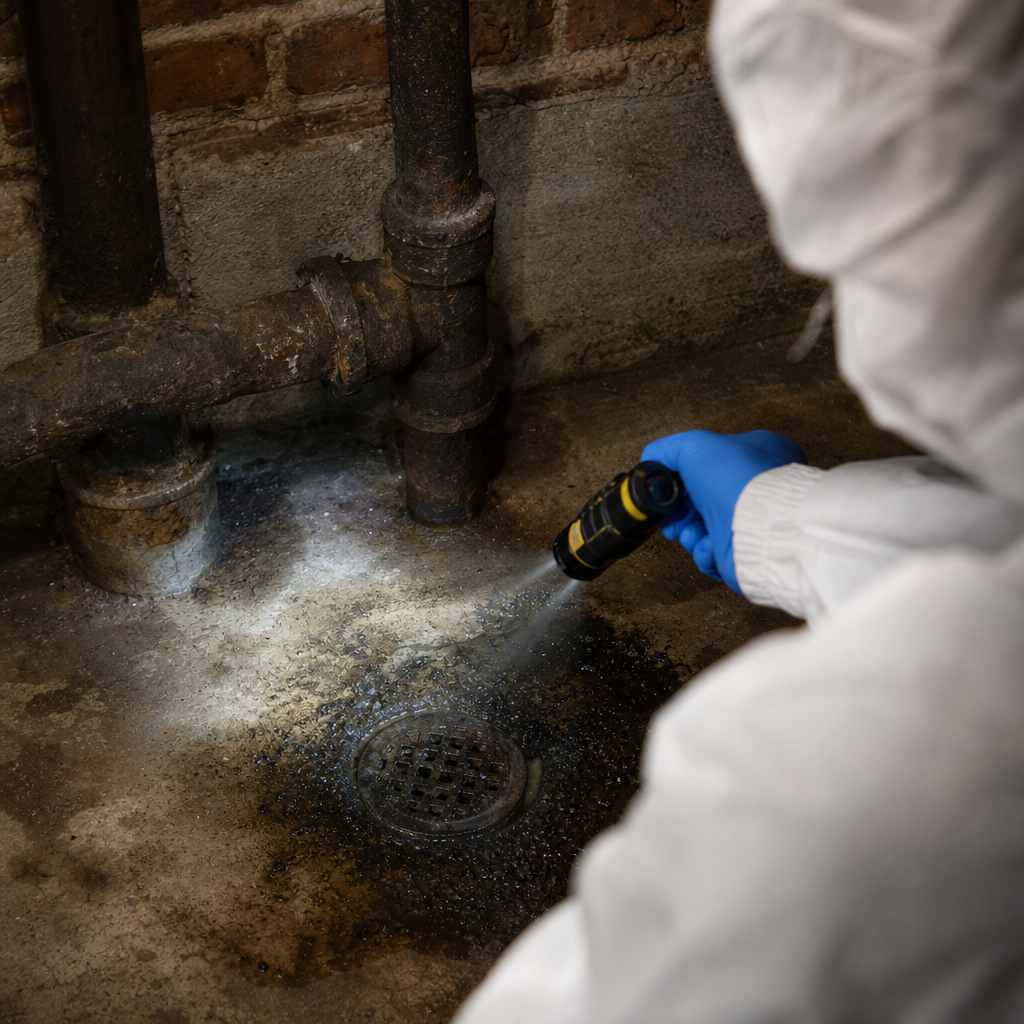
According to Floodline Restoration Co., remediation of sewage backups generally involves a multi-step process to remove wastewater and sanitize the affected environment:[5]
- Assessment: Evaluating the affected area to determine the extent of water intrusion and identify affected materials.
- Wastewater Extraction: Removing standing liquid and bulk waste using pumps or extraction equipment.
- Removal of Saturated Materials: Removing porous materials that cannot be safely cleaned or restored.
- Sanitization and Cleaning: Cleaning and treating structural surfaces with appropriate disinfectants.
- Structural Drying: Utilizing air movers and dehumidifiers to remove excess moisture from structural components.
What Does Sewage Backup Cleanup Cost?
Need sewage backup cleanup in Corona?
We’re available now - call for a fast, free estimate.
The total cost of sewage backup remediation depends on factors such as the volume of standing water, the extent of contamination, and the specific materials affected.
Disclaimer: No authoritative Corona-specific price range is available. Property owners are advised to obtain written estimates and review their insurance policy limits.
| Remediation Phase | General Scope |
|---|---|
| Phase 1: Inspection & Containment | Moisture assessment, containment barriers, and safety evaluations |
| Phase 2: Wastewater Extraction | Liquid extraction and bulk waste removal |
| Phase 3: Sanitization & Removal | Removal of unsalvageable materials and disinfection of structural framing |
| Phase 4: Structural Drying | Dehumidification, air movement, and moisture monitoring |
Key Cost Factors
- Area Size and Layout: Unfinished basements generally require different labor and procedures than finished basements or living areas.
- Extent of Saturation: Deeper water levels and extended exposure time increase the scope of required cleaning and material removal.
- Drying Requirements: As noted by Floodline Restoration Co., structural density and local humidity levels influence the duration and equipment needed for complete structural drying.
Insurance Coverage Considerations
Note: The available reference materials provide California insurance guidance only; authoritative New York policy sources should be consulted before making claims regarding New York insurance coverage.
Municipal Sewer Systems and Local Infrastructure
During heavy storms, combined municipal sewer systems must manage both household wastewater and street runoff. According to citywide fiscal year 2023 statistics from the NYC Department of Environmental Protection (DEP), confirmed sewer backups citywide were primarily caused by heavy rain surcharges (43%) and fats, oils, and grease (40%). These figures represent citywide statistics and do not measure Corona specifically.[1]
To address local flooding issues, the city launched a $32.6 million flood-mitigation project in Corona, and Corona reached 200 installed flood sensors by September 2024, including the 200th sensor at Louis Simeone Park. Additionally, the DEP cleaned 106 miles of city sewers in 2024. Residents should report suspected city-system sewer backups through 311; DEP aims to inspect within six hours, though maintenance and repairs on private sewer lines remain the property owner’s responsibility.[2]
General Salvage Guidelines
According to Floodline Restoration Co., decisions regarding whether materials can be salvaged depend on material porosity, degree of exposure, and the ability to thoroughly clean and dry the items:
Porous Materials
- Padded materials, carpets, and saturated porous wall materials are difficult to sanitize thoroughly and often require removal and replacement.
Non-Porous and Structural Materials
- Hard, non-porous surfaces and sound structural framing lumber can often be cleaned, disinfected, and dried if they remain structurally intact.
Frequently Asked Questions About Sewage Cleanup
How fast do emergency restoration teams arrive?
Response times vary by service provider, traffic conditions, and local availability. Some companies cite a 45-minute arrival target, but this is an unverified company target rather than a guaranteed timeframe.
What are the primary risks of raw sewage?
Raw sewage contains biological contaminants and pathogens. Direct contact or handling contaminated water without proper protective equipment can pose health risks.
Can household cleaners handle a major sewage backup?
Household cleaning products alone are generally insufficient for major backups where wastewater has penetrated structural framing or concrete slabs, which typically requires commercial extraction and drying equipment.
Can residents stay in the home during cleanup?
Whether occupants can remain on-site depends on the location and severity of the backup, air circulation, and whether essential living areas or plumbing systems are affected.
How is structural drying verified?
Restoration professionals at Floodline Restoration Co. monitor moisture levels in structural framing and floors using calibrated moisture meters until materials reach standard dry baselines.
Need sewage backup cleanup in Corona?
We’re available now - call for a fast, free estimate.
Sources
- [PDF] Department of Environmental Protection – NYC.gov – nyc.gov (2024)
- STATE OF THE SEWERS 2024 – nyc.gov (2024)
- [PDF] STATE OF THE SEWERS 2022 – NYC.gov – nyc.gov (2022)
- Eric Adams – nyc.gov
- SOS: SAVE OUR SEWERS! – nylpi.org (2023)
Frequently Asked Questions
Does property insurance cover sewage backup cleanup in Corona, and does Floodline Restoration Co. assist with claims?
Coverage typically depends on whether your policy includes a specific sewer backup endorsement or rider. Floodline Restoration Co. assists Corona homeowners by providing detailed photo documentation and moisture logs, and our team handles direct insurance billing to streamline the claims process.
What happens during Floodline Restoration Co.'s initial 45-minute emergency response in Corona?
Upon arrival, certified technicians conduct a free visual inspection and establish containment barriers to halt biohazard spread. The crew immediately begins extracting standing Category 3 wastewater and initiates moisture mapping across affected structural materials.
Should I wait for NYC DEP to inspect a backup before calling a restoration company?
No, you should not delay cleanup because sewage pathogens and moisture saturate structural framing rapidly. While DEP investigates reported municipal main issues via 311, Floodline Restoration Co. can immediately extract dangerous wastewater and secure private property boundaries.
About the author
 |
David Wallace David Wallace is an IICRC-certified Applied Microbial Remediation Technician with over 12 years of experience assessing and resolving residential mold issues in the Tri-State area. He holds a Bachelor of Science in Environmental Health and Safety from the Rochester Institute of Technology. David specializes in translating complex remediation protocols into actionable steps for homeowners dealing with indoor air quality concerns. |
Water damage, flood, or mold emergency?
We’re available now - call for a fast, free estimate.
Call Now - Free Estimate