
Quick Summary
Severe Queens storms and municipal sewer backups frequently overwhelm residential drainage, making rapid basement flood cleanup in Bayside essential to prevent deep foundation compromise and hazardous mold growth. Floodline Restoration Co. delivers specialized emergency mitigation through high-powered water extraction, masonry moisture mapping, antimicrobial sanitization, and structural dehumidification to safely restore compromised living spaces. Property owners will learn the key cost factors, insurance limitations, and critical safety protocols needed before calling Floodline Restoration Co. for 24/7 emergency water extraction and an on-site inspection.
Basement Flood Cleanup in Bayside
When heavy storms hit Queens, water in your basement quickly turns into an emergency. Whether caused by intense downpours overwhelming local storm drains, a failed sump pump, or a municipal sewer line backup, standing water weakens structural framing, ruins finished living spaces, and creates conditions for mold growth. Professional cleanup services, such as Floodline Restoration Co., can help restore your property safely.[5]
During severe weather, local infrastructure often faces extreme pressure. On July 31, 2025, Bayside recorded 6.35 inches of rain in two to three hours. When water enters a home, prompt action helps prevent moisture from spreading through building materials and foundations.[1] See also Water Damage Restoration in Flushing – Call Now-10% Off – Same-Day Service – Free Estimate.
What Does Basement Flood Cleanup Cost in Bayside?
Basement flood cleanup cost depends heavily on the source of the water, the total square footage affected, and how long the moisture has sat. Clean water from a broken supply line requires fewer containment steps than water contaminated with road runoff or sewage backflow.
According to Floodline Restoration Co., every restoration project requires a detailed, on-site inspection to establish an accurate scope of work, but the main cost factors include:
- Category of Water: Clean water from supply lines is generally less costly to address than gray water or black water from sewer backups, which require specialized containment and disposal procedures.
- Building Layout: As general guidance, shared masonry walls or complex floor plans can absorb moisture laterally, which may require extended drying procedures compared to freestanding single-family structures.
- Finished vs. Unfinished Spaces: An unfinished concrete cellar with a floor drain takes significantly less labor to dry than a fully finished basement featuring drywall, carpeting, custom baseboards, built-in cabinetry, and subfloors.
- Structural Reconstruction: If moisture reaches wall cavities, damaged materials such as sheetrock and insulation may need removal, followed by post-drying repairs and rebuilding.
According to citywide estimates by the New York City Comptroller, roughly 43,000 basements and cellars in one-, two-, and three-family buildings across New York City (about 10% of the citywide total) face some form of flood risk. Flood damage is generally excluded from standard homeowners insurance policies. Separate flood coverage or riders may be available, but National Flood Insurance Program (NFIP) basement coverage is limited and excludes finished walls, floors, ceilings, and personal property. Property owners should check their specific policy and consult their insurer.[2]
Moisture Migration in Masonry and Shared Walls
As general structural guidance, porous brick and mortar can absorb and draw water sideways across shared partitions between adjoining properties. If drying focuses only on visible floor areas, trapped moisture can remain inside masonry cores and behind finished wall assemblies, potentially affecting framing materials over time.
According to citywide estimates by the New York City Comptroller, an estimated 23,200 basements and cellars across New York City (5.5% citywide) are located in areas vulnerable to flooding from moderate rainfall events. By the 2050s, citywide projections estimate that 136,200 basements and cellars (roughly 32% of the citywide total) across the city could face coastal or extreme-rainfall flood risks.[3]
Specialists at Floodline Restoration Co. commonly use moisture meters and drying equipment to assess and extract moisture trapped within dense materials and wall assemblies.
Step-by-Step Restoration: From Extraction to Salvaging Materials
Need basement flood cleanup in Bayside?
We’re available now - call for a fast, free estimate.
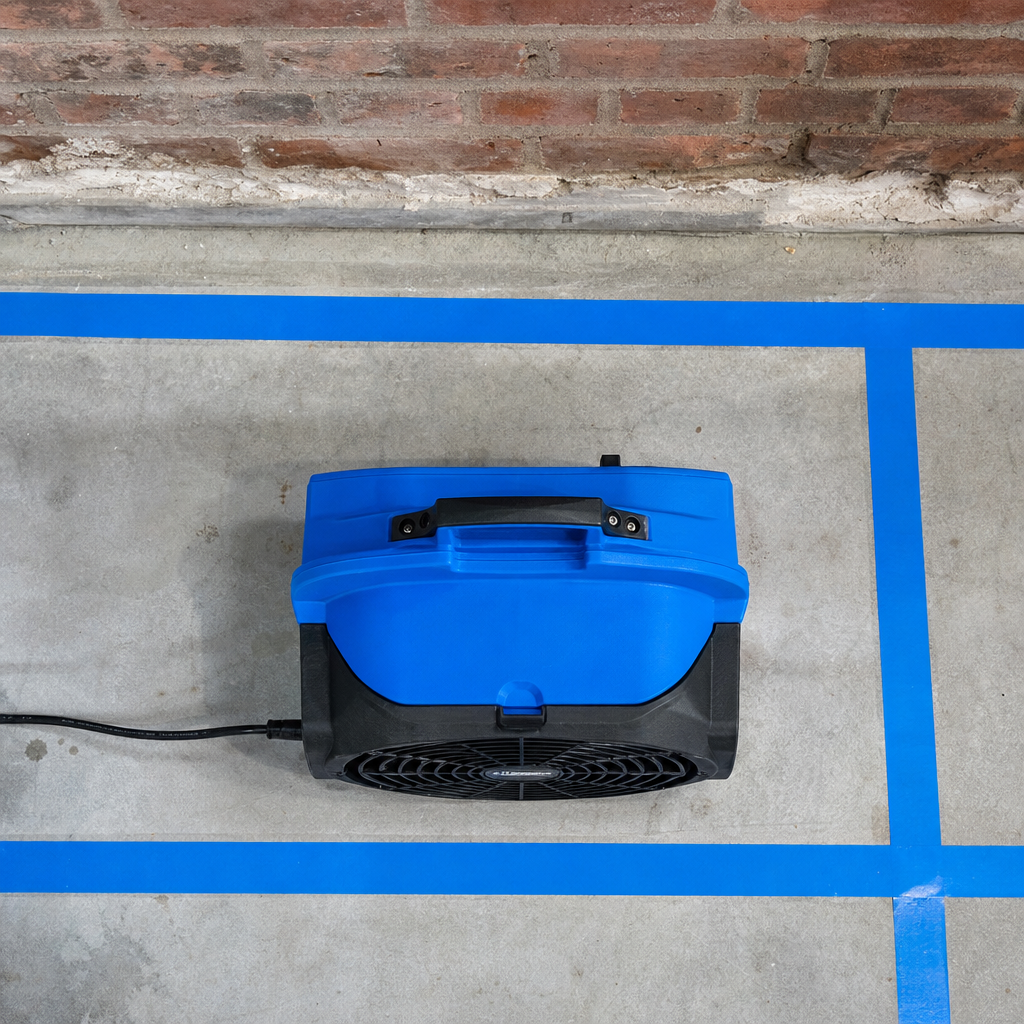
Basement water damage restoration typically involves several key stages:
1. Water Extraction
Standing water must be pumped out promptly to minimize the amount of water absorbed by surrounding building materials.
2. Moisture Mapping and Material Removal
Restoration professionals assess hidden moisture pockets. Saturated materials that cannot be salvaged, such as damaged drywall and insulation, are removed to allow airflow to structural framing.
3. Cleaning and Sanitation
Exposed structural surfaces are cleaned and treated with antimicrobial solutions to address microbial growth.
4. Dehumidification and Structural Drying
Air movers and dehumidifiers are deployed to draw deep moisture out of structural components until moisture levels normalize.
Frequently Asked Questions
What immediate safety steps should I take if my basement floods?
Your safety comes first. Do not enter a flooded basement unless electricity is confirmed off, and never approach a breaker through standing water; contact an electrician instead. If the flood involves sewer backup, avoid skin contact and keep family members and pets away from the area until trained professionals like Floodline Restoration Co. arrive.
How quickly can emergency flood cleanup crews arrive in Bayside?
Arrival time depends on availability and conditions and should be confirmed with the provider.
How long does it take to completely dry a flooded basement?
Drying time varies depending on factors such as the volume of water, the porosity of the building materials, and ambient humidity levels. Moisture levels should be monitored until materials reach appropriate moisture content.
How do professionals prevent mold growth after basement water damage?
Mold prevention requires prompt water extraction, thorough structural drying, and appropriate sanitation to remove the moisture needed for mold to develop.
Does homeowners insurance cover basement flood cleanup?
Flood damage is generally excluded from standard homeowners insurance policies. Separate flood insurance policies may be available, but NFIP basement coverage is limited and excludes finished walls, floors, ceilings, and personal property. Always check your policy and contact your insurer for specific coverage terms.[4]
Basement Water Damage Restoration in Bayside
Do not let standing water compromise your home’s foundation. Prompt water extraction, moisture management, and structural drying help protect your property from ongoing damage. Contact a licensed restoration provider like Floodline Restoration Co. to arrange an inspection and confirm service availability.
Need basement flood cleanup in Bayside?
We’re available now - call for a fast, free estimate.
Sources
- REPORT FLOOD DAMAGE AND SUBMIT 311 SERVICE … – nyc.gov (2025)
- Building Performance: Egress from Floodprone Basements – fema.gov (2022)
- [PDF] Bringing Basement Apartments Into the Light – comptroller.nyc.gov (2021)
- Bringing Basement Apartments Into the Light – comptroller.nyc.gov
- Is New York City Ready for Rain? – comptroller.nyc.gov
Related reading: Drywall Water Damage Repair in Astoria – Call Now-10% Off – On-Site in 60 Minutes – Free Estimate
Related reading: Water Damage Restoration in Middle Village – Call Now-10% Off – Same-Day Service – Free Estimate
Related reading: Water Damage Restoration in College Point – 10% Off & Free Estimate – Same-Day Service
Frequently Asked Questions
How quickly can Floodline Restoration Co. dispatch a crew for basement flood cleanup in Bayside?
Floodline Restoration Co. provides a fast 45-minute on-site emergency response across Bayside and neighboring Queens areas, 24 hours a day. Rapid deployment ensures immediate high-powered water extraction before moisture can migrate deeply into porous foundation masonry and cause severe structural decay.
Can Floodline Restoration Co. help navigate insurance claims for finished basement flood damage?
Yes, Floodline Restoration Co. works directly with insurance carriers by supplying comprehensive moisture mapping, damage assessments, and itemized scopes of work. Because standard policies and NFIP coverage often restrict finished basement reimbursements, our team documents all structural and sanitation losses precisely to support your claim.
What special protocols are required if my Bayside basement flood involves sewage backup?
Sewage backups involve Category 3 black water, which contains hazardous pathogens requiring specialized containment, disposal, and medical-grade antimicrobial sanitization. Floodline Restoration Co. removes non-salvageable porous items like saturated drywall, thoroughly disinfects exposed structural framing, and runs commercial dehumidifiers to eliminate biological health risks.
About the author
 |
Sarah Miller Sarah Miller is a certified water damage restoration specialist with over 8 years of experience working with residential and commercial properties in the New York area. She holds a B.S. in Environmental Science from SUNY College of Environmental Science and Forestry and is passionate about helping property owners navigate emergency situations and prevent long-term damage. |
Water damage, flood, or mold emergency?
We’re available now - call for a fast, free estimate.
Call Now - Free Estimate