
Last updated August 25, 2026
Free visual inspection and a written scope of work before any mitigation begins - photos, moisture readings, and drying logs go in your claim file
The scope we write is the scope we bill. Anything new gets shown to you, in writing, before we touch it.
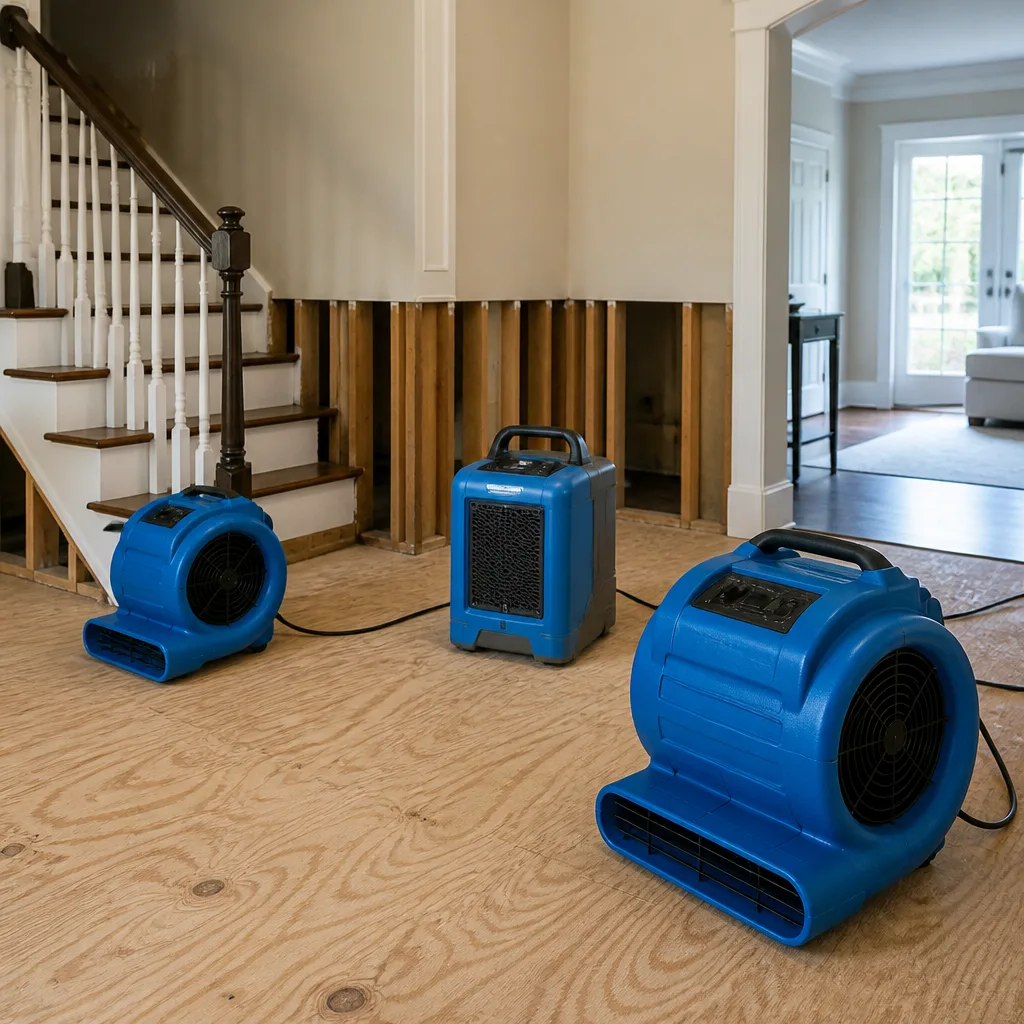

Storm responseSewage cleanup

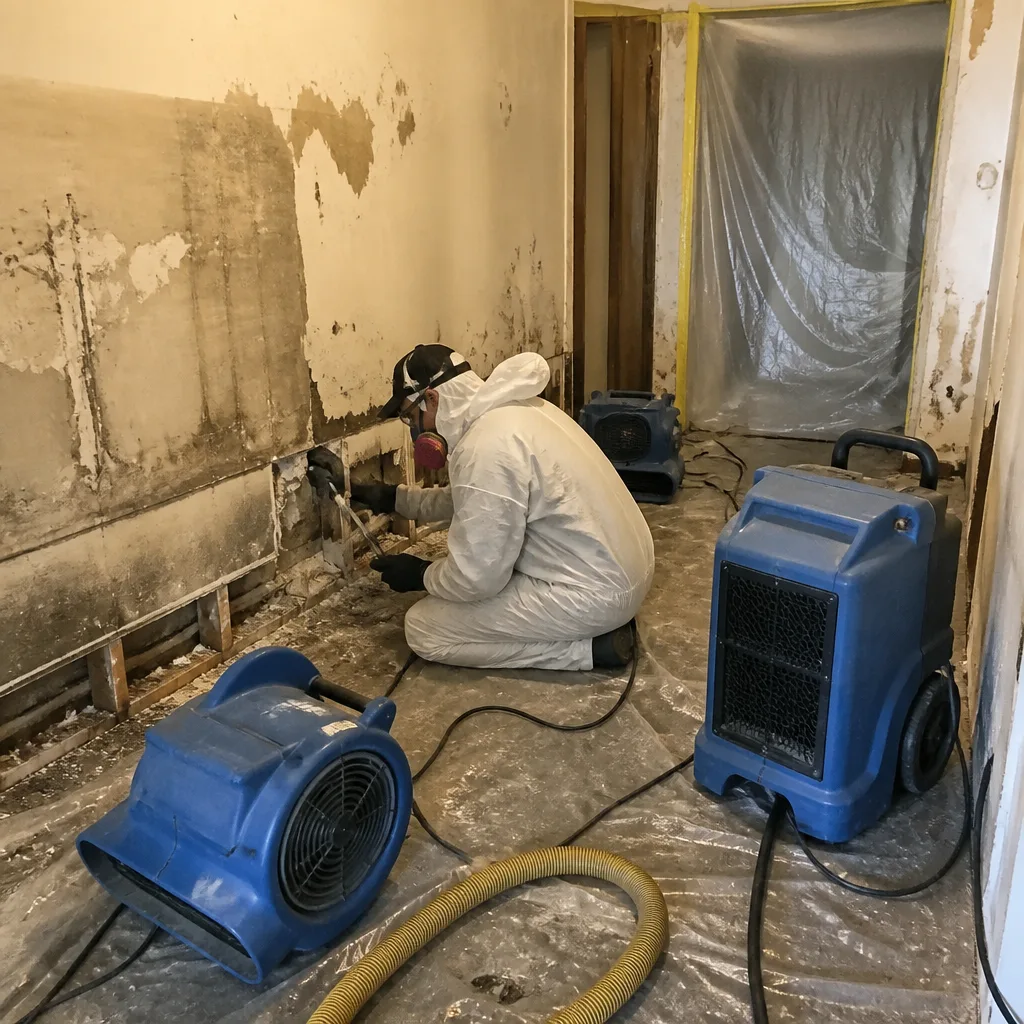 Before
 After
After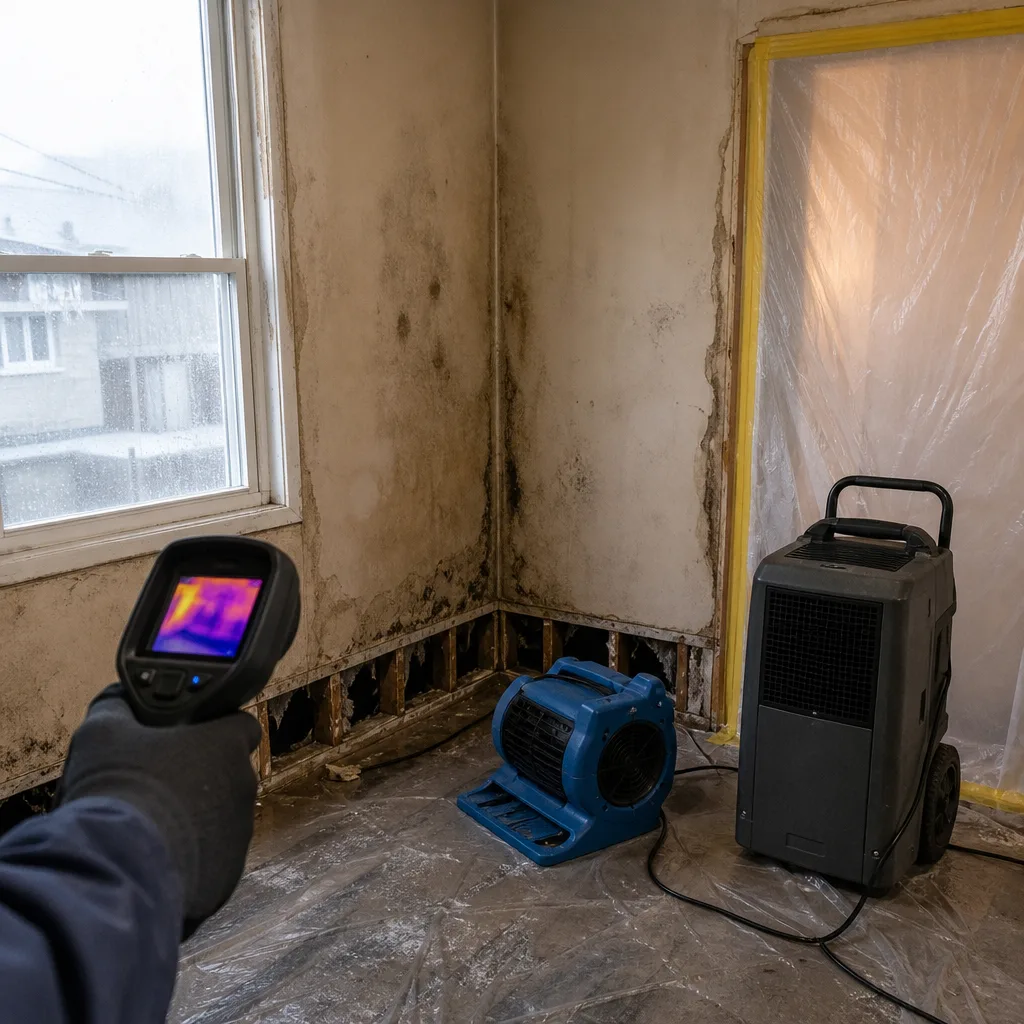 Before
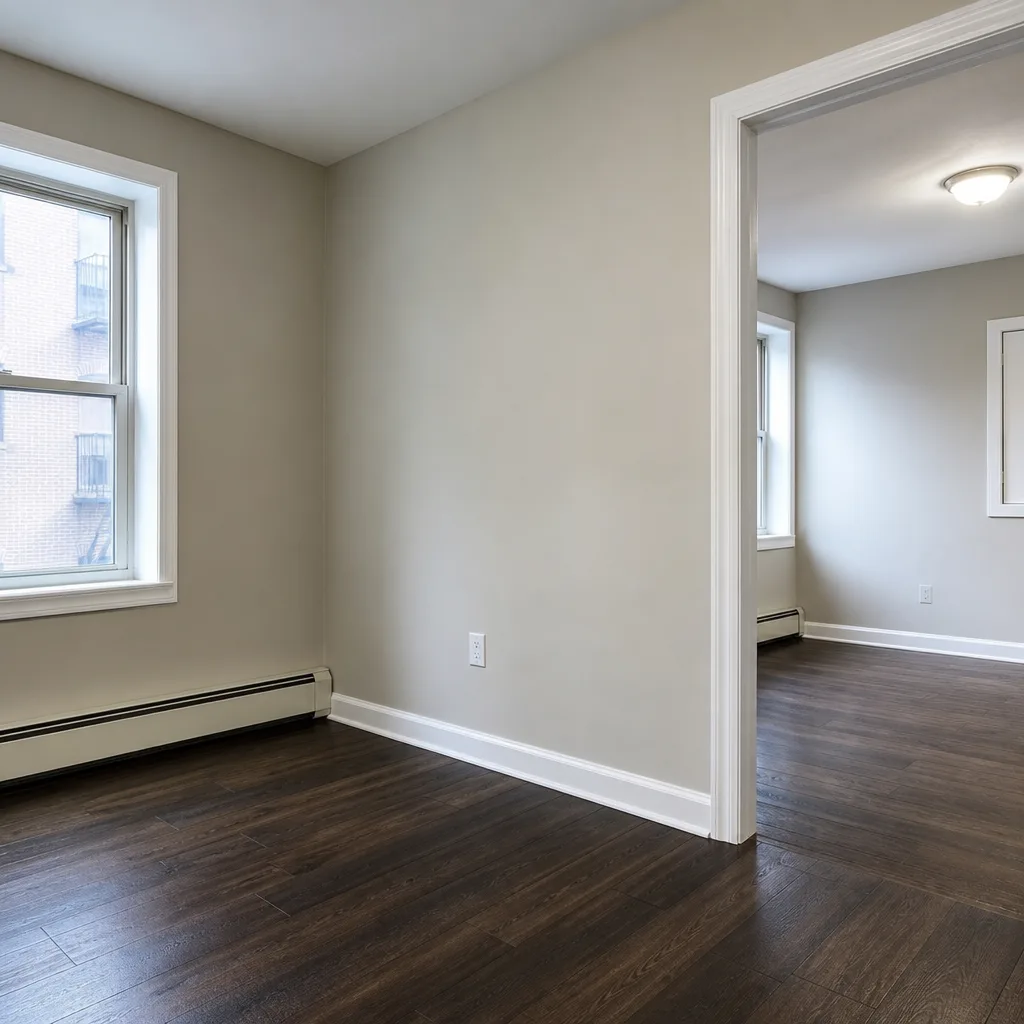 After
After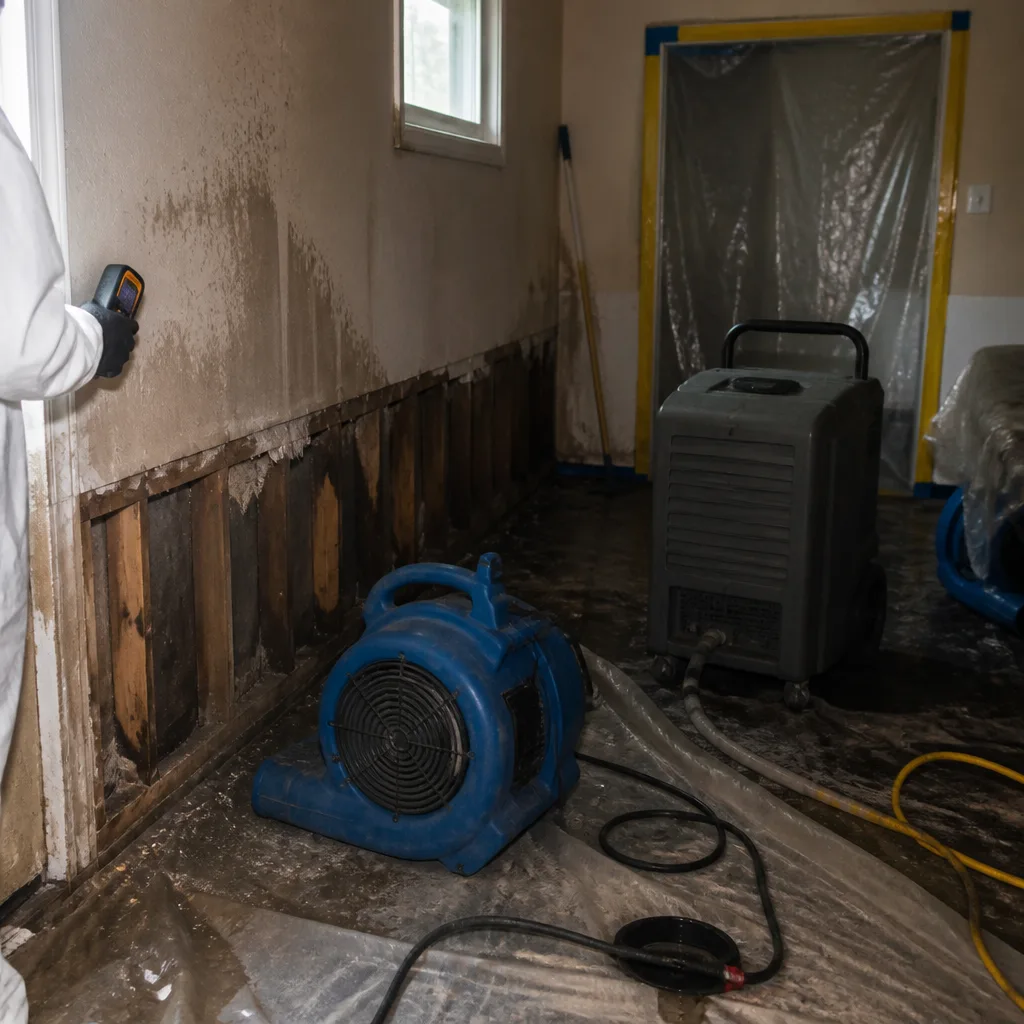 Before
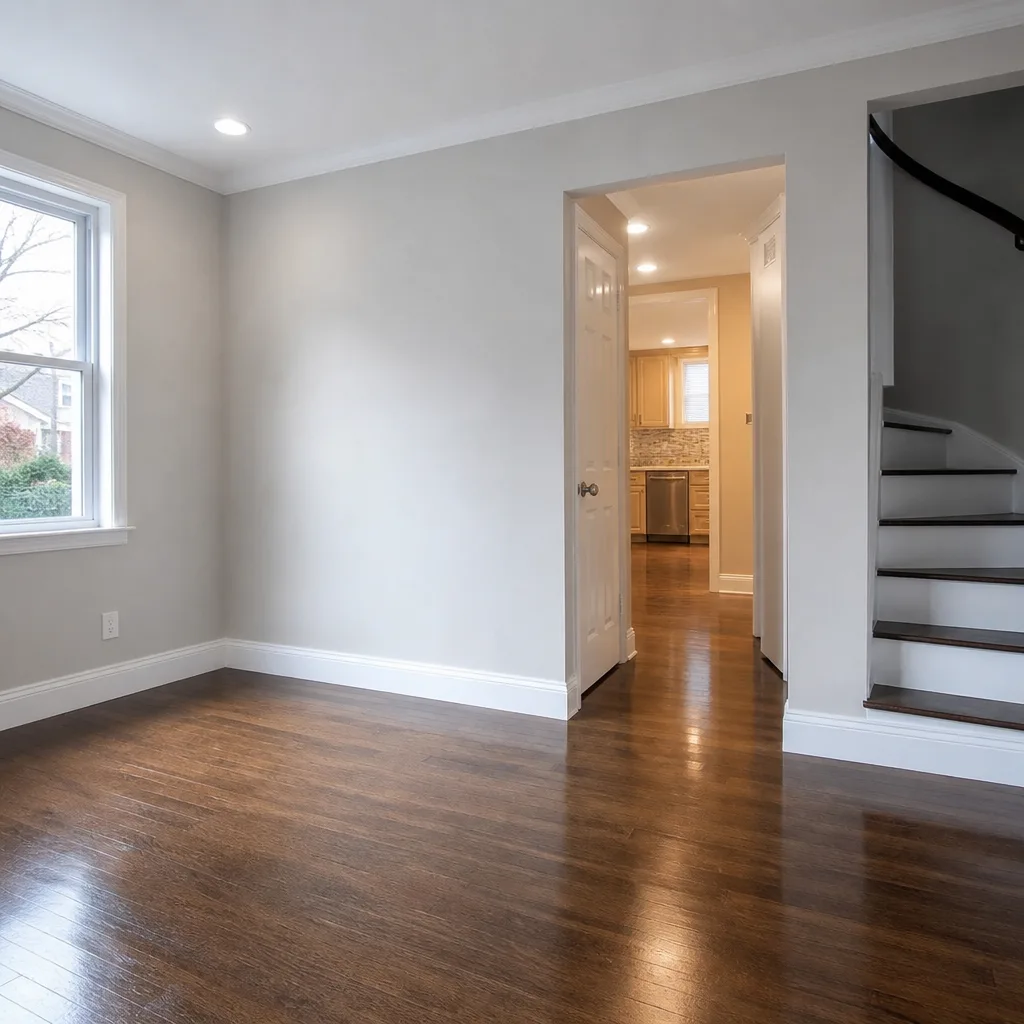 After
AfterDamage Restoration Warning Signs: A Flushing Homeowner’s Reference Guide
Most homeowners in Flushing don’t discover a water problem by seeing the water. They discover it by smell, by a door that suddenly sticks, or by a water bill that jumps 40 percent without explanation. The damage that forces a family out of their house for six weeks almost always started small enough to ignore. This guide walks through the warning signs that matter in Flushing specifically: what our wet winters and humid Julys do to houses, which signs you can safely investigate yourself, which ones mean you should shut the water off and call someone, and what a real restoration should look like when the crew arrives. You’ll learn to read the early signals before they become a rebuild.
Quick Answer
Water damage in Flushing homes most often announces itself through five signs: a musty or earthy smell that gets stronger after rain, staining or discoloration on ceilings and baseboards, warped or cupping floors, a sudden unexplained spike in the water bill, and paint or wallpaper that bubbles or peels without any obvious cause. If you see any of these, shut off the water at the main valve and call a restoration company same day. A professional moisture assessment costs nothing from a reputable firm and can prevent damage that would otherwise spread behind walls for weeks before you see it.
Table of Contents
- Water Stains and Discoloration: Reading the Marks
- The Smell That Won’t Leave: What Musty Odors Actually Mean
- Warped Floors and Bowed Walls: When Building Materials Move
- A Water Bill Spike Nobody Can Explain
- Peeling Paint and Bubbling Wallpaper: Moisture Behind the Surface
- Basement and Crawlspace Warning Signs Specific to Flushing
- The Mold Question: How to Tell If You Have a Problem
- Insurance and Documentation: What to Record Before You Call Anyone
Water Stains and Discoloration: Reading the Marks
A brown stain on a Flushing ceiling is not a stain. It’s a record. The shape, color, and location tell you where the water entered, how long it’s been running, and often what kind of water it is. A coffee-colored ring with a pale center usually means water pooled once and dried slowly. A dark stain that keeps spreading means active water is still moving behind the drywall. Either way, the stain marks the lowest point water reached before it stopped, which is why ceiling stains under bathrooms and kitchens in Flushing’s older housing stock are so common. The leak starts at a supply line or a wax ring, runs along a joist, and shows up six feet from where it actually began.
In our experience in Flushing homes, the water entering a ceiling stain is rarely where the stain appears. Water follows the path of least resistance, usually along a joist or a Romex run. Callers describe a stain in one corner while the leak is in another. That’s why a real assessment includes a moisture meter, not just a photo. Testing the perimeter of the stain shows whether the water has moved beyond the visible mark. We’ll read moisture around the edges and create a map of what’s actually wet. What you want in Flushing is a technician who can tell you what happened upstream before cutting anything open.
The color matters too. Yellowish-brown suggests slow, repeated exposure over weeks, the kind that comes from a small supply leak behind a wall. Dark black or gray staining often means the water carried dust and debris, which in Flushing’s older co-ops and prewar buildings may include decades of accumulated grit. Green or black discoloration with a slimy texture points to biological growth, and that changes the scope of work entirely. None of this means panic. It means the issue is established and needs mapping.
The Smell That Won’t Leave: What Musty Odors Actually Mean
A musty smell in a Flushing house is not a “house smell.” It’s evidence of active water and, often, active microbial growth. The scent comes from volatile organic compounds that fungi and bacteria release as they digest organic material: drywall paper, wood, dust, old paint. If the smell gets stronger after it rains or when the heat comes on, you’re almost certainly dealing with moisture in a wall cavity, under a floor, or inside a crawlspace. The rain connection means exterior water is finding a path in. The heat connection means warmth is volatilizing moisture that sits in building materials year-round.
Where the smell gathers matters. A smell strongest near the floor points to water under flooring or behind baseboards. A smell that hits when you open a closet suggests a wall cavity that never dries. A smell strongest in the basement after the April rains in Queens points to foundation seepage or a backed-up perimeter drain. Our crews have been in many Flushing basements where the homeowner assumed the smell was “just the basement” for years while water was tracking in through a failed parge coat and sitting behind finished walls. The smell was the only sign.
Air fresheners and deodorizers mask the scent but do nothing to the moisture that feeds it. They also make the problem harder to locate. You want the source found and the moisture logged, not covered. Call us and we’ll trace the odor with a moisture meter, not a guess.
Warped Floors and Bowed Walls: When Building Materials Move
Wood moves when its moisture content changes. That’s not a building defect; it’s physics. A hardwood floor in a Flushing home that starts to cup or crown is telling you the wood has absorbed more water than it can hold. Cupping means the edges of the boards rise while the center dips, which happens when the underside of the floor is wetter than the top. Crowning is the reverse. Both signals mean water is present under the floor or in the subfloor. Sometimes it’s a slow supply line leak under the kitchen sink traveling under the hardwood. Sometimes it’s water running under the flooring after a toilet overflow.
A bowed or bulging wall is more urgent. Drywall begins to lose structural integrity once it soaks through. It sags. Seams crack. The wall may feel soft to the touch, or a push against it feels springy. That wall needs to be opened up and dried from the inside, whether or not it looks salvageable from the outside. A professional-grade drying system, using Dri-Eaz or Phoenix equipment, should be able to dry the cavity and the framing, but only if the wall is accessed properly and the moisture monitored daily. If the wall has already bowed, it’s generally a tear-out and replace, not a drying scenario.
In Flushing’s older homes, non-standard wall assemblies are common: plaster over wood lath, or drywall over plaster. Plaster handles short-term moisture better than drywall but hides damage longer. That’s why the moisture meter matters more than what your eyes tell you. A plaster wall can look and feel fine while the lath behind it is soaked.
A Water Bill Spike Nobody Can Explain
New York City water rates have risen more or less every year, but a Flushing homeowner who sees a 30, 40, or 60 percent jump in a single billing cycle with no new appliance and no new garden should treat that bill as a diagnostic tool, not a nuisance. The most common silent culprits are running toilets, which can waste hundreds of gallons a day, followed by pinhole leaks in supply lines, leaking water heater connections, and underground lateral leaks between the street main and the house. A toilet flapper that fails can use more water in a month than a family of four drinks in a year.
Here’s the step-by-step approach we recommend when a Flushing homeowner calls us about a mysterious bill spike:
- Check the toilet flappers first. Drop food coloring in the tank and wait 15 minutes. If color appears in the bowl, that toilet is running.
- Read the water meter with no water running in the house. Write the number down. Check it again in 30 minutes. If it has changed, water is moving somewhere.
- Shut off the main valve. If the meter still moves, the leak is between the meter and the house, and you need a plumber and possibly a DEP notification.
- If the meter only moves when the main valve is open, the leak is inside the house. A moisture assessment can locate the water’s path.
An unexplained water bill spike combined with any of the other signs in this guide means an active leak is already doing damage. The water bill is the earliest warning system many Flushing homes have. Read it. If the numbers don’t make sense, call (518) 872-6111 and we’ll send someone to find the water.
Peeling Paint and Bubbling Wallpaper: Moisture Behind the Surface
Paint failure from age looks like fine cracking or chalking, and it happens uniformly across a wall. Paint failure from water looks different. It bubbles in a specific area, usually with the paper layer of the drywall separating from the gypsum core. The paint might lift in blisters, or the wall surface may feel gritty or sandy to the touch. Bubbling wallpaper is even clearer: the adhesive has released because the wall behind it is damp. Wallpaper is a moisture trap. It seals the wall surface and forces any water in the wall to move through the drywall itself, which accelerates deterioration.
A home that has peeled paint in one isolated area, not related to a steamy bathroom or a cooking space, almost certainly has water behind that spot. In Flushing homes with masonry exterior walls, condensation can do this too. When warm indoor air hits a cold masonry wall with no vapor barrier, the wall becomes a condensing surface from about November through March. The result looks exactly like a roof leak, but the source is humidity, not water intrusion. A moisture meter and a hygrometer reading can distinguish the two in minutes.
The repair path depends on the source. A plumbing leak gets fixed at the pipe, then the wall is dried and the finish repaired. A condensation problem requires managing indoor humidity and often improving insulation or vapor barrier design. A roof leak in a Flushing rowhouse tends to show first along the party wall or in the top-floor ceiling corners, and it gets worse after wind-driven rain. Each of those has a different fix. The paint bubble is the messenger.
Basement and Crawlspace Warning Signs Specific to Flushing
Flushing sits on ground that was historically marshy, and much of the neighborhood’s housing stock has basements and crawlspaces that were built before modern waterproofing standards. After heavy rain, the water table rises. That water pressure finds foundation cracks, failed mortar joints, and floor-wall seams. The result is a damp or wet basement that most homeowners write off as normal. It is not normal. Repeated basement water intrusion rots sill plates, rusts mechanical equipment, and feeds mold in stored belongings and finished walls.
These basement signs should trigger a call in Flushing specifically:
- Efflorescence: white powdery deposits on masonry walls. This is mineral salt left behind as water evaporates from the surface. It is not cosmetic; it’s a record of recurring water movement through the wall.
- Dampness or dew on the slab floor after rain, especially in the corners where floor meets wall.
- A rust line or water mark on the water heater, furnace, or washer, indicating past water height.
- Spalling concrete: the surface of the floor or wall flaking away. Water is pushing through and taking the surface with it.
- Mold growth on stored cardboard boxes, wood shelving, or anything else that sits against the floor or wall.
Crawlspaces in Flushing’s older single-family homes present the same issues without the benefit of standing room. A damp crawlspace humidifies the entire house from below and feeds the same smell and mold issues described elsewhere in this guide. Sealing and dehumidifying a crawlspace is standard work for a restoration firm that understands the local water table, not a handyman add-on.
The Mold Question: How to Tell If You Have a Problem
Every home has mold spores in the air. That’s normal. A mold problem starts when spores find a surface that stays wet long enough for them to grow, usually 48 to 72 hours. In Flushing, that window opens easily in summer, when indoor humidity climbs and air conditioning runs intermittently. The spores are everywhere; the missing ingredient is standing moisture. Remove the moisture, and the growth stops. Remove only the visible mold, and it comes back.
The signs that you have a mold problem rather than a mold scare:
- Visible growth that reappears after cleaning. If you clean a patch of black or green growth and it returns within weeks, the moisture source behind it is still active.
- An earthy, damp smell that persists after cleaning. Mold doesn’t need to be visible to be present. A wall cavity can grow mold internally while the painted surface stays clean.
- Growth in areas that never see water from above, such as baseboards on interior walls or the underside of a staircase. Water is finding these surfaces through the structure.
- Health symptoms that improve when you leave the house and worsen when you return, especially for anyone with asthma, allergies, or a suppressed immune system.
Real mold remediation is a controlled process, not a scrub job. The area gets contained so spores don’t spread to the rest of the house. HEPA air scrubbers run during the work. Affected materials are removed and bagged, the cavity is dried to a verifiable dry standard, and the area is treated and tested. That’s the standard our IICRC-certified technicians work to on every Flushing mold job. If someone offers to “bleach it and paint over it,” get a second opinion. Bleach does not reliably kill mold on porous surfaces, and it can make the moisture problem harder to see.
Insurance and Documentation: What to Record Before You Call Anyone
The insurance claims process starts before the restoration crew arrives, and what you document in the first hour can make or break the claim. The standard homeowner’s policy in Flushing typically covers sudden and accidental water damage, such as a burst pipe or a failed supply line. It often does not cover long-term seepage, gradual leaks, or flood damage from rising groundwater, unless a separate flood policy is in place. The distinction matters, and adjusters are trained to identify which category the damage falls into.
Before you call anyone, do this:
- Take photos of every affected area from multiple angles, including the source if you can see it. Wide shots for context, close-ups for detail.
- Photograph the water line on walls and baseboards. The line tells the adjuster how high the water reached.
- Make a written list of damaged belongings with purchase dates and approximate values if known.
- Do not throw anything away until the adjuster or the restoration company has documented it. Wet material is evidence.
- Mitigate what you safely can: shut off the water, move furniture out of standing water, and set up fans if you have them. Your policy requires you to prevent further damage.
A restoration company that works with insurers directly will document the scene, provide photo records and moisture logs to your adjuster, and bill the carrier. That means you’re not playing messenger between a drying company, a rebuild contractor, and an insurance adjuster who returns calls on a schedule. You want one company that can handle the extraction, the drying, the rebuild, and the paperwork. That’s the full-cycle approach Floodline Restoration Co. home uses on every Flushing job: one crew from first extraction to final finish, with a moisture log in your hands and the carrier billed directly.
Common Mistakes to Avoid
- Waiting to see if it dries on its own. It won’t. Wall cavities and subfloors in Flushing homes dry far more slowly than surface materials, and waiting turns a drying job into a tear-out job. The first 48 hours are the difference between saving floors and replacing them.
- Calling a handyman first. A handyman can fix the leak but cannot dry the structure or verify that the dry standard has been met. Damage left behind walls after a leak is the most common cause of hidden mold we find on later jobs in Flushing.
- Painting over a water stain. The stain will bleed through, and the moisture that caused it will continue working behind the paint. Address the water first, then repair the finish.
- Using a shop vac on sewage water. Sewage cleanup requires containment, personal protective equipment, and proper disposal. A shop vac spreads the contamination further. If the water came from a backed-up sewer line, call a professional immediately.
- Accepting a bid without a written scope of work. A verbal estimate is worthless when the adjuster asks what was actually done. Get the scope, the equipment list, and the drying protocol in writing before work starts.
- Leaving a dehumidifier running without checking the drain. A dehumidifier that isn’t draining properly just recirculates humid air. Check the bucket or drain line daily.
When to Call a Professional
Call a professional the same day if you see water traveling across a floor, if water is coming through a ceiling, if the water is from a toilet or sewer line, or if you smell a persistent earthy odor that gets worse after rain. Also call if your water bill has spiked and you cannot find the source, if a wall feels soft or a floor is cupping, or if mold is present in an area larger than about ten square feet. These are not weekend projects. They are structural and health issues that compound hourly. Floodline Restoration Co. offers free estimates in Flushing, and our live dispatchers answer the phone 24 hours a day, 7 days a week. Call (518) 872-6111 and a certified crew can be on the way while the damage is still manageable. Every job comes with the 90-Day Done Right Promise in writing: if it’s not done right, we make it right.
Frequently Asked Questions
Our live dispatchers answer the phone 24/7, and in most cases a certified crew can reach a Flushing home within hours of your call, not days. We dispatch from a live board, not a voicemail. If you call at 2 a.m., a person answers, and extraction can be running the same visit.
Most standard homeowner’s policies cover sudden and accidental water damage, like a burst pipe or a failed supply line, but they often exclude gradual seepage and groundwater flooding. We document everything, bill your carrier directly, and provide the moisture log and photo records an adjuster needs to approve the claim. You don’t have to play messenger.
Mold can begin growing within 48 to 72 hours of water exposure, especially during Flushing’s humid summers. That’s why same-day extraction matters. The faster the water comes out and drying starts, the less chance mold ever gets established.
Every Floodline restoration job in Flushing is backed by a written 90-Day Done Right Promise, which we call the Keystone Standard. If the work isn’t done right, we make it right. No arguing, no paperwork battles.
Fans move air over surfaces, which helps, but they don’t pull water from inside wall cavities, subfloors, or framing. Professional-grade equipment like Dri-Eaz and Phoenix air movers combined with dehumidifiers and Injectidry systems for hard-to-reach cavities is designed to dry the whole structure to a verifiable dry standard, measured daily with moisture meters. Most Flushing homes need that standard met before rebuild can start.
No. Our estimates in Flushing are free, and the scope of work is written before anything starts, so you know the numbers before you approve them. Call (518) 872-6111 and ask for a free assessment, and you’ll get a real person, day or night.
The Bottom Line
Most serious damage in Flushing homes starts as something small and quiet: a slightly higher water bill, a stain the size of a coffee cup, a smell that comes and goes with the rain. These signs are not random. They are the house telling you water is where it shouldn’t be. The window to act is short: 48 to 72 hours before mold sets in, days before drywall loses its structure, weeks before a small leak becomes a rebuild. Know the signs, act the same day you see them, document everything for your carrier, and choose a restoration company that handles the whole job from extraction to final paint with one crew and a written guarantee.
Written by Curt Bowman, Owner at Floodline Restoration Co., serving Flushing since 2010.