
Dri-Eaz Water Damage Restoration in Flushing: A Homeowner’s Guide
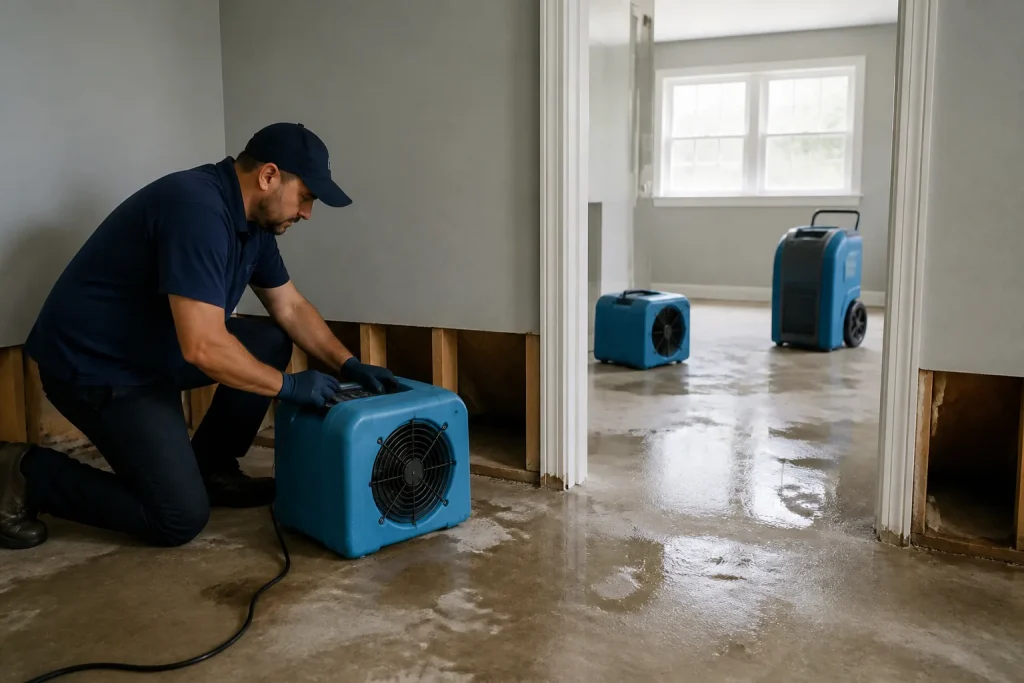
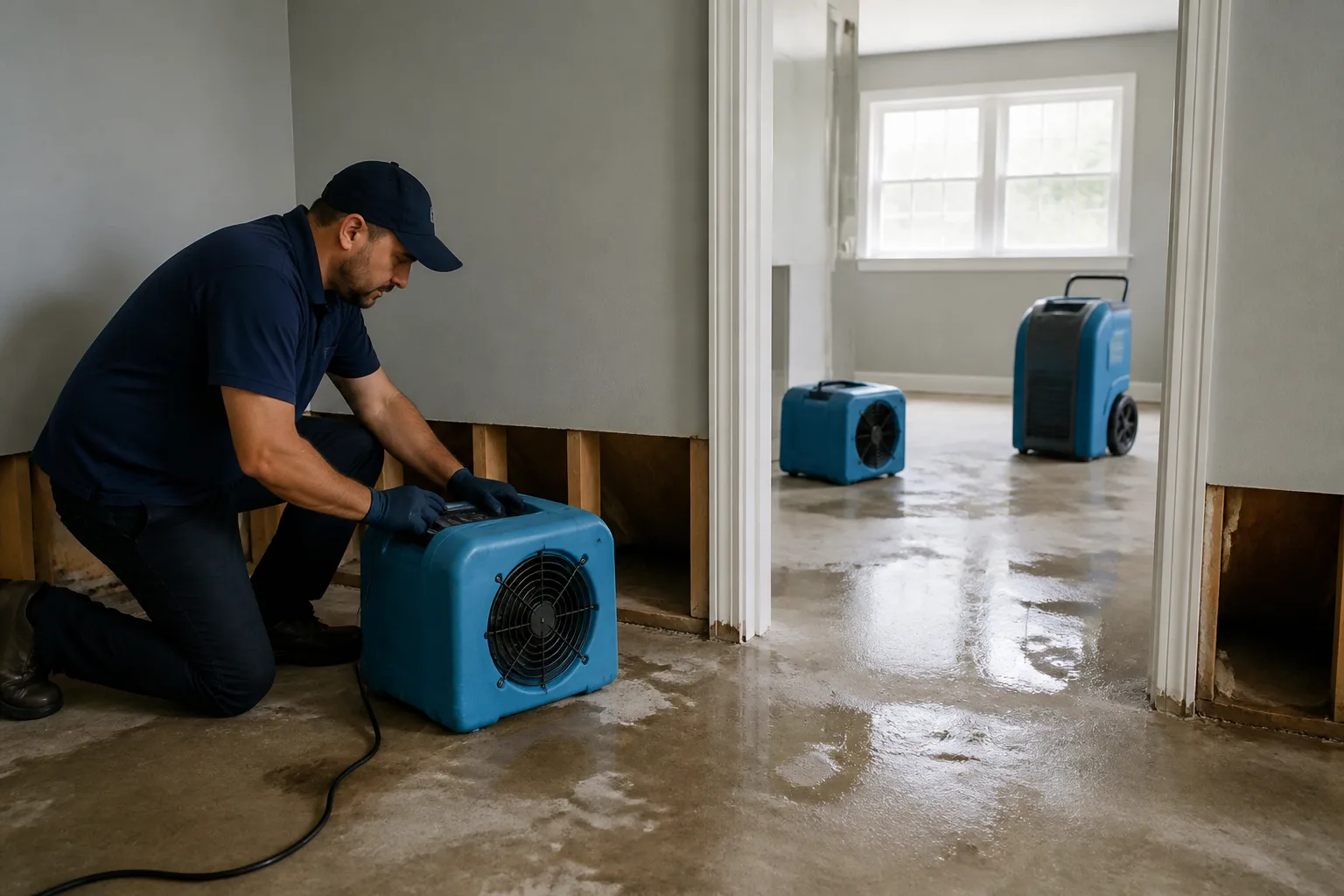
A Dri-Eaz dehumidifier in your basement is only as good as the person who set it up. These are professional-grade machines, but a misconfigured unit can pull moisture from the air while the water trapped in your subfloor stays exactly where it is. This guide explains what Dri-Eaz equipment actually does, what proper setup looks like, and the questions to ask so you can tell real drying from expensive box-placement.
Most homeowners in Flushing never think about psychrometrics until there’s a foot of water in the basement. Then suddenly the brand name on the machine matters more than it should. We’ve walked into homes where a previous company left dehumidifiers running for two weeks with no airflow plan, no moisture log, and no clue why the walls weren’t drying. The machine was fine. The setup wasn’t.
What Dri-Eaz LGR Dehumidifiers Actually Do in Flushing Conditions
Dri-Eaz makes several models, but the ones that matter for water damage restoration are LGR units, which stands for Low Grain Refrigerant. A standard household dehumidifier pulls maybe 20 to 30 pints of water per day in ideal conditions. A Dri-Eaz LGR pulls 130 to 150 pints per day and keeps working down to much lower humidity levels.
Why does that matter in Flushing specifically? Because Flushing sits near Flushing Bay and the East River, and summer humidity regularly pushes past 70 percent. A standard dehumidifier fights that ambient moisture and loses. An LGR unit keeps extracting even when the air in the room drops below 30 percent relative humidity, which is the range where structural drying actually happens. The machine doesn’t just collect water from the air; it creates a vapor pressure differential that pulls moisture out of drywall, hardwood, and subflooring.
The other key piece is heat. Dri-Eaz LGRs discharge warm, dry air. That warmth raises the surface temperature of wet materials slightly, which accelerates evaporation. In Flushing’s older homes, where plaster walls hold water differently than modern drywall, that heat matters more than most people realize. Plaster releases moisture more slowly, and without warm, dry airflow moving across it, the wall can stay damp for weeks behind a dry-feeling surface.
Equipment Placement Versus a Drying System: The Difference Nobody Explains
Here’s the honest reality: putting a dehumidifier in a wet room is not a drying system. A drying system is a calculated setup based on airflow mapping, psychrometric readings, and equipment ratios spelled out in the IICRC S500 Standard for Professional Water Damage Restoration.
We pulled one out of a garage over in Auburndale last month where a homeowner had rented three Dri-Eaz units and pointed them at a wet wall. The wall dried in patches. The bottom plate stayed soaked. The garage smelled like a damp basement by week two. The machines were working perfectly. They just weren’t configured to move air across the right surfaces.
A proper setup looks like this:
- Airflow mapping: The technician identifies every wet surface, including what’s behind walls and under floors, then positions air movers to create continuous airflow across those surfaces. Not pointed at them. Across them.
- Equipment ratios: IICRC guidelines call for roughly one air mover for every 50 to 75 square feet of wet surface, and enough dehumidifier capacity to remove moisture faster than the materials release it. Most DIY setups under-ventilate by half.
- Containment and pressure: In Flushing’s attached homes and co-ops, negative air pressure keeps moisture and contaminants from spreading to unaffected rooms. Without it, you’re just moving wet air through the whole house.
- Daily readings: A technician should check moisture readings in the same spots every day and adjust equipment placement as materials dry. The map changes as the job progresses.
The difference shows up in the moisture log. A system run by someone who understands vapor pressure and airflow drops moisture percentages on a predictable curve. A machine left running with no plan shows exactly what you’d expect: some things dry, some things rot, and nobody knows which is which until the smell shows up.
How to Read a Moisture Log: What the Numbers Should Do
A moisture log is the single most important document in a water damage job. It’s the difference between “it feels dry” and proof that structural materials hit a specific dry standard. If a contractor won’t show you one, that’s your answer.
Here’s what a proper log tracks:
- Moisture content percentages for each affected material, measured in the same locations every day. For wood subfloors in Flushing, you want readings at or below 12 to 14 percent before the job closes.
- Drying readings that are specific to the material, not just the air in the room. A dehumidifier display showing 35 percent humidity means nothing about the moisture trapped inside a tongue-and-groove subfloor.
- A steady downward trend. Moisture should drop noticeably each day with a properly configured system. If day three looks flat or rising compared to day one, something is wrong: too little airflow, too little dehumidifier capacity, a hidden water source, or a misconfigured system.
- Drying goals for different materials. Plaster and hardwood dry slower than drywall. Flushing’s pre-1970 housing stock, with its plaster-over-lath walls and original oak or pine flooring, needs different targets and often more time than a modern drywall closet.
A flat or rising reading at day three is the moment to ask hard questions. It means the current setup isn’t working, and leaving it “a few more days” just makes mold more likely. In our experience, the most common culprit is a dehumidifier sized for the room, not the water load. A 130-pint Dri-Eaz unit is powerful, but if the damage came from a burst pipe that soaked a 300-square-foot oak floor, one unit isn’t enough regardless of what the display says.
Why Flushing’s Older Homes Dry Differently Than Modern Construction
Flushing’s housing stock spans more than a century, and that matters a lot when water gets into walls and floors. A home built in 1935 doesn’t dry like a gut-renovated condo from 2015.
The biggest differences we see on the job:
- Plaster walls: Plaster is dense and holds moisture deep. It releases water slowly, which means drying takes longer and requires consistent airflow over the surface. Drywall, by comparison, wicks moisture outward faster and dries from both sides. If you set a dry standard expecting drywall behavior on plaster, you’ll close the job too early.
- Tongue-and-groove subfloors: Pre-1970 Flushing homes often have solid wood plank subfloors, not plywood. Water travels along the seams and settles in the cavities below. Drying this requires lifting floorboards or drilling access points to get airflow underneath. Without that access, the top surface can read dry while the underside stays wet for weeks.
- Clay-heavy soil: Much of Flushing sits on clay, which drains poorly. Basement water events, especially after heavy rain, can leave groundwater pressure that keeps concrete slabs and foundation walls damp long after the standing water is gone. A drying plan has to account for whether the water source was a one-time event or an ongoing seepage problem.
- Balloon framing: Many older Flushing homes use balloon framing, where wall cavities run continuous from basement to attic. Water that enters a wall in the basement can wick upward into the first floor without ever showing up on the surface. A drying professional checks wall cavities with a moisture meter, not just the visible surfaces.
This is one reason we run Dri-Eaz and Phoenix equipment with daily moisture readings logged in writing. The machine matters, but knowing where to put the probes matters more. When a job closes, the moisture log should show every affected material back to dry standard, not just the air in the room.
The One Document That Proves the Job Was Done Right
Never accept “it feels dry” as a close-out on a water damage job. Your fingers cannot detect moisture at 20 percent wood moisture content, and they certainly can’t tell you what’s happening inside a wall cavity.
The document you want is a completed moisture log, signed and dated, showing initial readings, daily readings, and final readings for every affected material. The log should demonstrate that each material reached the IICRC dry standard for its type. For wood structural materials, that generally means 12 to 14 percent moisture content or below, depending on the species and location. For drywall, readings should show the material back to its pre-loss baseline.
Why does this matter in practical terms? Because the worst water damage in Flushing shows up weeks after the equipment is gone. A subfloor that never dried completely under the surface becomes a mold issue by the following month. A plaster wall that was closed up too early carries a musty smell through the next humid summer. The moisture log is your proof that the job was finished to a measurable standard, not to a gut feeling.
If the contractor can’t produce one, the job wasn’t finished to standard. That’s not an opinion. It’s the difference between a written record and a handshake. We hand a moisture log to every homeowner and their carrier at close-out because it’s the honest way to prove the work. Our reference page on Water Damage Restoration in Flushing walks through our process from first extraction to final reading.
The Bottom Line
Dri-Eaz makes excellent equipment. So do Phoenix and B-Air. The machine is not the variable that determines whether your Flushing home dries correctly or stays wet behind the walls. The variable is whether the person running it understands airflow, psychrometrics, and the specific materials in your house. Ask for a moisture log. Ask about equipment ratios. Ask why the drying plan looks the way it does. If the answers are vague, call someone else.
If you’re in Flushing and dealing with water damage right now, a live dispatcher answers our phone around the clock. We’re at the Floodline Restoration Co. home when you need us. Estimates are free, and since 2010, Curt Bowman and our crews have handled extraction, drying, and rebuild with the same certified team from first call to final walkthrough. Call (518) 872-6111 and we’ll be there when we say.
Frequently Asked Questions
Are Dri-Eaz dehumidifiers available to rent in Flushing?
Yes, Dri-Eaz LGR dehumidifiers are available through equipment rental companies, but renting one without a drying plan rarely works. We’ve seen homeowners run a rented 130-pint unit for a week with no air movers and no moisture readings, then call us when the smell returned. The machine was fine. The system wasn’t there.
How long should a Dri-Eaz dehumidifier run after water damage?
On most Flushing water damage jobs, professional drying with LGR equipment takes 3 to 5 days, though pre-1970 plaster homes and saturated hardwood subfloors can extend that to 7 days or more. The unit should run until the moisture log shows all affected materials at dry standard, not until the display reads a certain humidity percentage.
Why does Flushing humidity make water damage worse?
Flushing sits near Long Island Sound and Flushing Bay, which keeps ambient summer humidity high. When indoor humidity stays above 60 percent, structural materials release moisture much more slowly. That’s why standard dehumidifiers underperform here and why LGR equipment, which keeps extracting at low humidity levels, matters for complete drying.
Will insurance cover professional water damage restoration with Dri-Eaz equipment?
Most homeowner policies cover water damage restoration when the cause is sudden and accidental, like a burst pipe or appliance failure. Slow leaks and long-term seepage are usually excluded. The equipment brand doesn’t affect coverage. We bill carriers directly and provide photo documentation and moisture logs for every claim, so you’re not playing messenger with an adjuster. For related issues after a fire or flood, see our Fire & Smoke Damage Restoration in Flushing and Mold Remediation in Flushing pages. Call (518) 872-6111 for a straight answer about your specific policy.
Written by Curt Bowman, Owner at Floodline Restoration Co., serving Flushing since 2010.
Need Damage Restoration Help?
Call Floodline Restoration Co. - licensed & insured, here with fast after-hours help in Flushing.
(518) 872-6111