
Quick Summary
Property owners facing severe storms or plumbing failures can use this guide to navigate the critical process of flood damage restoration in Astoria. Timely recovery requires structured safety evaluations, rapid structural drying, and detailed claim documentation led by specialists like Floodline Restoration Co. to minimize property loss. Readers will understand neighborhood flood risks and insurance steps, and can call the 24/7 emergency dispatch line for an immediate on-site response and free visual inspection.
Flood Damage Restoration in Astoria: Risk Factors, Structural Drying, and Insurance Claims
When severe weather or plumbing failures flood a home or commercial building, addressing water intrusion is critical for recovery. Dealing with flood damage restoration in Astoria requires an understanding of local flood exposure. Properties throughout Queens face risks from sewer backups, flash downpours, and tidal surges.[4]
The NYC Department of Health and Mental Hygiene identifies coastal flood risk in Long Island City-Astoria as higher than the Queens average of 29.2% and the citywide average of 39%; the available research does not establish the neighborhood’s exact percentage. Proper recovery involves a structured restoration process recommended by specialists like Floodline Restoration Co., including safety assessment, documentation, protecting undamaged property, drying the structure, addressing hazards, and coordinating repairs with qualified professionals.[1]
How Flood Damage Restoration Works in Astoria
Quick Answer: The research-supported flood damage restoration process includes conducting a safety assessment, documenting damage, notifying the insurer, protecting undamaged property, drying the structure, addressing hazards, and coordinating repairs with qualified professionals.[5]
Professional restoration focuses on addressing standing water, mitigating moisture hazards, and drying structural materials to prevent deterioration.
Immediate Response Considerations
Response times vary with availability, traffic, storm conditions, access, and incident severity, and no standard Astoria arrival time is established by the available research.
Initial Assessment and Restoration Steps
The standard flood damage restoration process includes:
- Safety Assessment: Evaluating structural integrity and potential electrical or environmental hazards.
- Documentation: Recording damage thoroughly for insurance purposes before and during cleanup.
- Notifying the Insurer: Reporting the loss promptly and reviewing policy terms.
- Protecting Undamaged Property: Moving salvageable items and mitigating further exposure.
- Drying the Structure and Addressing Hazards: Extracting water, drying structural components, and addressing contamination or safety risks.
- Coordinating Repairs: Working with qualified professionals to carry out necessary structural rebuilding.
What Does Flood Damage Restoration Cost in Astoria?
No reliable Astoria-specific cost average was established; costs vary with affected area, contamination, structural damage, drying, contents, and rebuilding. Property owners are advised to obtain written estimates and confirm insurance coverage.
Cost Factors and Historical Claim Data
During Hurricane Ida, city records documented 678 damaged properties out of 24,444 tabulated parcels in the Astoria-Queensbridge community district area (about 2.77% of local properties).[2]
Federal flood-risk data shows 67 National Flood Insurance Program (NFIP) claims paid across Queens County, totaling $1,076,412 in payouts with an average claim of $16,066. While this countywide figure reflects general insurance payouts rather than an exact local restoration quote, it highlights the financial impact of severe flood events.
| Service Consideration | Restoration Process |
|---|---|
| Assessment | Comprehensive safety inspection and moisture evaluation |
| Documentation | Detailed photographic records and damage inventories for insurance claims |
| Drying and Hazard Mitigation | Structural drying, hazard removal, and professional coordination |
Navigating Insurance Claims and Policy Limits
Standard homeowners insurance generally does not cover flooding, while a separate NFIP policy may cover eligible building and contents losses subject to policy limits, deductibles, exclusions, and the cause of loss.
To streamline the claim process, property owners should document all damage thoroughly, notify their insurance carrier promptly, and obtain written estimates from qualified professionals such as Floodline Restoration Co.
Flood Hazard Variations in Astoria
Need flood damage restoration in Astoria?
We’re available now - call for a fast, free estimate.
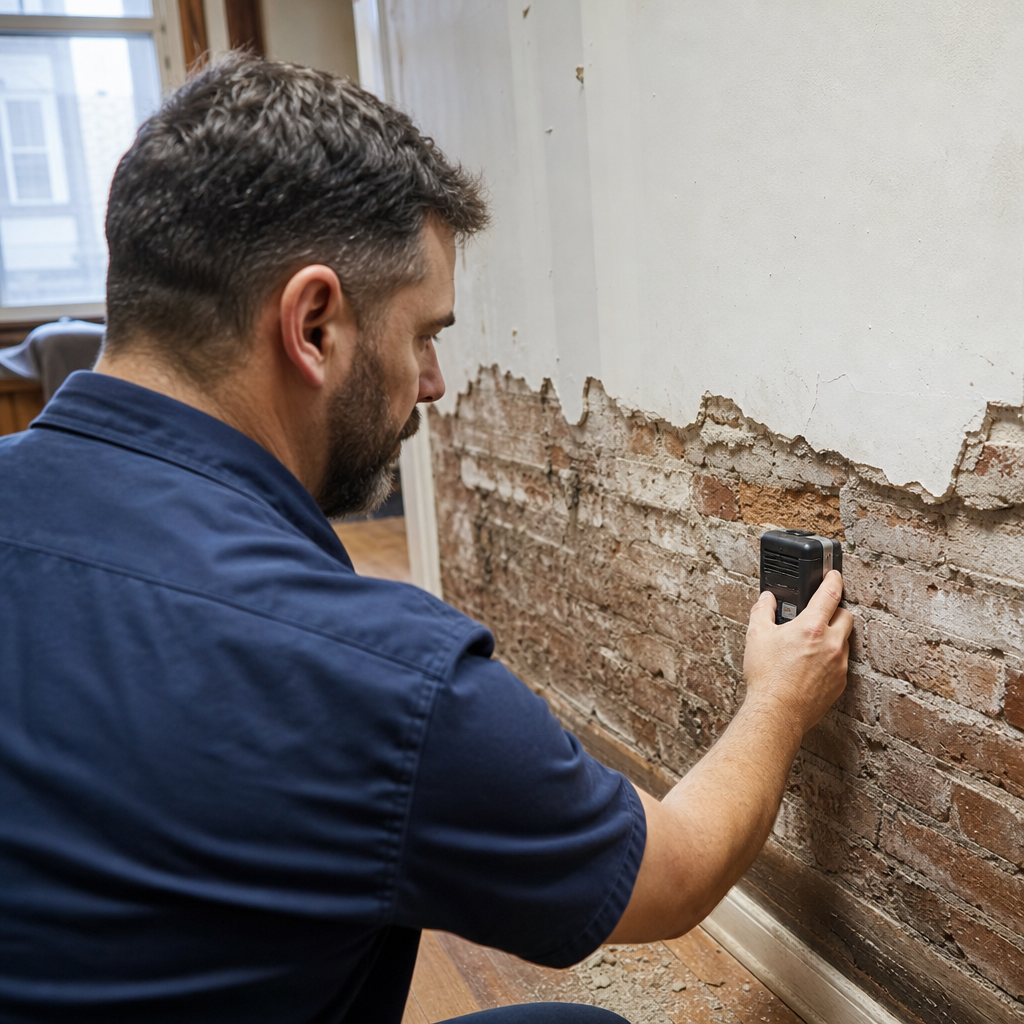
Flood exposure varies across the neighborhood: while areas like Astoria Central and Astoria East-Woodside North are designated as minimal flood hazard zones, parts of Old Astoria-Hallets Point sit in a 0.2% annual-chance flood hazard zone.[3]
Can Flooded Materials and Contents Be Salvaged?
Whether building materials and personal property can be salvaged depends on contamination, exposure duration, material type, structural condition, and professional safety assessment.
Porous materials exposed to contaminated water may pose health and safety risks, whereas non-porous or structurally sound items may be dried and restored depending on the extent of damage.
Frequently Asked Questions About Flood Damage Restoration in Astoria
How quickly can emergency flood restoration teams arrive in Astoria?
Response times vary with availability, traffic, storm conditions, access, and incident severity, and no standard Astoria arrival time is established by the available research.
How much does flood damage restoration typically cost in Astoria?
No reliable Astoria-specific cost average was established; costs vary with affected area, contamination, structural damage, drying, contents, and rebuilding. It is recommended to obtain written estimates and confirm insurance coverage.
Does homeowners insurance cover flood cleanup and water damage repairs?
Standard homeowners insurance generally does not cover flooding, while a separate NFIP policy may cover eligible building and contents losses subject to policy limits, deductibles, exclusions, and the cause of loss.
What steps are involved in the flood damage restoration process?
The standard process involves conducting a safety assessment, documenting damage, notifying the insurer, protecting undamaged property, drying the structure, addressing hazards, and coordinating repairs with qualified professionals.
How is mold risk addressed after a flood?
Mitigating mold risk involves promptly drying the structure, removing unsalvageable contaminated materials, and addressing underlying moisture hazards in coordination with qualified restoration professionals like Floodline Restoration Co.
Can flooded materials be salvaged?
Salvageability depends on contamination, exposure duration, material type, structural condition, and professional safety assessment.
Need flood damage restoration in Astoria?
We’re available now - call for a fast, free estimate.
Sources
- WHAT IS THE HAZARD? – NYC.gov – nyc.gov (2080)
- NYC CDBG-DR Draft Action Plan Post-Tropical Cyclone Ida – nyc.gov (2022)
- Chapter 10: Natural Resources – FEIS – nyc.gov (2012)
- CDBG-DR – nyc.gov (2022)
- https://data.cityofnewyork.us/api/views/7n9x-tbtd/… – data.cityofnewyork.us (2025)
Frequently Asked Questions
How do restoration specialists locate hidden moisture inside walls and floors after an Astoria flood?
Technicians use non-invasive tools such as infrared thermal imaging and structural moisture meters to detect trapped water behind drywall and under subfloors. Floodline Restoration Co. performs comprehensive moisture mapping across affected properties to locate hidden dampness and ensure complete structural drying.
What steps are required if an Astoria flood involves contaminated sewer backup?
Sewer backups involve Category 3 black water that poses serious health risks and requires specialized extraction, sanitization, and disposal of non-salvageable porous materials. Floodline Restoration Co. provides 24/7 emergency response in Astoria to safely remove hazardous wastewater and disinfect affected building components.
How can property owners document flood damage for successful NFIP insurance claims?
Successful claims require thorough photographic and video evidence, moisture logs, and itemized lists of damaged structural elements before cleanup begins. Floodline Restoration Co. supports Astoria homeowners by compiling detailed technical documentation and written estimates directly aligned with NFIP guidelines.
About the author
 |
Sarah Miller Sarah Miller is a certified water damage restoration specialist with over 8 years of experience working with residential and commercial properties in the New York area. She holds a B.S. in Environmental Science from SUNY College of Environmental Science and Forestry and is passionate about helping property owners navigate emergency situations and prevent long-term damage. |
Water damage, flood, or mold emergency?
We’re available now - call for a fast, free estimate.
Call Now - Free Estimate