
Quick Summary
When severe weather, storm surges, or sewer backups strike coastal Queens properties, securing rapid flood damage restoration in Bayside is essential to prevent deep structural decay and hazardous mold growth. Floodline Restoration Co. provides 24/7 emergency response across Bayside, utilizing IICRC-certified water extraction, advanced cavity dehumidification, and antimicrobial treatments to safely remediate contaminated floodwaters. Readers will understand the multi-phase mitigation process, critical safety protocols, and how to call the 24/7 emergency dispatch line for immediate on-site response and a free visual inspection.
“`html
Flood Damage Restoration in Bayside – Water Extraction and Structural Drying
When floodwater enters a property, prompt evaluation helps address water intrusion and potential structural damage. As Queens-wide context, waterfront property values across Queens climbed 127.65% from fiscal year 2010 to fiscal year 2020, representing the largest waterfront value increase of any New York City borough. Properties in low-lying coastal or poorly drained areas may also face potential risks from tidal surges, severe rainfall, and possible municipal sewer backups.[4]
Professional restoration providers such as Floodline Restoration Co. offer flood damage mitigation services to manage disaster recovery, ranging from initial water pumping and extraction to structural drying, sanitization, and repairs. Restoration contractors generally use commercial extraction equipment and moisture measurement tools to assess and mitigate water intrusion into building foundations and living spaces.
Disclaimer: Available research data does not provide a Bayside-specific restoration price, market total, or standard response time.
Quick Answer: Emergency Flood Cleanup in Bayside
Emergency protocol: Restoration procedures often involve water extraction, removal of unsalvageable porous building materials, structural drying, and antimicrobial cleaning where appropriate. Under industry standards such as the IICRC S500 standard for professional water damage restoration, outdoor floodwaters and sewage are commonly evaluated as Category 3 water, which may require specialized personal protective equipment, containment, and targeted drying techniques such as commercial desiccant or LGR dehumidifiers to reach documented dry standards.
Prompt documentation, extraction, drying, and cleaning can help limit additional damage, subject to site conditions and professional guidance. Typical mitigation workflows may include the following general phases:
- Site Safety and Moisture Inspection: Technicians assess electrical and structural safety, inspect moisture boundaries using meters or thermal imaging tools, and classify the water category.
- Water Extraction: Pumps and commercial extractors are deployed to remove standing water from floors and foundation slabs.
- Material Removal and Sanitation: Non-salvageable porous materials, such as saturated drywall or insulation, may be removed, and EPA-registered antimicrobial treatments may be applied in accordance with manufacturer instructions and industry guidance.
- Structural Drying and Monitoring: Air movers and dehumidification systems are placed to extract moisture from building materials, with moisture readings logged to evaluate drying progress.
What Does Flood Damage Restoration Cost in Bayside?
Pricing overview: Authoritative research does not establish an isolated, Bayside-specific restoration price, market total, or standardized cost average. Regional restoration expenses typically depend on water depth, contamination category, affected square footage, and the scope of required demolition and structural drying.
As Queens-wide context, the New York City Comptroller’s Office reported that Queens has 20,841 buildings located within the 100-year floodplain, including 672 structures built or altered after 2014. These properties face varying risks from coastal surge and heavy storm events. Costs reflect the specific mitigation work required to stabilize individual structures:[1]
Restoration Variables and Service Scope
Clean water discharges from indoor plumbing supply lines may require standard extraction, drying equipment, and moisture tracking. In contrast, water entering from outdoor surface runoff, bay surges, or potential sewer backups is treated as Category 3 black water under authoritative industry standards. Depending on the assessment, technicians from firms like Floodline Restoration Co. may employ personal protective equipment, remove contaminated porous materials like carpeting and low-level drywall, and apply multi-stage sanitization. Larger structures and finished subterranean spaces often require additional equipment and extended drying timelines.
Insurance Coverage and Out-of-Pocket Considerations
Standard homeowners insurance policies generally do not cover flooding from outside water. Coverage for outdoor flooding depends on the terms, limits, exclusions, and deductible of an applicable flood insurance policy, such as one issued through the National Flood Insurance Program (NFIP) or a private flood carrier. Following Superstorm Sandy, New York City directed more than $3 billion of its post-disaster Community Development Block Grant Disaster Recovery funding toward housing recovery across single-family, multifamily, and public housing developments.[2]
Insurance and financial assistance gaps can complicate recovery. In focus groups conducted by the Federal Reserve Bank of New York, participants reported that flood recovery is often costly and time-consuming; most participating renters reported having no renters insurance for personal property, and participants in those focus groups reported receiving no insurance payouts or public disaster assistance after flooding events.[3]
Structural Moisture Management and Masonry Drying
Need flood damage restoration in Bayside?
We’re available now - call for a fast, free estimate.
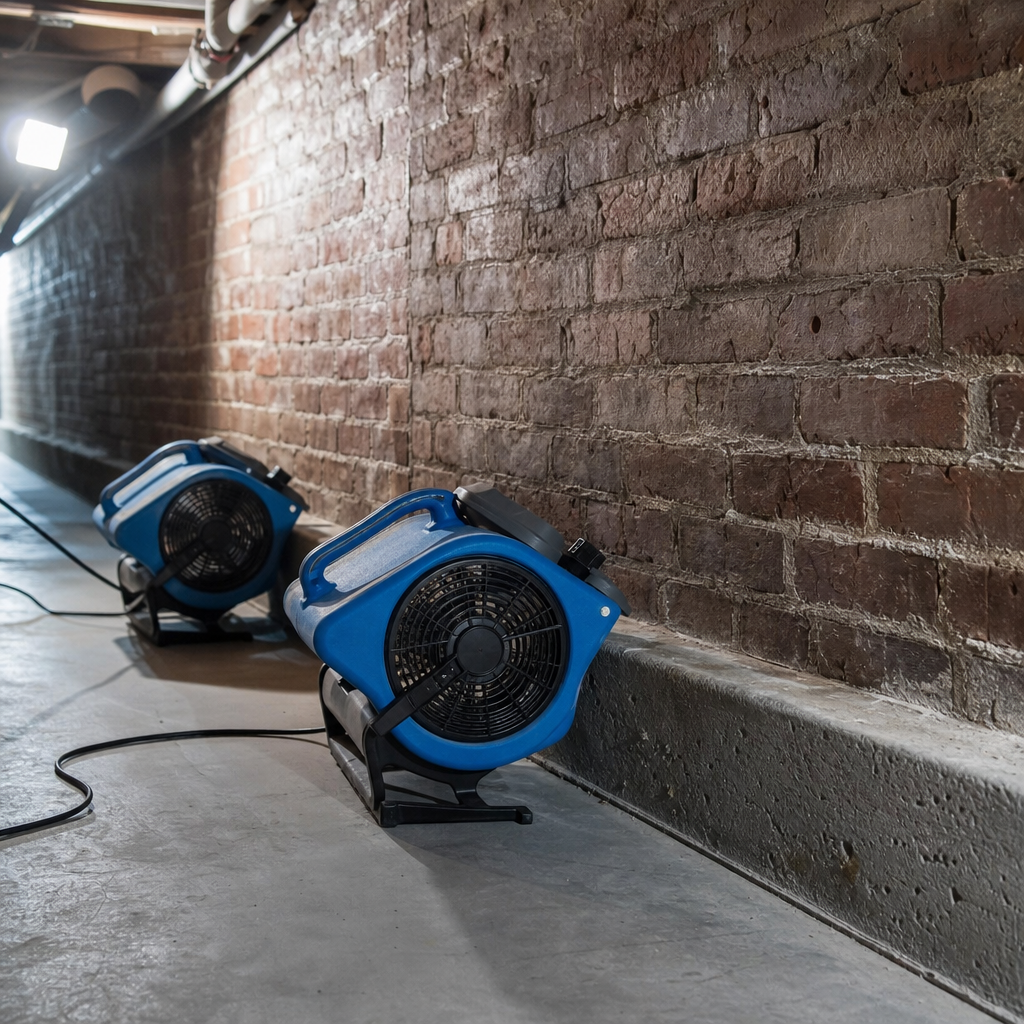
Dense building materials such as brick and concrete can absorb significant moisture during a flood event. If surface materials are dried without addressing deep structural moisture, water can remain trapped within masonry assemblies and inner framing cavities.
Industry standards recommend monitoring moisture content in structural assemblies using specialized instruments such as non-invasive moisture meters and thermal imaging devices. When deep moisture is present, restoration professionals, including teams at Floodline Restoration Co., may utilize cavity drying equipment or low-grain refrigerant and desiccant dehumidifiers to manage vapor pressure and support structural drying.[5]
What Steps Are Typically Followed for Flood Damage Restoration?
Professional flood mitigation, as practiced by Floodline Restoration Co., generally follows an organized process designed to stabilize the property and prepare it for safe occupancy:
-
Phase 1: Emergency Safety, Containment, and Water Extraction
Technicians verify utility safety, establish containment barriers if necessary to limit cross-contamination, and initiate water extraction to remove standing liquid as promptly as site conditions permit.
-
Phase 2: Structural Dehumidification, Antimicrobial Application, and Air Filtration
Where deemed necessary by professional assessment, non-salvageable porous drywall and insulation are removed. EPA-registered antimicrobials may be applied to structural framing and subfloors in accordance with industry guidance. High-efficiency particulate air (HEPA) air filtration units and commercial dehumidifiers may be operated to help manage airborne particles and bring structural materials toward target moisture equilibrium.
-
Phase 3: Repair Evaluation and Reconstruction
After moisture meters confirm that framing and masonry materials have reached acceptable drying thresholds, reconstruction and finish repairs can proceed.
Frequently Asked Questions About Bayside Flood Cleanup
How quickly can an emergency flood restoration team arrive in Bayside?
Arrival times vary based on provider availability, traffic, storm conditions, and incident severity. Confirm the estimated arrival time directly with the selected company.
How is mold growth managed after basement flooding?
According to public health and building science guidance cited by Floodline Restoration Co., managing mold risk involves drying structural materials promptly following water intrusion. Recommended actions may include removing heavily saturated porous items, applying EPA-registered antimicrobials where appropriate, and operating dehumidification equipment to reduce indoor humidity below 50% while drying structural framing to recognized moisture thresholds.
What should property owners do while waiting for flood restoration technicians?
- Check for Safety: If standing water is near electrical outlets or breaker panels, do not enter the flooded area. Disconnect utilities only if it can be done safely from a dry location.
- Document the Damage: Take photographs and video of water levels, affected belongings, and structural waterlines for insurance review before moving or discarding items.
- Protect Unaffected Belongings: Move dry personal items, furniture, and critical documents to higher ground if it is safe to access the area.
- Avoid Standard Home Vacuums: Never use a standard household vacuum cleaner to extract standing water, as this creates an electrical hazard and can damage the equipment.
“`
Need flood damage restoration in Bayside?
We’re available now - call for a fast, free estimate.
Sources
- Climate – nyc.gov (2050)
- Ten Years After Sandy: Barriers to Resilience – New York City … – comptroller.nyc.gov (2030)
- NYC's Federal Funding: Outlook Under Trump – Office of the New … – comptroller.nyc.gov (2026)
- Mayor Adams Commemorates 10th Anniversary of … – nyc.gov (2012)
- Ten Years After Sandy – Office of the New York City Comptroller … – comptroller.nyc.gov (2014)
Frequently Asked Questions
Does Floodline Restoration Co. assist with flood insurance claims in Bayside?
Yes, Floodline Restoration Co. provides end-to-end insurance claim management by documenting moisture levels, structural waterlines, and mitigation scopes according to industry standards. Our staff coordinates directly with NFIP and private flood insurance adjusters to help streamline the claims process for Bayside property owners.
How do I request an emergency on-site inspection for flood damage in Bayside?
You can call the Floodline Restoration Co. 24/7 live emergency dispatch line at any time to request immediate on-site deployment. Our IICRC-certified technicians arrive promptly to perform a free visual inspection, assess moisture boundaries with thermal imaging, and begin emergency water extraction.
Why must drywall and insulation be removed after coastal floodwater enters a home?
Outdoor floodwater and storm surges are classified as Category 3 black water, which contains hazardous microbes and contaminants that cannot be safely sanitized from porous building materials. Floodline Restoration Co. removes saturated drywall and insulation to prevent toxic mold proliferation and allow deep structural drying of the framing.
About the author
 |
Sarah Miller Sarah Miller is a certified water damage restoration specialist with over 8 years of experience working with residential and commercial properties in the New York area. She holds a B.S. in Environmental Science from SUNY College of Environmental Science and Forestry and is passionate about helping property owners navigate emergency situations and prevent long-term damage. |
Water damage, flood, or mold emergency?
We’re available now - call for a fast, free estimate.
Call Now - Free Estimate