
Water Damage Restoration Cost Guide: What Flushing Homeowners Pay in 2026
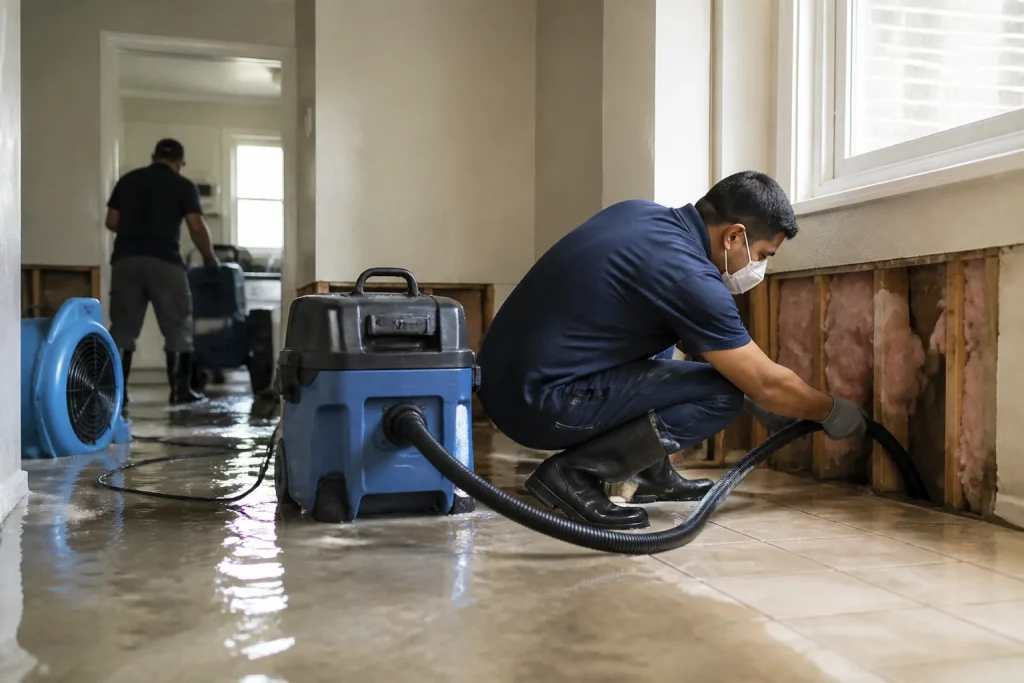
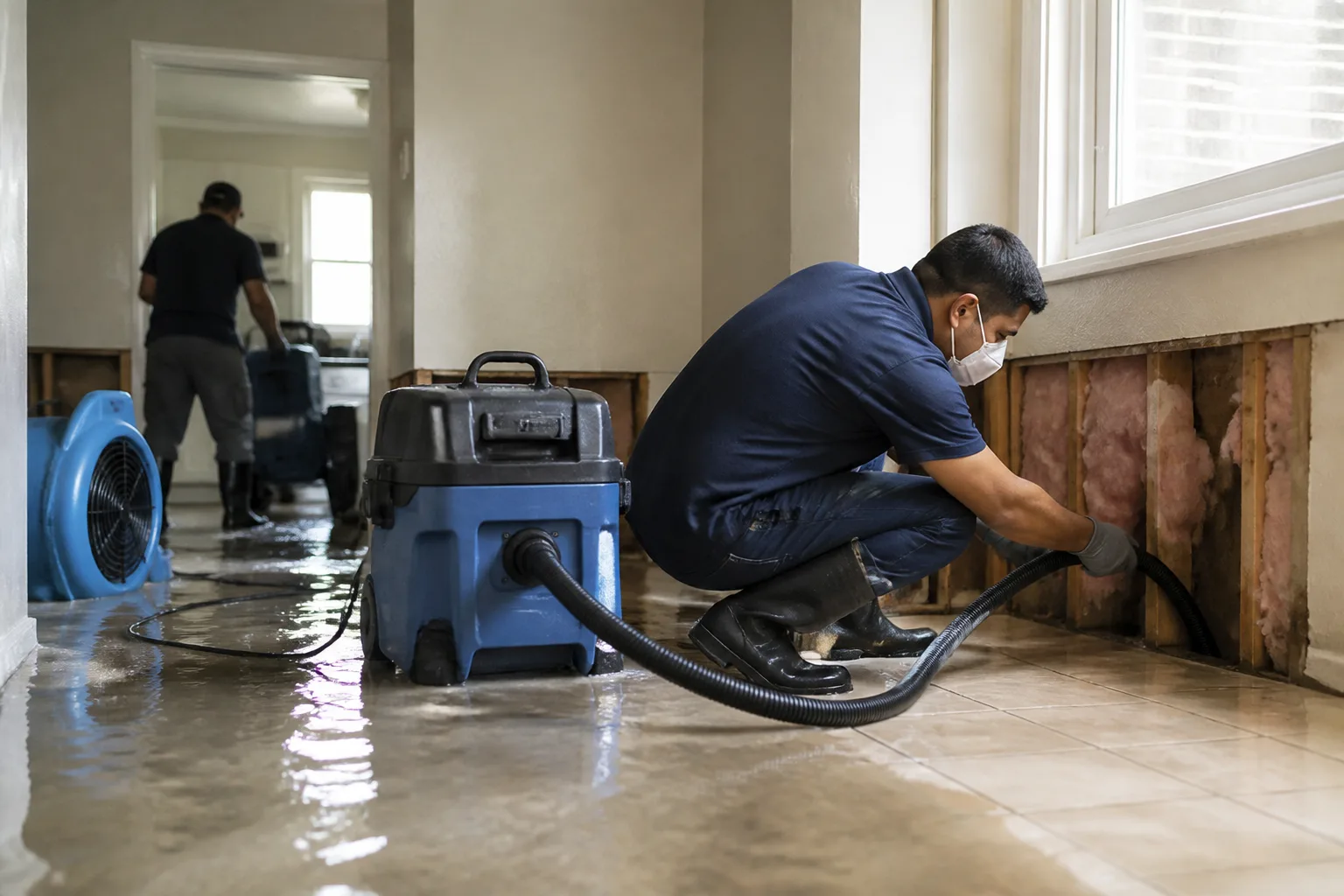
Water damage restoration in Flushing typically costs between $2,100 and $7,800 for a complete scope in 2026, with most Category 1 clean water jobs on a single floor landing around $3,400. The spread is wide because two contractors can quote entirely different scopes: one covers extraction and drying while the other includes demolition, antimicrobial treatment, and rebuild. If you’d rather skip the math and get a straight number, call (518) 872-6111 for a free estimate.
Here’s the number every Flushing homeowner should hear before accepting any bid: the average homeowner who takes the lowest water damage quote ends up spending 34% more than the highest original bid once they hire a second contractor to finish reconstruction the first never included in writing. We’ve watched that exact scenario play out over fifteen years, and it always starts the same way: a quote that looks honest because it is honest, just incomplete.
Why Flushing Water Damage Quotes Differ by Thousands of Dollars
Most homeowners assume the gap between a $2,300 quote and a $7,200 quote means one company is overcharging. In Flushing, that’s rarely the actual story. What’s happening is that the lower quote covers mitigation only: extraction, equipment placement, and drying. The higher quote covers mitigation plus the rebuild: removing saturated drywall, treating the framing, replacing insulation, hanging new sheetrock, and repainting. Both contractors technically did the work they bid. Only one ever told you the job wasn’t finished.
This is the scoping problem, and it’s worse in older housing stock. Flushing has thousands of pre-1960 homes with plaster-over-lath walls and wood subfloors that hold water differently than modern drywall. A contractor who has never worked on Bowne Street or through Kissena Park won’t know that a small supply-line leak there can wick up three feet of plaster before the homeowner notices. A local crew does. The line the water left on your wall is where the scope begins, and anyone quoting from a photo instead of a moisture map is guessing.
When you compare bids, line them up by category, not by total. Every complete Flushing restoration scope should include these six components:
- Extraction: standing water removed with truck-mounted or portable extractors before drying equipment goes in.
- Equipment placement: air movers, dehumidifiers, and sometimes Injectidry systems for wall cavities and under cabinets.
- Daily drying monitoring: moisture readings logged until materials hit the dry standard, typically 3-5 days in Flushing’s humid summers.
- Demolition of unsalvageable material: soaked drywall, baseboards, carpet pad, and saturated insulation cut out and bagged.
- Antimicrobial treatment: applied to affected framing and subfloor to prevent mold before rebuild begins.
- Structural rebuild: drywall, trim, paint, flooring, and any cabinetry or fixture replacement.
If a quote only lists the first three, that’s a mitigation bid. Nothing wrong with it, as long as you understand someone else still needs to handle the last three. We’re a Floodline Restoration Co. home company that handles all six with the same crew, which is why our quotes sometimes look higher on day one and end up lower on day thirty.
2026 Flushing Price Ranges by Water Category
Water damage pricing turns on what kind of water you’re dealing with. The IICRC classifies water into three categories, and each carries different handling requirements, equipment needs, and disposal costs. Here’s what we’re seeing in Flushing this year:
Category 1: Clean Water
This is supply-line water, a failed water heater, or an overflowing bathtub. No bacteria concerns, no special disposal. A 200-square-foot kitchen or bathroom in a Flushing co-op or single-family home typically runs $2,100 to $4,200 for complete mitigation. Add rebuild and you’re at $4,800 to $9,700 depending on cabinetry and flooring. Jobs under 300 square feet are usually done in one visit.
Category 2: Gray Water
Washing machine discharge, dishwasher overflow, or aquarium failures. This water carries some contamination and requires more aggressive drying plus targeted antimicrobial application. Expect $2,800 to $5,400 for mitigation on a typical room. We pulled a washing machine line out of a garage over in Auburndale last month where the water had run under the slab. The homeowner thought it was a mop-up job. The moisture map said otherwise.
Category 3: Sewage and Flood Water
Sewage backup, toilet overflows involving solid waste, or storm surge through a basement window. This is the most expensive category in Flushing, not because the labor is harder but because disposal is regulated, containment is required, and far more material gets cut out. A Category 3 basement of 500 square feet runs $6,500 to $14,000 for full mitigation and rebuild. Protection of unaffected areas with 6-mil poly containment is standard and should be on the quote.
How Queens County Adjusters Calculate ACV vs. RCV Payouts
Insurance payouts are one of the most misunderstood parts of water damage restoration in Flushing, and the misunderstanding costs homeowners real money. Your policy almost certainly covers water damage from sudden and accidental events. What it pays out depends on two numbers: Actual Cash Value (ACV) and Replacement Cost Value (RCV).
ACV is what your damaged property was worth at the moment of loss, which means replacement cost minus depreciation. A fifteen-year-old water heater? Depreciated to near zero. RCV is what it actually costs to replace that property with new material of like kind and quality. Most Flushing homeowner policies pay ACV first, then release the remaining RCV once the work is complete and receipts are submitted.
The gap between those two numbers is your out-of-pocket exposure, and it can be thousands of dollars on a Category 3 basement with old mechanicals. A 1998 hot water tank with zero ACV leaves you covering the full replacement cost until the RCV check clears. We’ve walked through this with enough Flushing homeowners to know that most never had the difference explained when they bought their policy.
Here’s what to ask your adjuster in the first phone call:
- What is my deductible, and is it a flat dollar amount or a percentage of dwelling coverage?
- Does my policy hold back RCV until after the rebuild is complete?
- Is my water damage classified as a covered peril or an excluded maintenance failure?
- Will you send a field adjuster, or is this a desk-review estimate from photos alone?
We coordinate directly with carriers, and our technicians photograph and document every phase of the job specifically for adjuster review. Photo documentation is the difference between a disputed line item and a paid one. For Water Damage Restoration in Flushing, direct carrier communication is part of the job, not an add-on.
The Hidden Flushing Cost Multiplier: Building Permits and Mandatory Inspections
Queens has building code requirements that quietly add cost and time to water damage restoration when structural work is involved. The Flushing homeowner who ignores them usually finds out the hard way when a buyer’s inspector or an insurance adjuster asks for permits later.
Replacing drywall in kind does not trigger a permit. But once you’re pulling out studs, sistering floor joists, or altering any load-bearing material, the NYC Department of Buildings generally wants a permit and an inspection. The same goes for electrical work if your panel or wiring got wet. Sewage backups that require re-piping the cast iron under a basement slab? That’s absolutely a permit job in Queens.
A good restoration contractor in Flushing will tell you upfront when your scope triggers a permit and include the filing cost in the quote. A bad one will skip the permit, do the work, and leave you with a liability that resurfaces when you sell. We’d rather tell you the truth at the kitchen table than let you find it in an escrow inspection ten years later. Done right, and backed in writing, includes the paperwork.
What Direct Carrier Billing Actually Eliminates for You
The phrase “we work with your insurance” is almost meaningless. A contractor can work with your insurance by handing you receipts and wishing you luck. What you want in Flushing, where a Category 3 basement can run five figures, is direct carrier billing.
Direct billing means the restoration company invoices your insurance carrier for approved scope items directly. You are not the middleman. You are not fronting $9,000 while you wait six weeks for a check. You are not translating between an adjuster’s codes and a contractor’s line items, because the people doing the work are already speaking the carrier’s language.
Ask any Flushing restoration contractor these three questions before you sign anything:
- “Do you bill my carrier directly for approved work?” If the answer is anything other than yes, you’re carrying the float.
- “Will you send the moisture log and daily readings to my adjuster?” A contractor who does not document drying progress is inviting a payout dispute.
- “Who signs the certificate of completion that closes out my claim?” If it’s not the contractor, you’re still playing messenger.
We bill carriers directly, and the homeowner receives a copy of every document the adjuster does. No surprises on the bill, no homework for you. That’s the square deal we’ve run on since 2010.
When to Call a Pro in Flushing
Water damage is one problem that gets worse while you wait, and not in a linear way. The drywall you could have saved on day one becomes mold food by day four. The hardwood that was salvageable on Tuesday cups and crowns by Friday. If the water is more than a mop’s worth, or if it touched drywall, a finished floor, or anything that can’t come apart to air out, call someone with commercial drying equipment and a moisture meter. Call us at (518) 872-6111 and a live dispatcher answers, even at 2 a.m., and a certified crew reaches the job that same visit.
Related services in Flushing: Mold Remediation in Flushing for secondary growth after water damage, and Fire & Smoke Damage Restoration in Flushing for water damage caused by firefighting efforts.
The Bottom Line
Water damage restoration in Flushing costs $2,100 to $7,800 for most complete scopes in 2026, with Category 3 sewage work running higher and square footage driving the final number. The single most important thing you can do is compare quotes by line item, not by total. A mitigation-only bid and a full mitigation-plus-rebuild bid are not the same job, and in our experience, the lower afternoon quote becomes the higher thirty-day cost when someone has to come back and finish the work.
We’re Floodline Restoration Co., founded by Curt Bowman in 2010, and we’ve been serving Flushing with the same crew from extraction to rebuild ever since. Every job comes with the 90-Day Done Right Promise in writing, and we stand behind it. If you’re in Flushing and need help, Floodline Restoration Co. offers free estimates, call (518) 872-6111.
Frequently Asked Questions
Most Flushing water damage jobs run between $2,100 and $7,800 for a complete scope. Category 1 clean water on one floor averages around $3,400, while Category 3 sewage work in a basement can reach $14,000 once demolition and rebuild are included. The exact number depends on square footage, water category, and how much material can be saved. Call (518) 872-6111 for a free estimate from a crew that scopes the whole job the first time.
Sudden and accidental water damage, like a burst supply line or a failed water heater, is typically covered under most Flushing homeowner policies. Gradual leaks and maintenance failures are often excluded. Your payout will be split between ACV and RCV, with the difference representing a temporary out-of-pocket gap your contractor should explain in plain English before work starts.
In Flushing, our dispatchers answer live around the clock, and a certified crew reaches the job the same visit. Extraction running within hours of the call is what keeps a $3,000 mitigation from becoming a $9,000 rebuild. The first 24 hours determine more about the final cost than any other factor, which is why we staff live dispatch every day of the year.
If water touched drywall, finished flooring, or anything porous, cleaning alone is usually not enough. Materials that stay wet for 48-72 hours grow mold, and that’s when a $500 cleanup becomes a $5,000 remediation. The honest answer comes from a moisture meter, not a visual inspection. We map the moisture, hand you the log, and tell you exactly what needs to come out and what can be saved.
Written by Curt Bowman, Owner at Floodline Restoration Co., serving Flushing since 2010.
Need Damage Restoration Help?
Call Floodline Restoration Co. - licensed & insured, here with fast after-hours help in Flushing.
(518) 872-6111