
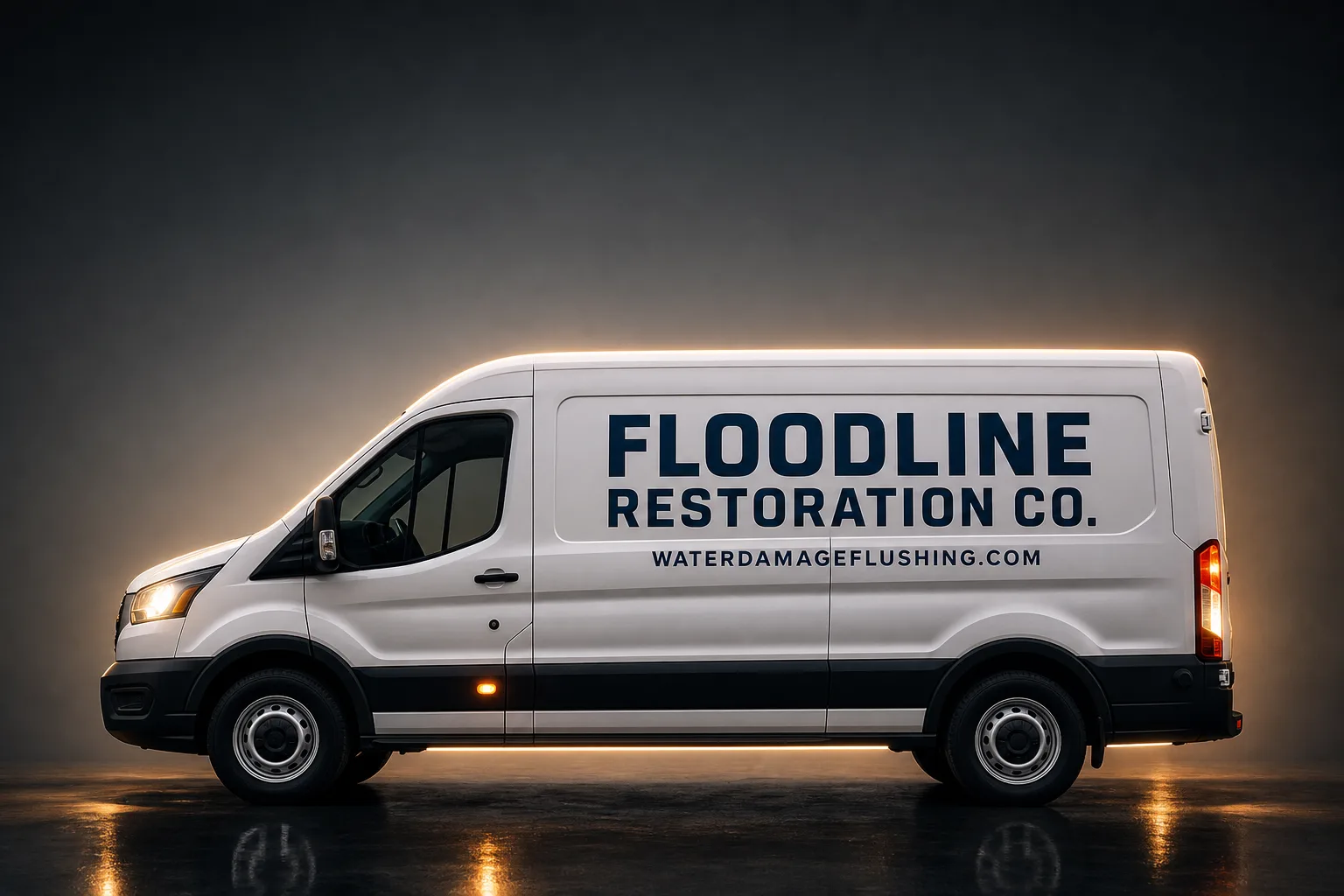
Free visual inspection and a written scope of work before any mitigation begins - photos, moisture readings, and drying logs go in your claim file
The scope we write is the scope we bill. Anything new gets shown to you, in writing, before we touch it.
Storm responseSewage cleanup
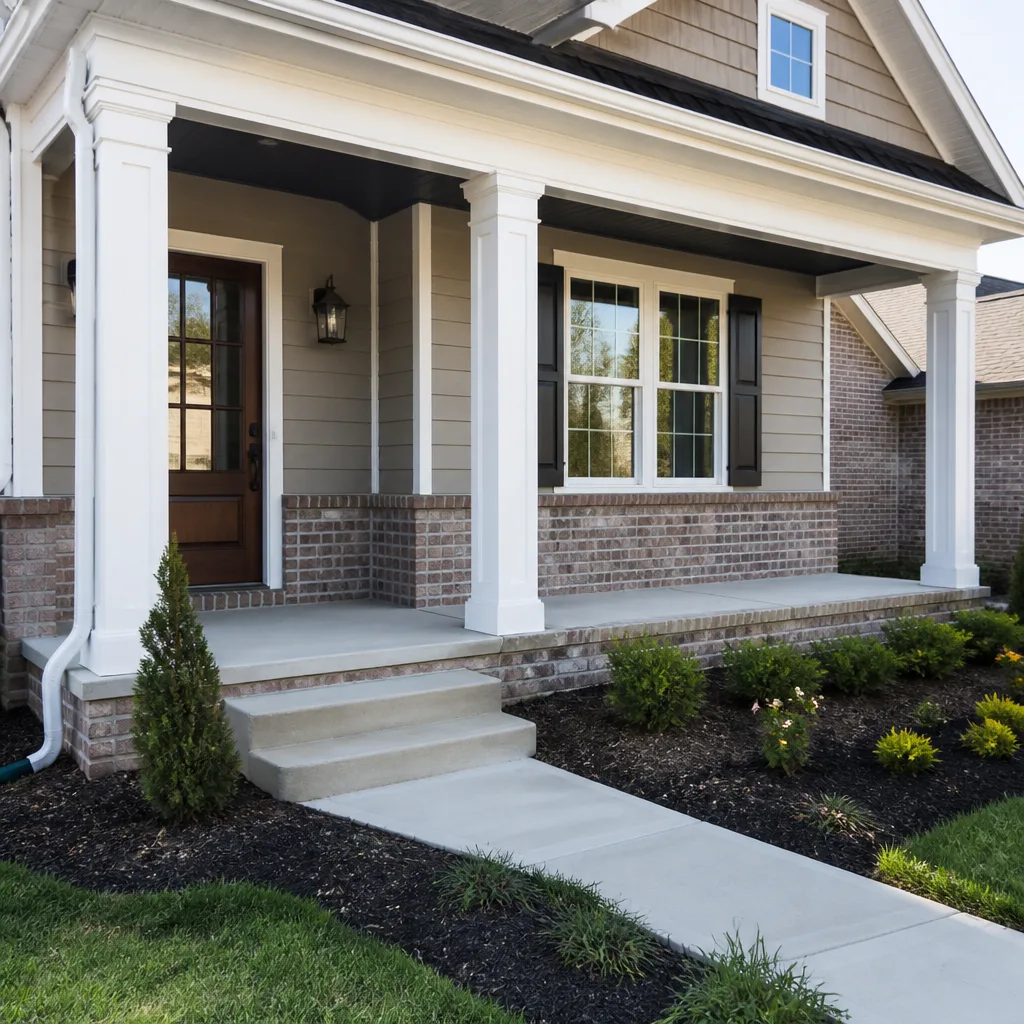
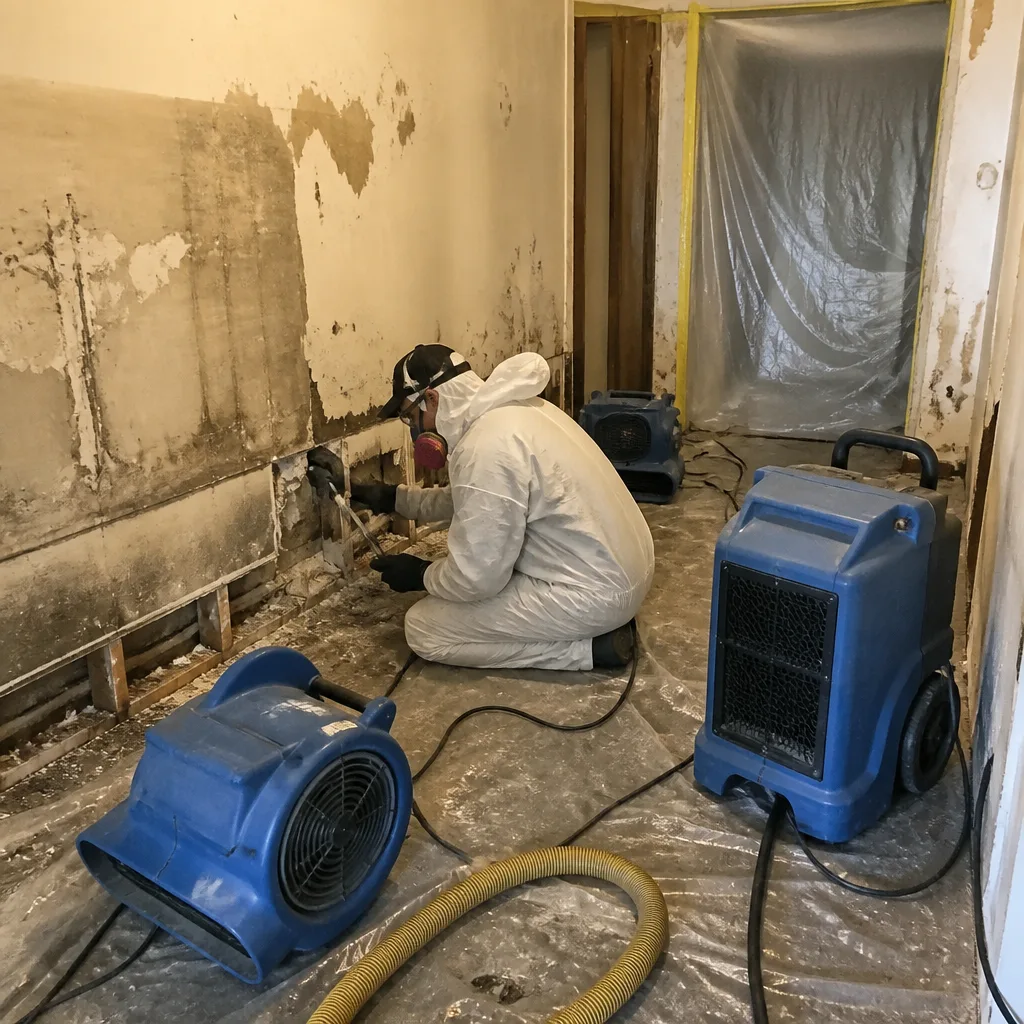 Before
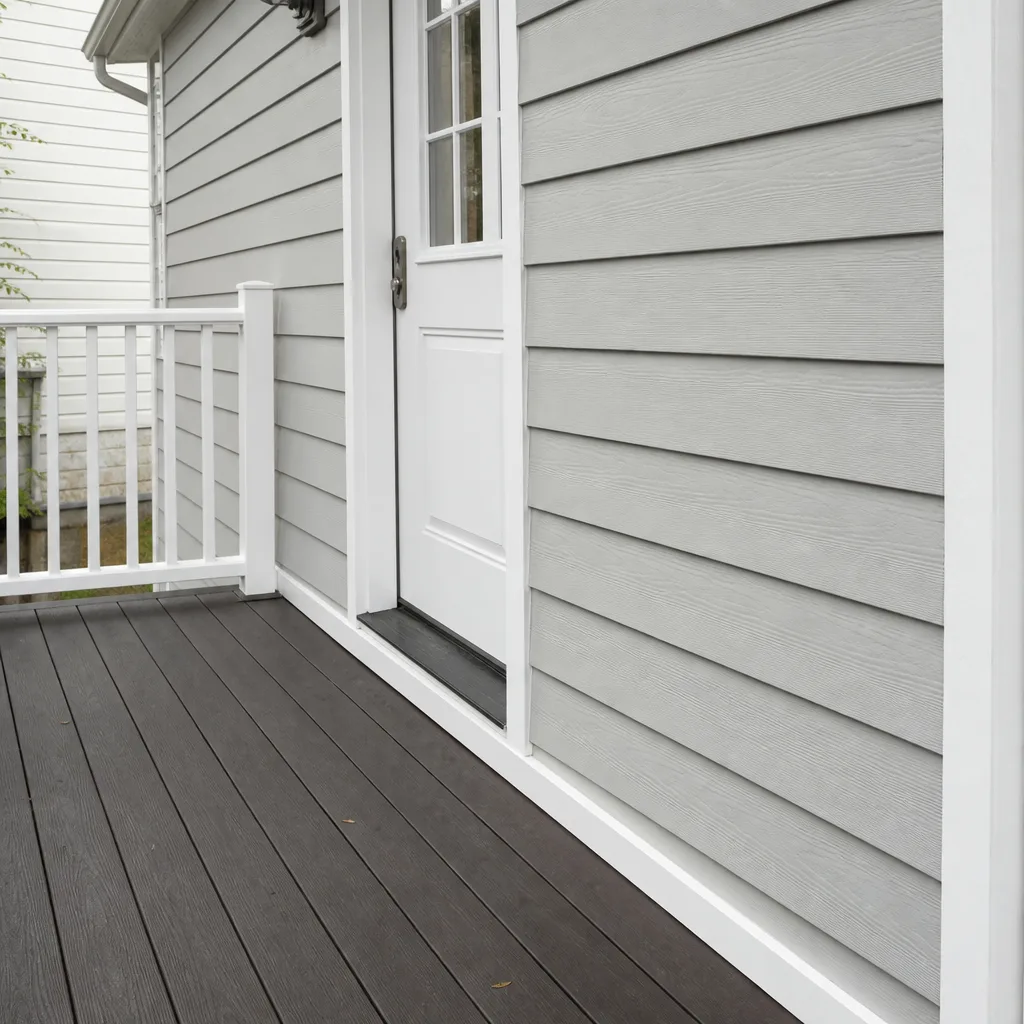 After
After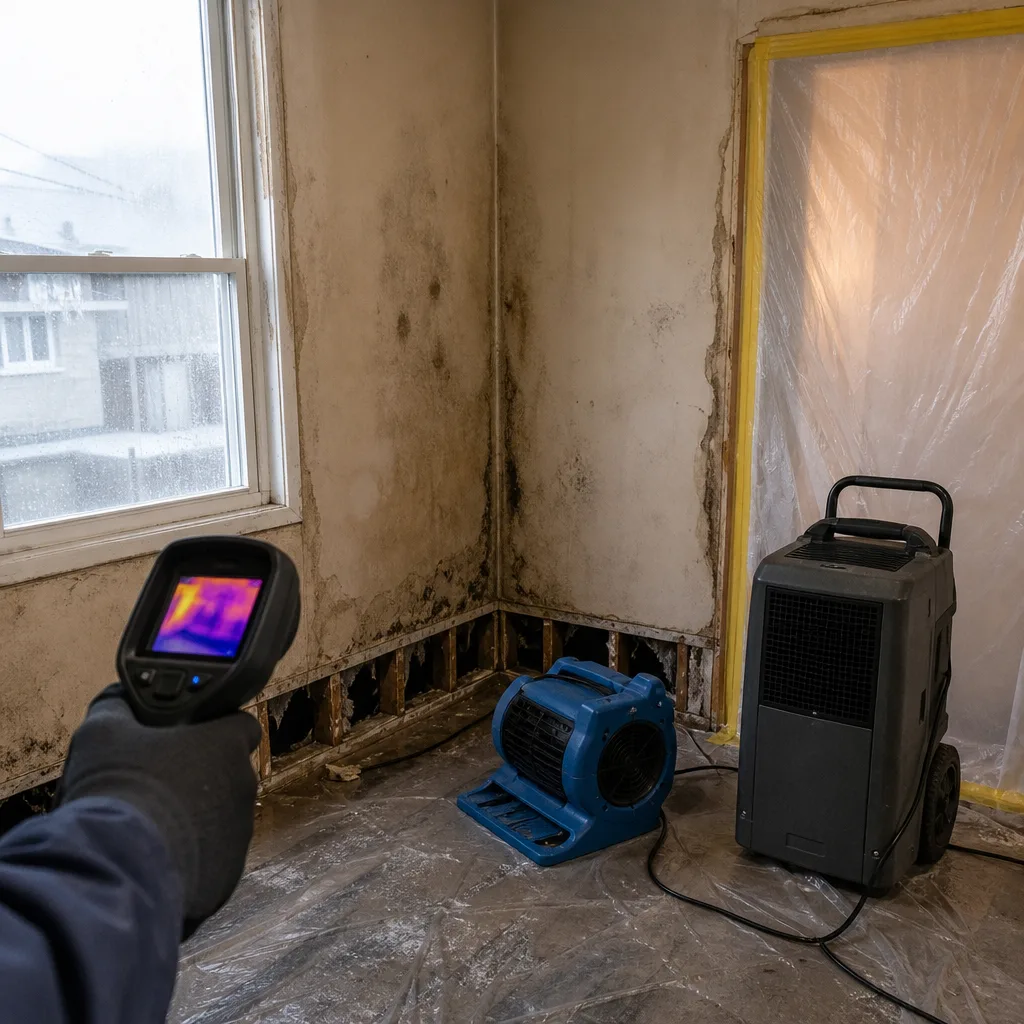 Before
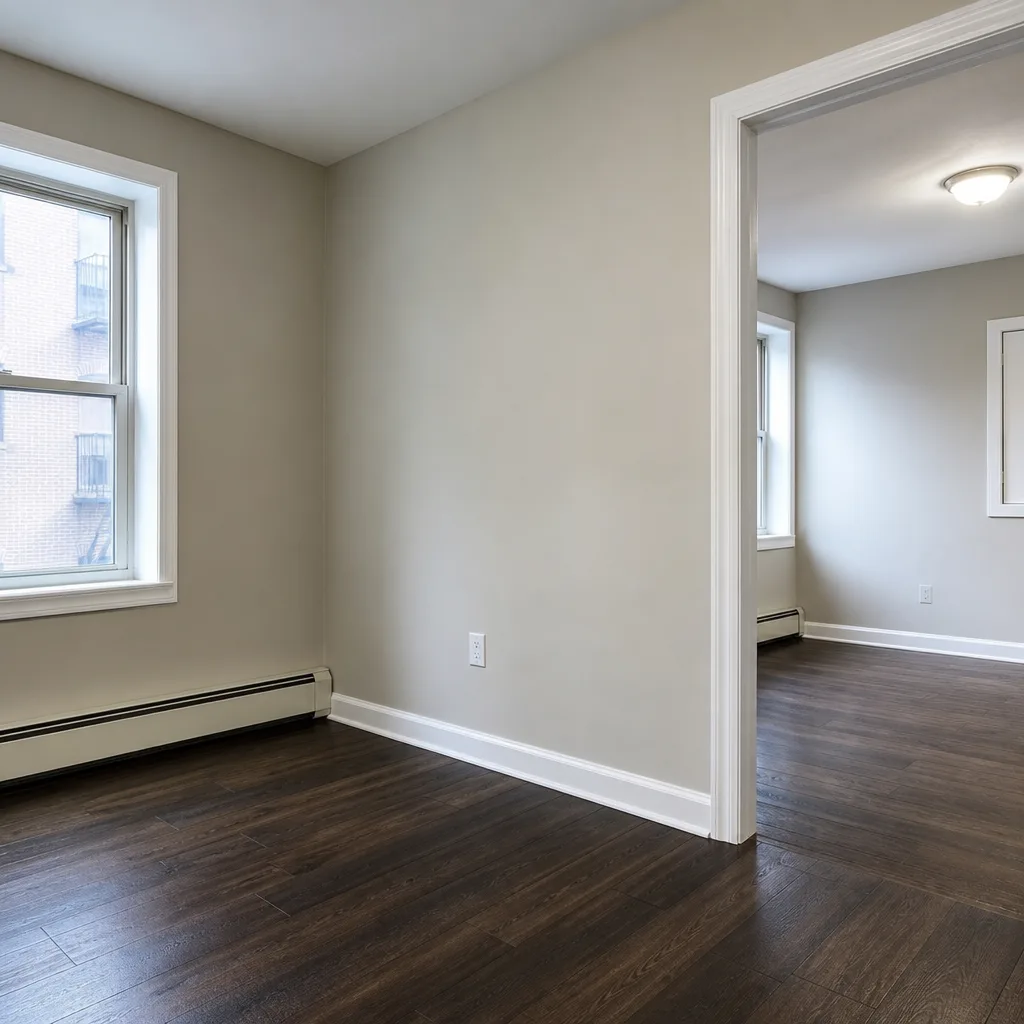 After
After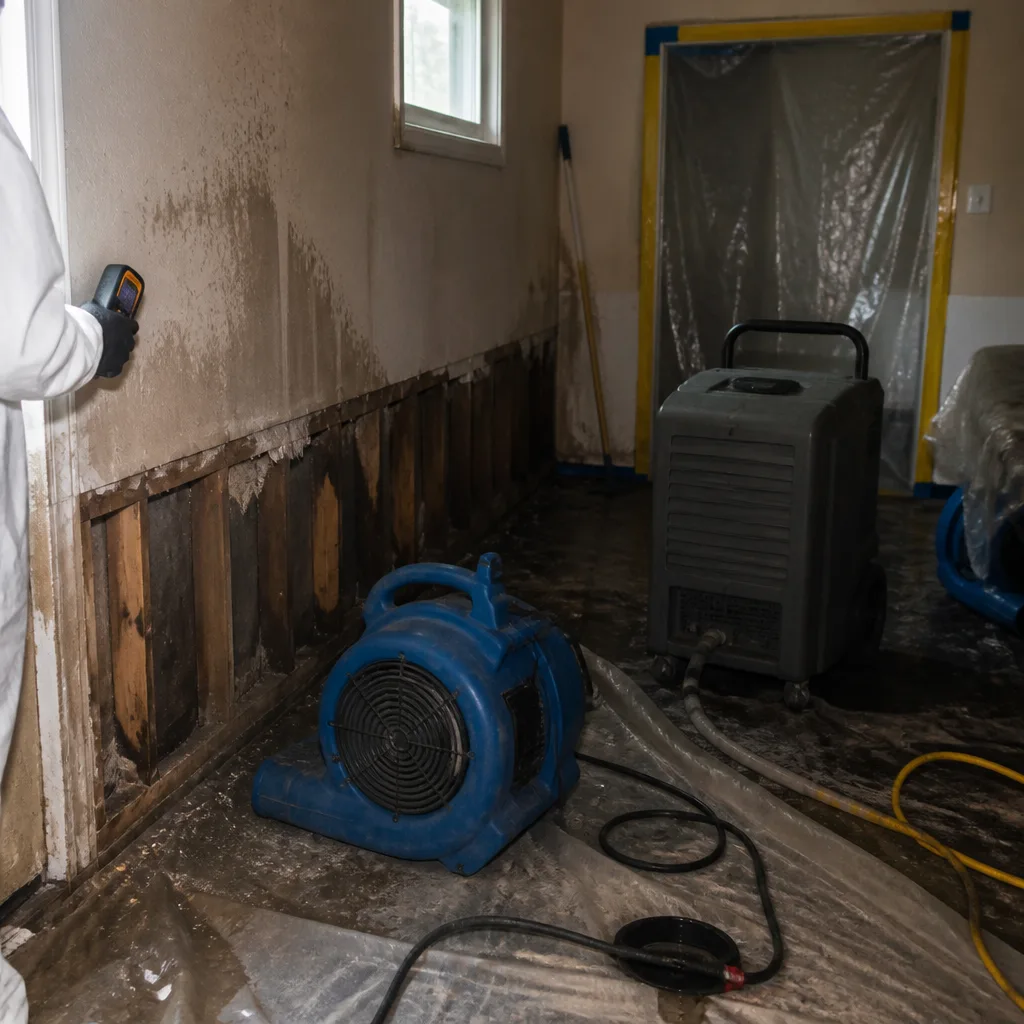 Before
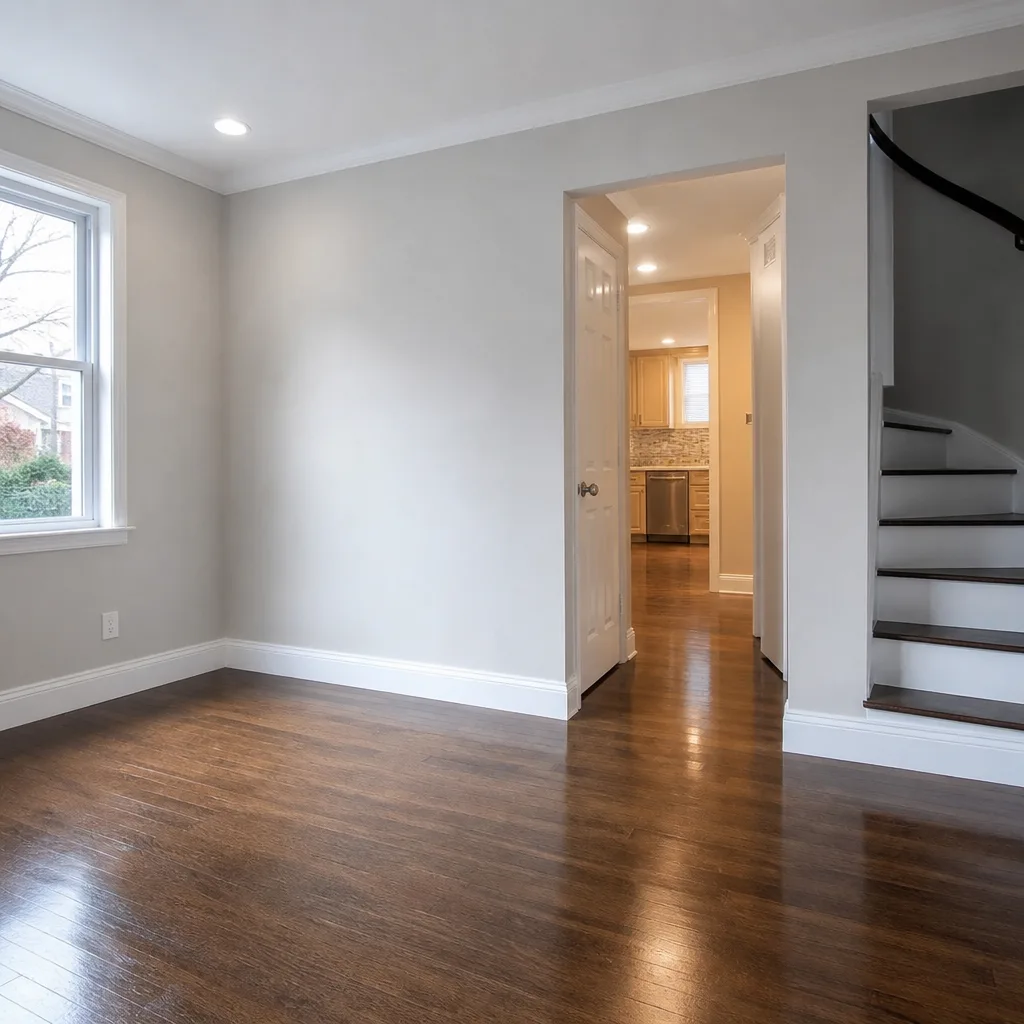 After
After24/7 Emergency Mold Remediation in Elmhurst
Mold remediation in Elmhurst typically runs $1,800-$6,500 for a contained basement project, and the sooner containment starts the less wall and framing has to come out. If you’ve got water in a below-grade space in 11373 or 11380, call (518) 872-6111 right now. A live dispatcher answers at any hour, and we’ll have a certified crew on your block within 45 minutes for a free visual inspection.
We’ve been doing this in Elmhurst long enough to know that mold here rarely starts as a one-off leak. It starts with a surcharged combined sewer and a shared party wall. Our team is standing by around the clock, every day of the year, with the equipment already loaded. You won’t leave a message. You’ll talk to a person who knows the difference between Category 1 and Category 3 water and can tell you over the phone whether you’re looking at a cleanup or a full containment job.
Understanding Mold Remediation Severity in Elmhurst Properties
Not every mold situation calls for the same response. Here’s how we classify severity in Elmhurst’s 1920s-1950s attached brick row houses and small multi-family buildings:
- Level 1: Surface contamination. Less than 10 square feet of mold on non-porous surfaces like painted drywall or tile. This is a cleaning job, not a demolition job.
- Level 2: Porous material saturation. Mold has grown into drywall, carpet, or insulation. Those materials come out. We set up containment with HEPA air scrubbers running negative pressure so spores don’t spread through the rest of the structure during removal.
- Level 3: Water-damaged masonry and hidden cavities. When sewage-laden water from a surcharged combined sewer sat inside wall cavities or behind vapor barriers, mold grows where you can’t see it. We cut inspection holes, run moisture mapping with thermal imaging, and track drying with daily hygrometer readings until the masonry drops below 15% moisture content.
- Level 4: Cross-property migration. In Elmhurst, shared brick party walls mean your neighbor’s flood can become your mold problem. This severity level requires a multi-address scope, NYC Department of Buildings permits, and coordination with the adjacent property owner.
Elmhurst’s housing stock makes hidden mold more likely than in newer construction. Original cast-iron waste lines, minimal sub-slab waterproofing, and finished basements above aging sewers mean moisture doesn’t always show itself before spores colonize. If you smell must but can’t see water, don’t wait. Call us. We’ll map the moisture that isn’t visible yet.
Why Elmhurst Property Owners Choose Floodline Restoration Co.
- 45-minute response commitment across Elmhurst. We dispatch from our metro office straight into 11373 and 11380. When a crew gives you an ETA, they keep it.
- Live answer, 24 hours a day, 7 days a week. A real person picks up at 2 a.m. Not a recording. Not a call center in another state. Someone who can schedule a crew while you’re still on the phone.
- IICRC-certified technicians trained to WRT and AMRT standards. Our crews are background-checked, uniformed, and carry the certifications that matter for water damage, mold remediation, and applied structural drying.
- Free visual inspection before any work is scoped. You get an honest assessment of what’s actually wrong. If you don’t need full remediation, we’ll tell you that. The 90-Day Done Right Promise means we’re not going to oversell a job and then have to eat the correction.
- Direct insurance billing. We write the estimate in industry-standard format, submit it to your carrier, and talk to the adjuster directly. You don’t play messenger.
- One team from first extraction to finished rebuild. The same crew that reads the moisture map on day one handles daily readings, hands the drying log to you and your insurer, and rebuilds what needs rebuilding. No mid-job handoff to a different company.
Our Mold Remediation Process
Inspection & Assessment
We inspect the affected area, identify the moisture source, and classify the water by IICRC standards. In Elmhurst, any basement flood is treated as Category 3 water until proven otherwise. We use thermal imaging and moisture meters to find what’s hidden behind walls and under flooring.
Containment & Stabilization
We set up physical containment with 6-mil poly sheeting and run HEPA air scrubbers under negative pressure. This stops spores from moving into the rest of the house during removal. We also stabilize any standing water and shut off the moisture source.
Drying & Dehumidification
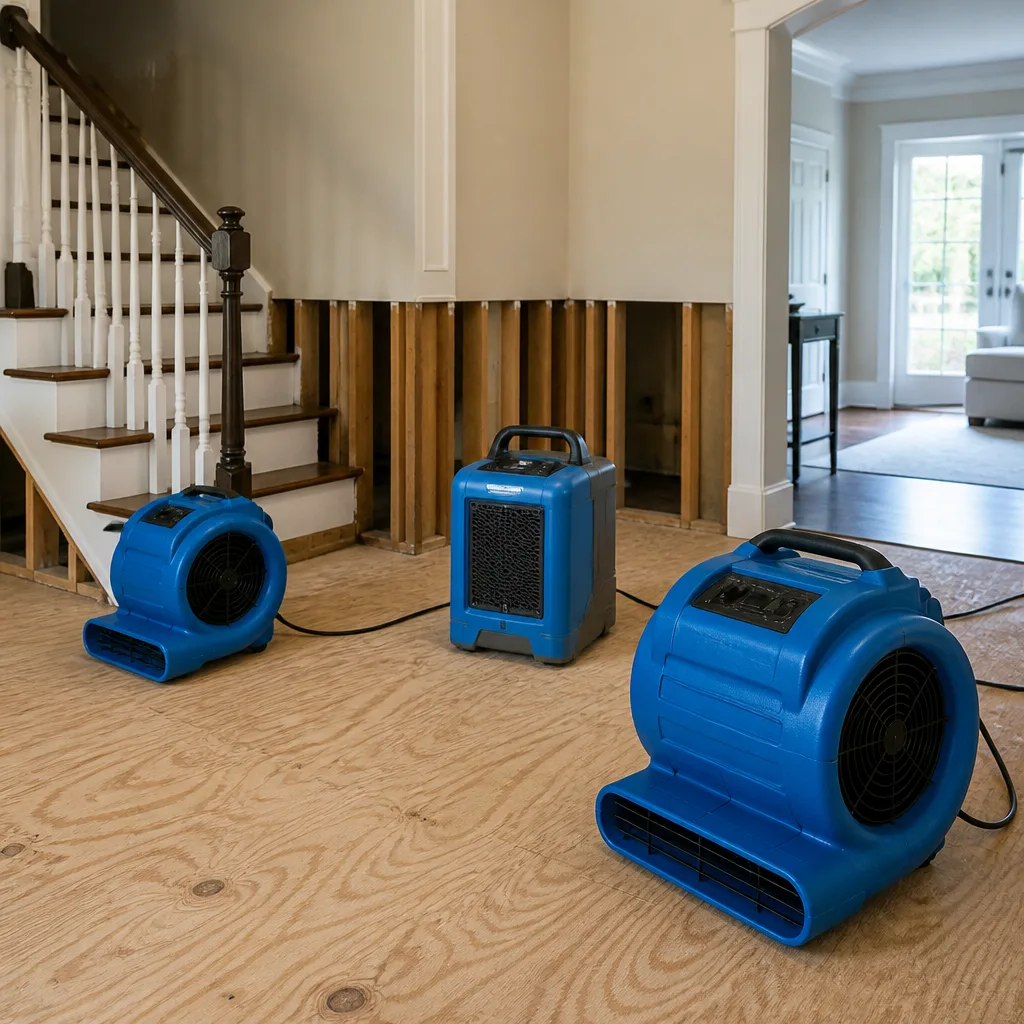
XPOWER air movers and Dri-Eaz dehumidifiers go in. We place them based on a moisture map, not guesswork. Daily hygrometer readings are logged until structural materials meet the dry standard. On shared masonry party walls, this often takes longer than a standard single-family frame wall.
Cleaning & Antimicrobial Treatment
Affected framing and masonry get wire-brushed, HEPA-vacuumed, and treated with an EPA-registered antimicrobial. This is not a wipe-down. It’s a mechanical removal of spores from porous surfaces followed by treatment that prevents regrowth while drying completes.
Air Quality Restoration
HEPA air scrubbers stay running through the drying period. Before we call the job complete, we check the air exchange rates and ensure the space is no longer circulating elevated spore counts. If post-remediation verification testing is part of your scope, we coordinate with a third-party lab.
Repairs & Restoration
We rebuild what came out: drywall, trim, flooring, insulation. The same Floodline crew does the reconstruction, so there’s no gap between remediation and buildback. You get the 90-Day Done Right Promise in writing before we finish, not after you find a problem.
Need Emergency Mold Remediation in Elmhurst Now?
Crews minutes away, answering live 24 hours a day. The sooner we start, the less it costs.
Working With Your Insurance Company
Most Elmhurst mold claims are tied to a covered water event: a sewer backup, a sudden pipe failure, or storm-driven flooding. Where coverage extends to mold remediation depends on your policy and whether the water damage was sudden and accidental. We document everything from the first hour so your carrier sees a complete, defensible claim file. Our team takes photos room by room, logs daily moisture readings, and writes a line-item scope in the same format insurers expect. We talk to the adjuster directly, and we invoice the carrier so you’re not fronting money waiting for reimbursement.
What We Provide Your Insurer
- Thorough documentation of the loss
- Photos of all damage, room by room
- Moisture readings and drying logs
- A detailed, line-item scope of work
- Direct coordination with your carrier
Built for Elmhurst’s Loss Calendar
Elmhurst’s mold season doesn’t follow a simple calendar. Here’s what our crews actually see through the year in 11373 and 11380.
Summer thunderstorm season, June through September. The biggest mold driver. Intense convective storms overwhelm Elmhurst’s aging combined sewer, which surcharges into below-grade spaces. Sewage-laden water sits in basements, saturated drywall wicks it up, and mold starts colonizing within 48 to 72 hours. After catastrophic events like Hurricane Ida in September 2021, we get calls from entire blocks, often the same day, and we run multi-property dispatches.
January and February. Deep freezes burst supply lines and cast-iron waste pipes. The water is typically Category 1 (clean), but when it sits in a finished basement with no one home, it converts to a mold situation quickly. Row houses with original plumbing are especially vulnerable because a frozen riser in one unit can back up the whole line.
Spring thaw. As frozen ground releases, water finds its way through slab cracks and foundation penetrations in Elmhurst’s low-lying, flat terrain, which has limited natural drainage. We see a wave of musty-smell calls in March and April as homeowners notice what winter left behind.
Mold Remediation Across Elmhurst’s Neighborhoods
Elmhurst is not uniform. Different blocks have different building stock, different drainage, and different mold patterns. Here’s how we approach the neighborhoods we serve.
In the blocks off Broadway and Whitney Avenue, we mostly see semi-detached brick row houses from the 1920s and 1930s. These buildings share side walls with their neighbors, and when a basement floods on one side of the party wall, moisture migrates through the common masonry. Remediation here often means accessing the neighbor’s side of the wall, which requires coordination and sometimes NYC DOB permits.
Along Grand Avenue and Queens Boulevard, commercial storefronts sit above residential units in mixed-use buildings. Water intrusion at the storefront level travels down through floor assemblies into apartments. Mold jobs here often involve two tenants, one landlord, and an insurer sorting out who pays for what. We handle the documentation and the direct adjuster communication.
The residential streets east of Junction Boulevard toward 74th Street and 75th Street are dense with attached two-to-four-family buildings put up in the 1940s and 1950s. Finished basements are common, many with informal sleeping quarters. A sewer backup here is not just a cleanup, it’s a potential occupancy and liability issue. We’ve handled enough of these to know what triggers a DOB inspection and how to keep the remediation moving while the paperwork gets sorted.
Around Elmhurst Park and Moore Homestead Playground, the blocks are a mix of larger apartment buildings and older frame houses with exposed cellars. Crawl space moisture is the main repeat problem. We run crawl space treatments that include vapor barrier installation, dehumidification, and re-routing of downspouts to keep water away from the foundation.
Every route matters. When you call Floodline, the crew dispatched to you knows your block, not just your address.
Specialized Mold Remediation Services We Offer in Elmhurst
Mold Inspection & Testing
Before we remove anything, we find out what’s actually there. Our inspection includes moisture mapping with thermal imaging and hygrometers, visual inspection of all accessible cavities, and air and surface sampling when the scope calls for it. In Elmhurst’s row houses, we pay special attention to party wall cavities and below-grade floor assemblies because those are where hidden colonies live. Sampling goes to a third-party lab so you get an independent number, not ours.
Black Mold Remediation
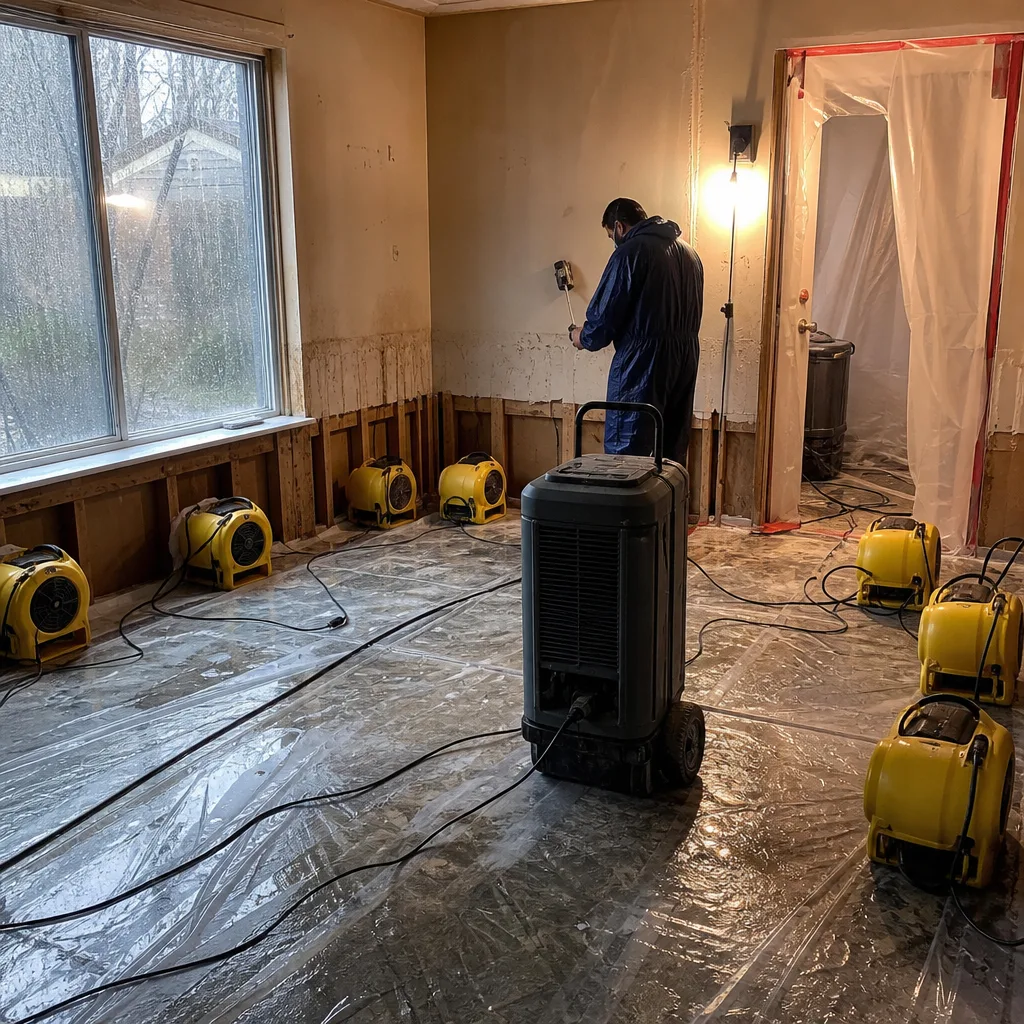
“Black mold” usually means Stachybotrys chartarum, which grows on chronically wet cellulose: drywall, cardboard, ceiling tile. It doesn’t appear overnight; it appears after a water source has been feeding the material for a week or more. Our black mold protocol includes full containment, HEPA air scrubbing, careful removal of saturated materials, and antimicrobial treatment of framing. We handle it as a health issue first and a construction issue second.
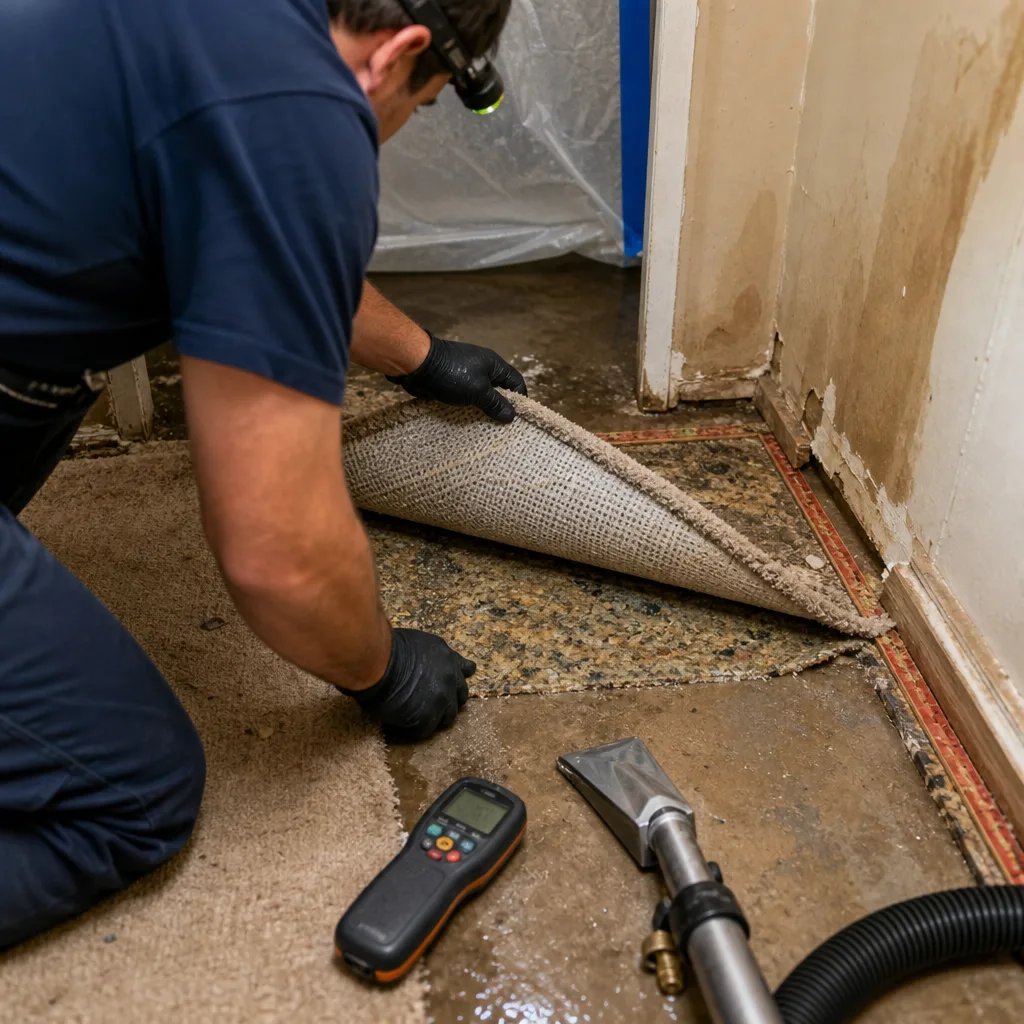
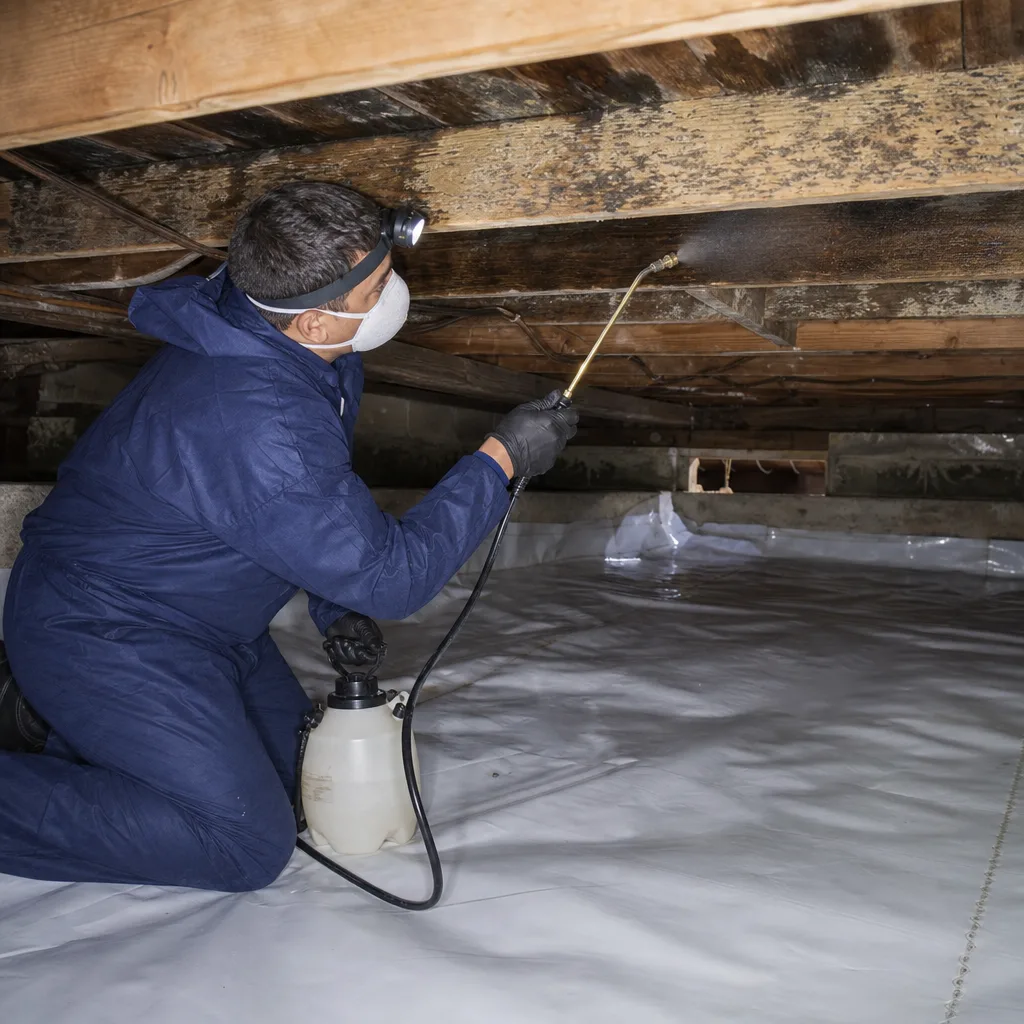
Moisture & Humidity Control
Mold can’t grow without water. In Elmhurst’s attached buildings, chronic humidity often comes from a combination of poor drainage, missing vapor barriers, and basement spaces that never fully dry. We install crawl space encapsulation, grade the soil away from foundations where accessible, and set up dehumidification systems sized correctly for the space. If the water source isn’t fixed, mold comes back. We don’t pretend otherwise.
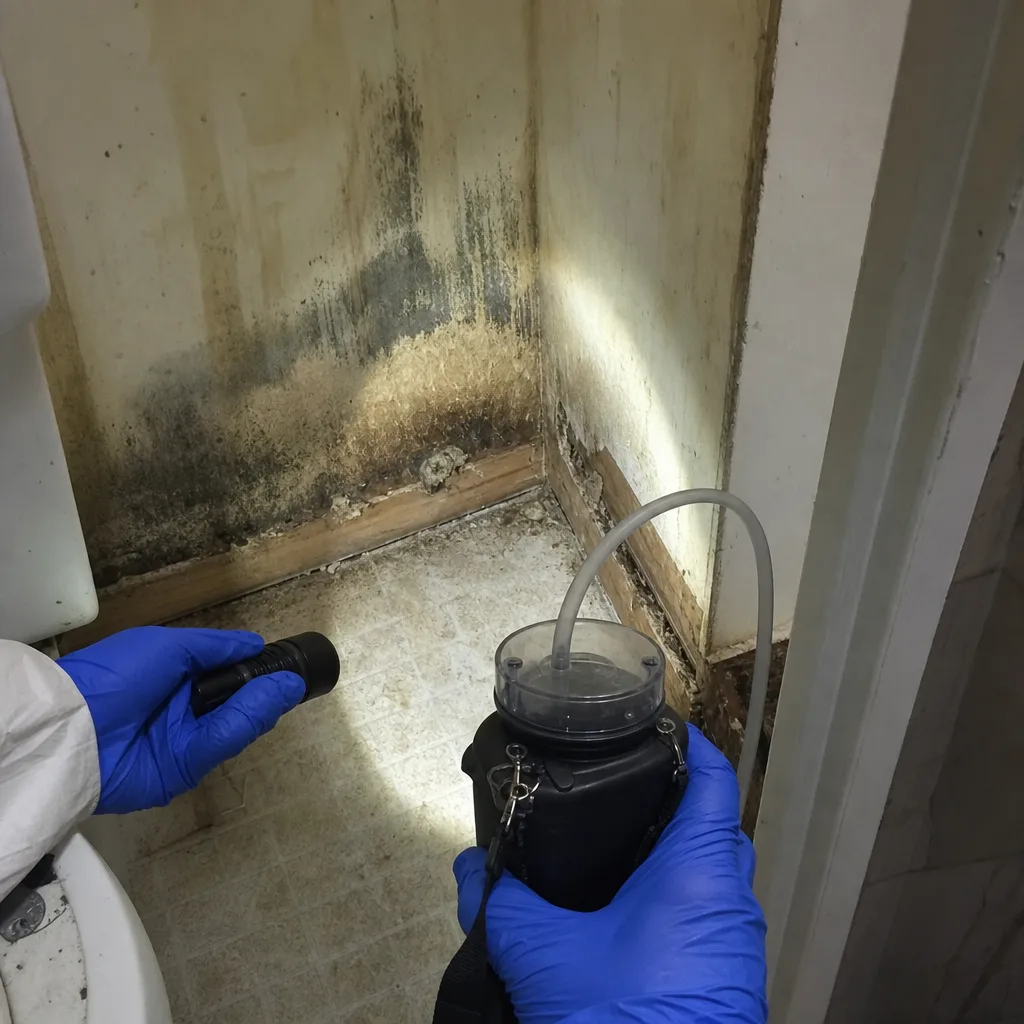
Air Quality Restoration
After the contaminated materials are out and the drying logs show the structure is within the dry standard, air quality becomes the next question. We run HEPA scrubbers, clean all horizontal surfaces, and verify air exchange rates before we start rebuild. For clients who need it, we coordinate post-remediation verification testing with a third-party lab so you have independent confirmation the air inside is cleaner than outside. This matters especially in Elmhurst, where one neighbor’s unresolved mold can push spores back through a shared wall.
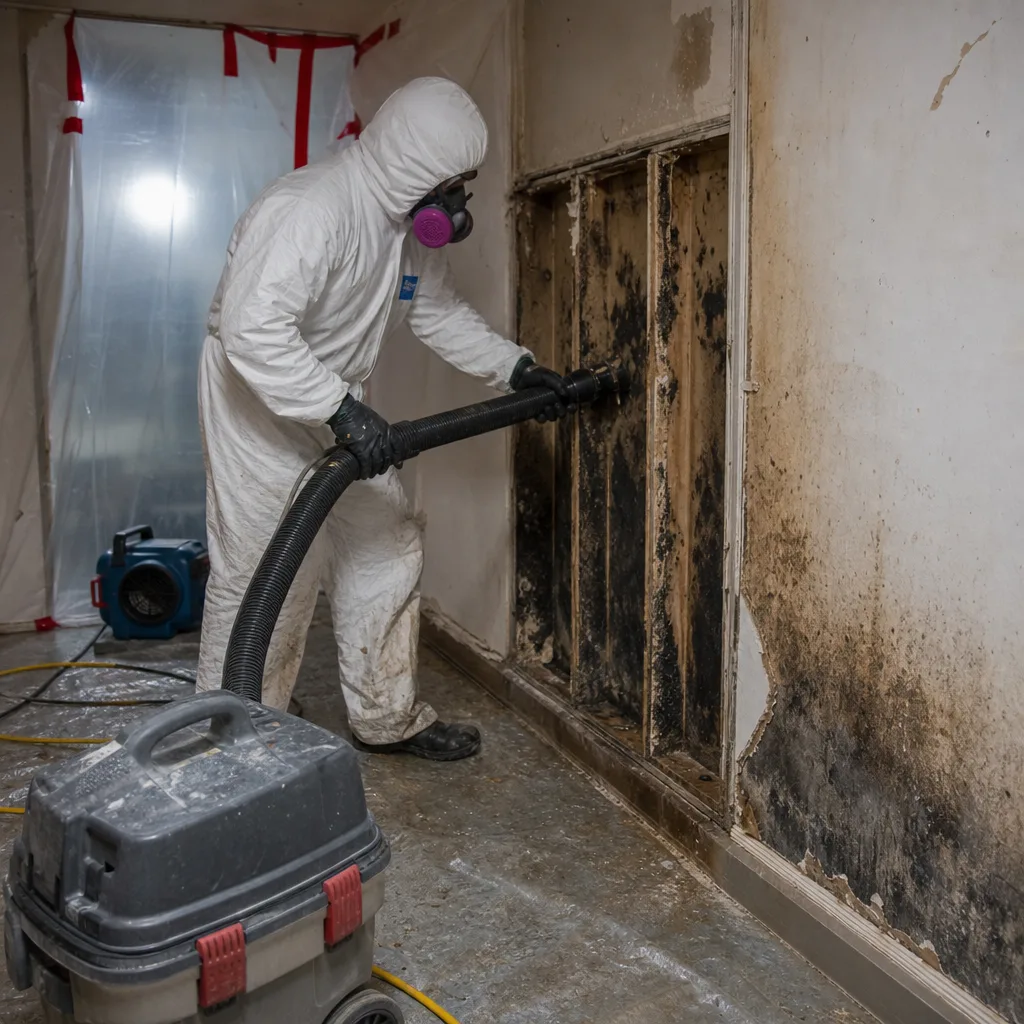
Mold Removal
This is the physical work: cutting out contaminated drywall, removing saturated insulation, lifting affected flooring, and packaging all of it for proper disposal. We work under containment, in full PPE, with negative pressure running the entire time. Mold removal in a 1930s Elmhurst semi-detached means we sometimes have to open an inspection port through to the neighbor’s side of the party wall to confirm the mold hasn’t crossed. We handle the access conversation with the adjacent owner.
What happens when you call
- 1
A real person answersNo phone trees - you reach a local pro.
- 2
You get an upfront price rangeHonest numbers before anyone is dispatched.
- 3
A background-checked tech heads outLicensed & insured, dispatched right away.
- 4
You approve before work beginsNothing starts until you say go.
Mold Remediation Costs in Elmhurst, NY
Here’s what mold remediation actually costs in Elmhurst, based on the jobs we’ve run in 11373 and 11380:
| Scope | Typical Range |
|---|---|
| Surface cleaning, small area (under 10 sq ft) | $500-$1,200 |
| Contained mold removal, one room | $1,800-$3,500 |
| Full basement remediation with drying | $4,000-$6,500 |
| Crawl space treatment with encapsulation | $3,000-$8,000 |
| Multi-property party wall remediation | $8,000-$20,000+ |
What moves the price: the size of the contaminated area, whether we have to open and dry a masonry party wall, the amount of demolition and rebuild needed, and whether asbestos or lead abatement is required because of the building’s age. If your policy covers water damage from a sudden event, remediation is often included. If the mold grew slowly over time without a covered cause, you may be looking at out-of-pocket. The free inspection answers this. We document enough for your adjuster to make a clear determination, and we’ll give you a written line-item scope before any work starts.
Senior and veteran homeowners get 5% off, always. Any repair over $250 gets $50 off. Call (518) 872-6111 for a free estimate.
We Also Serve Cities Near Elmhurst
Our crews dispatch to Elmhurst and the surrounding Queens communities every day. We also provide Mold Remediation in Corona, Jackson Heights, Middle Village, and East Elmhurst. Same live dispatch, same 45-minute response commitment, same written guarantee.
Serving Elmhurst, NY - Our Local Coverage Area
We’re based in the Elmhurst area and know this community well. Use the map below to see our service coverage - if you’re nearby, we can almost certainly help.
Elmhurst Mold Remediation Questions, Answered
How do Elmhurst’s shared party walls change the mold remediation scope of work?
Shared party walls change the scope in one essential way: you can’t stop at your unit boundary. In Elmhurst’s attached 1920s-1950s brick row houses, a flood on one side of a common wall sends moisture through the masonry to the other side. If we only dry your side, the mold regrows weeks later from the neighbor’s still-wet brick. A complete scope includes moisture mapping of the common wall, an inspection port to the adjacent side, and often coordination with the neighbor’s insurer or landlord. This is the difference between a $3,000 cleanup and a $12,000 multi-address restoration. Call (518) 872-6111 and we’ll tell you which one you’re looking at.
After an Ida-type storm, how quickly should I get mold testing in my Elmhurst basement?
Don’t wait for testing. If your basement took sewage-laden water, start drying within 24 hours and have a professional inspect within 48. Mold colonizes saturated drywall in 2 to 3 days, and Elmhurst’s combined sewer backups are all Category 3 water, meaning the water itself carried pathogens. Our crew can be on your block in 45 minutes with air movers and dehumidifiers running the same visit. Formal testing with a third-party lab makes sense after drying is underway; it documents the spore counts for your insurance file and confirms whether the air quality is safe for your family to stay in the house.
Why do Elmhurst mold jobs so often turn into multi-property restorations?
Because when the combined sewer surcharges on a low-lying block in 11373, it doesn’t flood one house. It floods every below-grade space connected to the same sewer lateral. Shared masonry party walls then carry the moisture between buildings. We’ve shown up to a single address and found three neighboring basements with Category 3 water sitting in them. We run multi-property dispatches in these situations, with one project lead coordinating all addresses, one line-item scope per property, and direct communication with each insurer. It keeps the paperwork straight and the drying moving.
What should I expect if my Elmhurst basement was an unpermitted sleeping area and now has mold?
Expect the remediation to trigger a NYC Department of Buildings review if the work opens walls or changes occupancy. Elmhurst has a substantial number of below-grade spaces used as sleeping quarters without legal certificates of occupancy. When mold remediation requires pulling permits, the unpermitted occupancy gets disclosed. We’ve handled this before. We don’t report tenants or call the DOB on a homeowner; we do prepare you for the likely inspection and keep the mold work moving while the occupancy issue is sorted. In some cases, we coordinate with the landlord and a housing attorney to sequence the work so displacement and liability are handled correctly.
How do you dry a shared brick party wall without tearing out the neighbor’s side?
We don’t always have to tear out the neighbor’s side at all. A recent job on a 1930s semi-detached in the 11373 blocks came after a summer cloudburst sent Category 3 water through a shared party wall and into a finished basement. We set XPOWER air movers and Dri-Eaz dehumidifiers within hours, ran moisture mapping across the common wall, and cut out saturated drywall up to the 4-foot flood line. Then we applied antimicrobial treatment and ran a structural drying program on the masonry itself, using the air movement on our side to draw moisture through the brick. The daily drying logs showed the masonry below 15% moisture content within nine days. No demolition on the neighbor’s side, no argument about who was paying for it.
Will my insurance cover mold remediation in Elmhurst?
Coverage depends on two things: whether the mold resulted from a covered water event, and whether your policy includes a mold remediation rider. Sewer backups and sudden pipe failures are often covered perils; slow leaks and chronic humidity usually are not. A flood from a storm surge may fall under separate flood insurance. We write scopes in industry-standard format, document the cause from the first hour, and submit directly to your carrier. If they push back, we give them the drying logs and photos that make your case. Call (518) 872-6111 and we’ll help you figure out what your policy actually covers before you commit to anything.
Can we stay in the house during mold remediation?
For small contained jobs, often yes. We set up physical containment with negative pressure so spores stay in the work area, not in your living space. For larger jobs, especially where sewage-related mold is present or where immunocompromised family members live, we recommend temporary relocation while the contaminated materials come out and the air scrubbers run. Every job is different. We’ll give you a straight answer at the inspection, not a sales pitch.
What should I do in the first 30 minutes after finding mold in my Elmhurst home?
Turn off any water source feeding it if you can do so safely. Don’t disturb the mold. Don’t spray bleach on it, don’t run a fan, don’t tear out drywall yourself because you’ll throw spores into the air and into rooms that weren’t contaminated. Close the door to the affected area, keep kids and pets away, and call (518) 872-6111. A live person will answer, and a crew will be on the way with containment and drying equipment. The faster you call, the less we have to tear out.
In Elmhurst’s attached brick row houses, mold from sewer-backup flooding doesn’t stay on one side of a wall. A single neighbor’s below-grade Category 3 water intrusion sends moisture and spores through common masonry, so remediation here routinely becomes a multi-address scope of work requiring NYC DOB permits and coordination across adjacent landlords. That’s not a complication we run from. It’s the job. Done right, and backed in writing.
Call Floodline Restoration Co. at (518) 872-6111 for a free visual inspection and a written scope before any work starts. We answer live, 24 hours a day. The line the water left is where we start.
Written by Curt Bowman, Owner at Floodline Restoration Co., serving Elmhurst and the greater Queens area since 2010.