

Free visual inspection and a written scope of work before any mitigation begins - photos, moisture readings, and drying logs go in your claim file
The scope we write is the scope we bill. Anything new gets shown to you, in writing, before we touch it.
Storm responseSewage cleanup
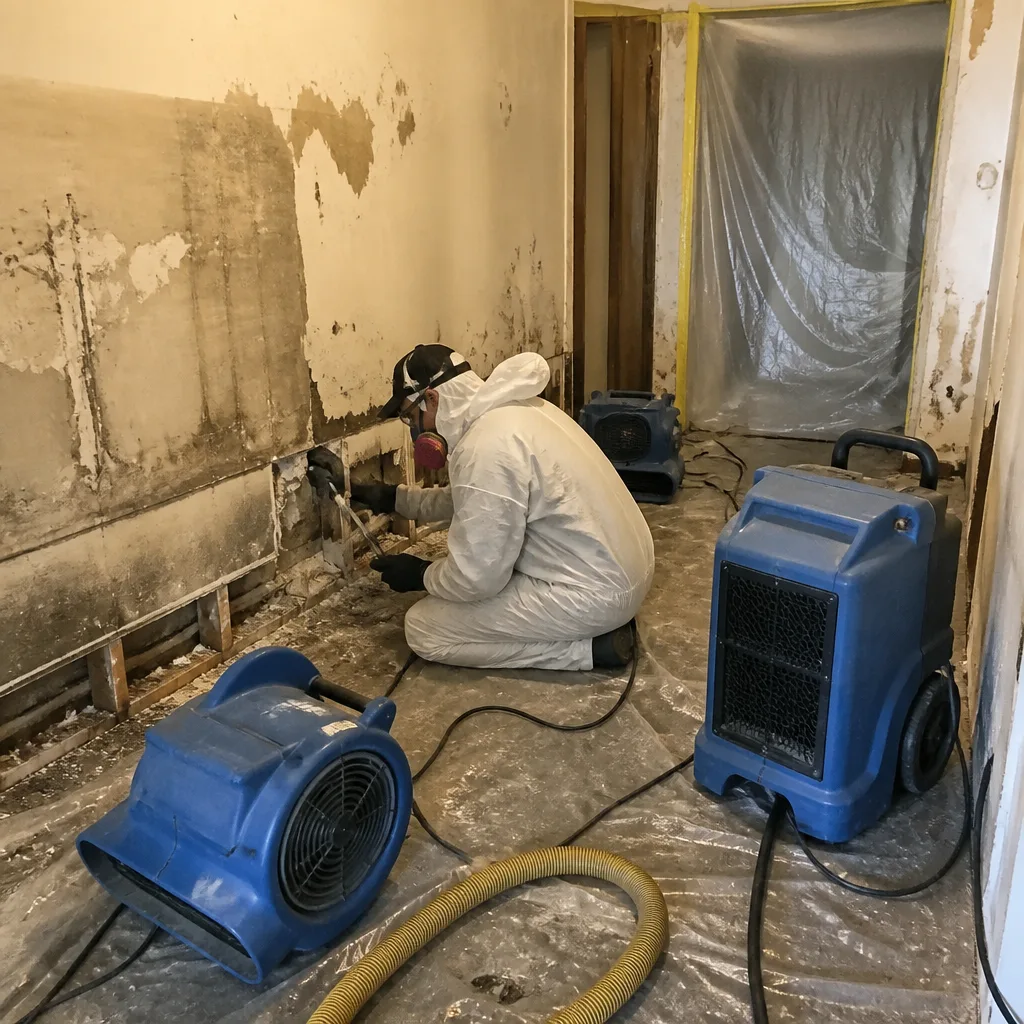 Before
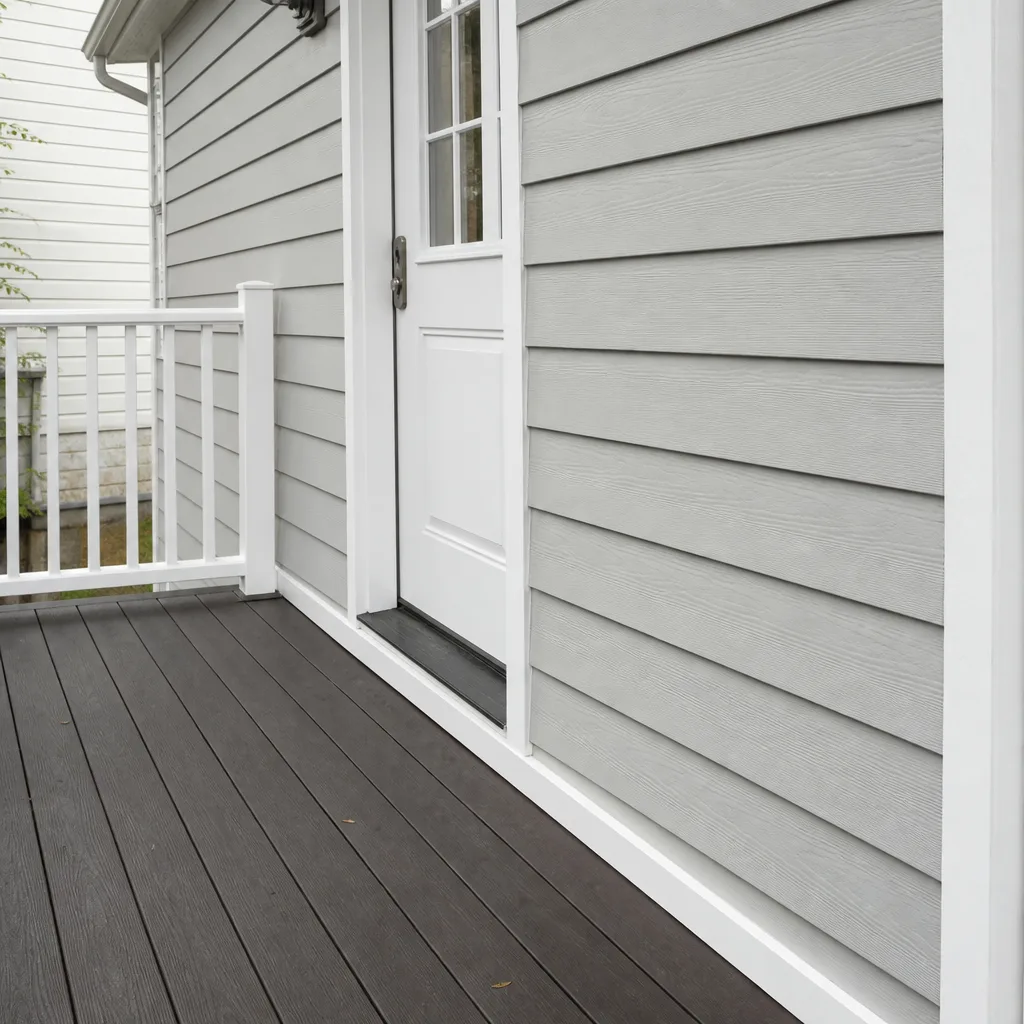 After
After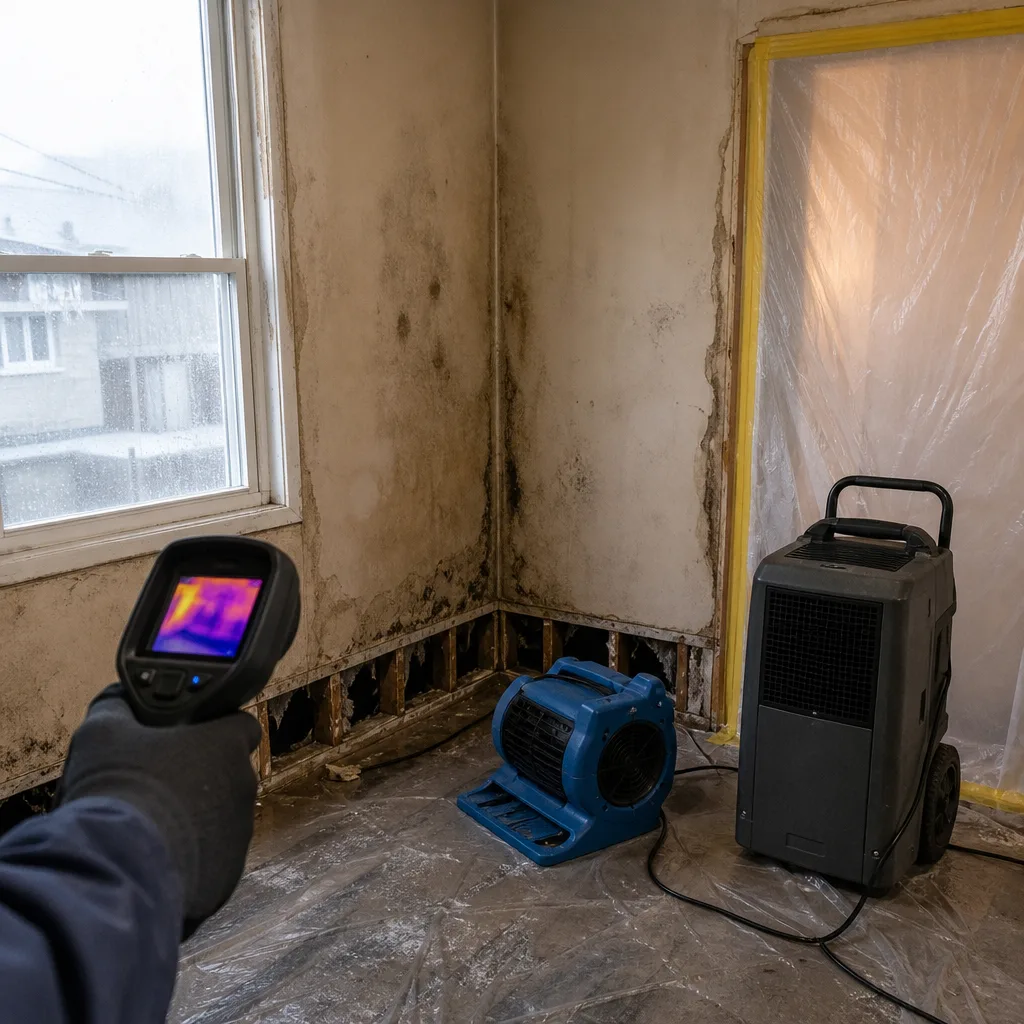 Before
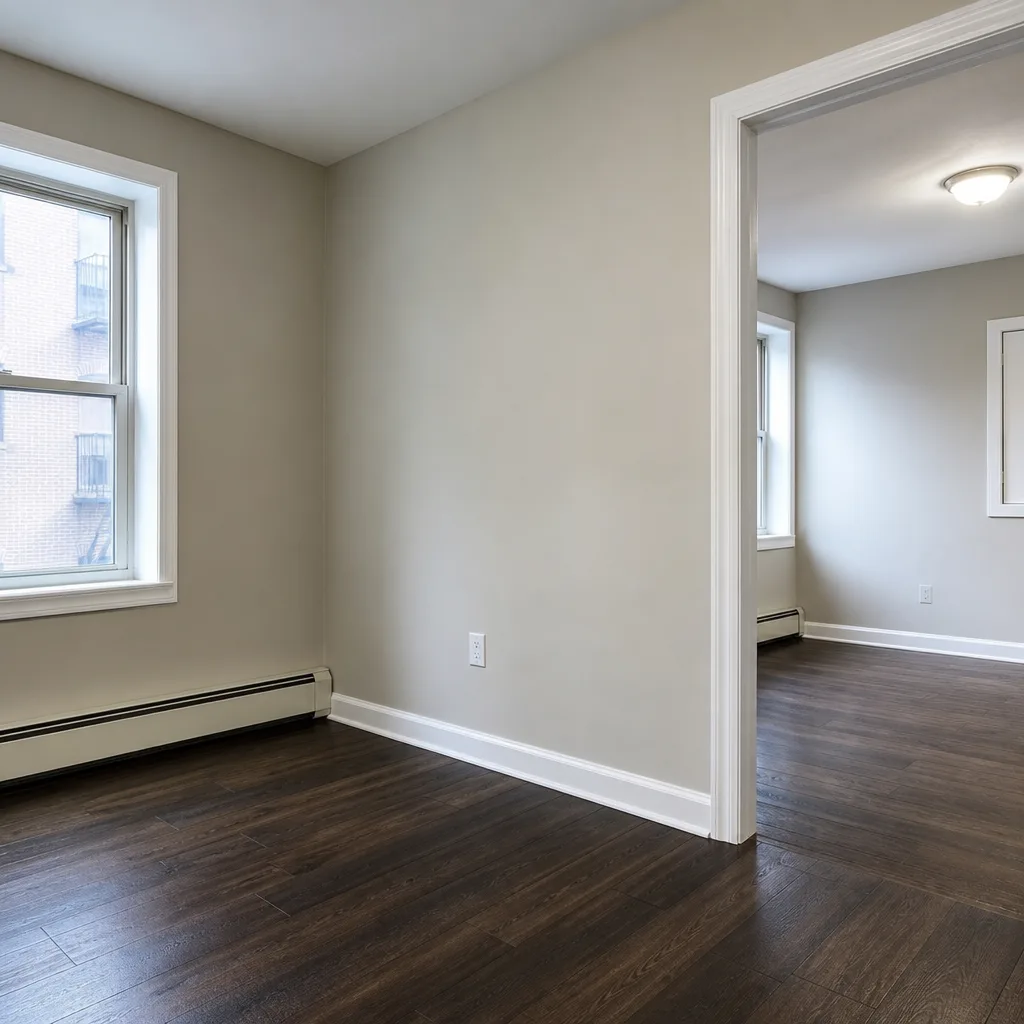 After
After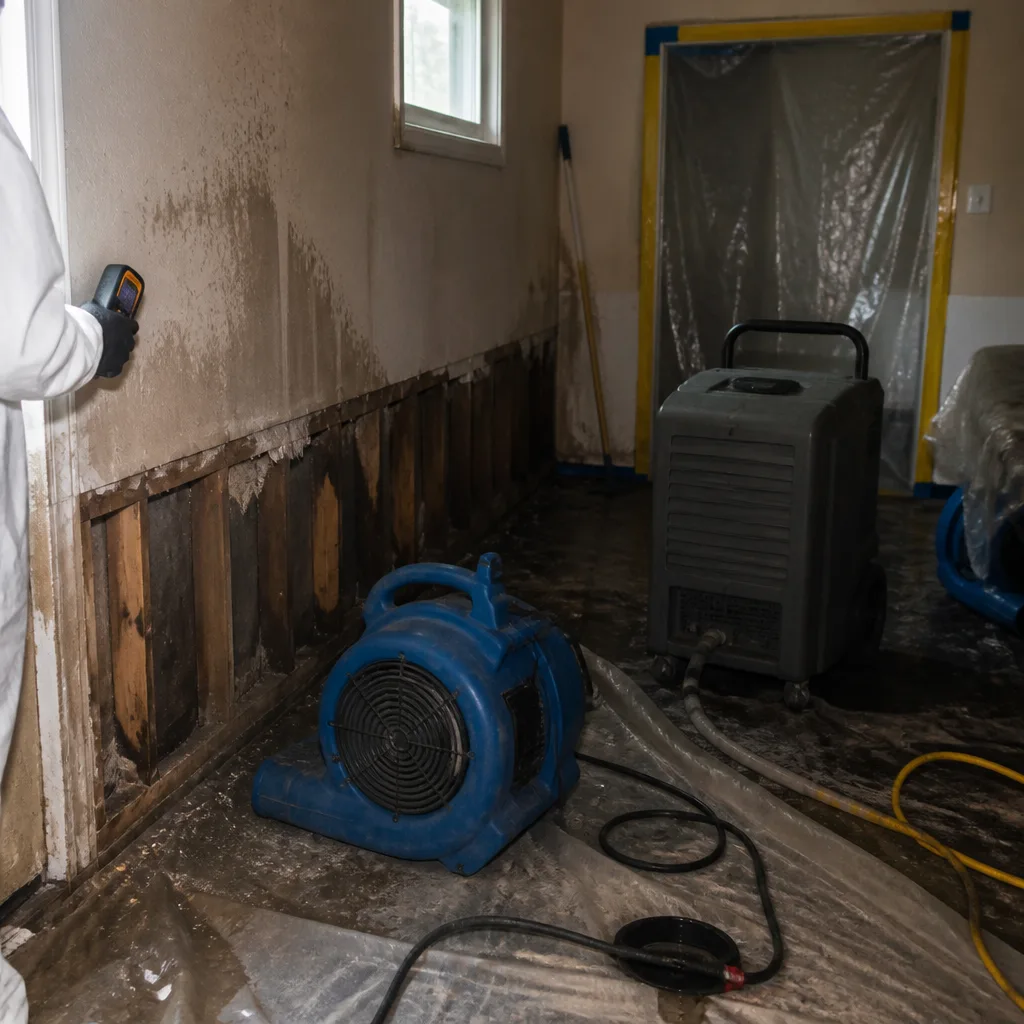 Before
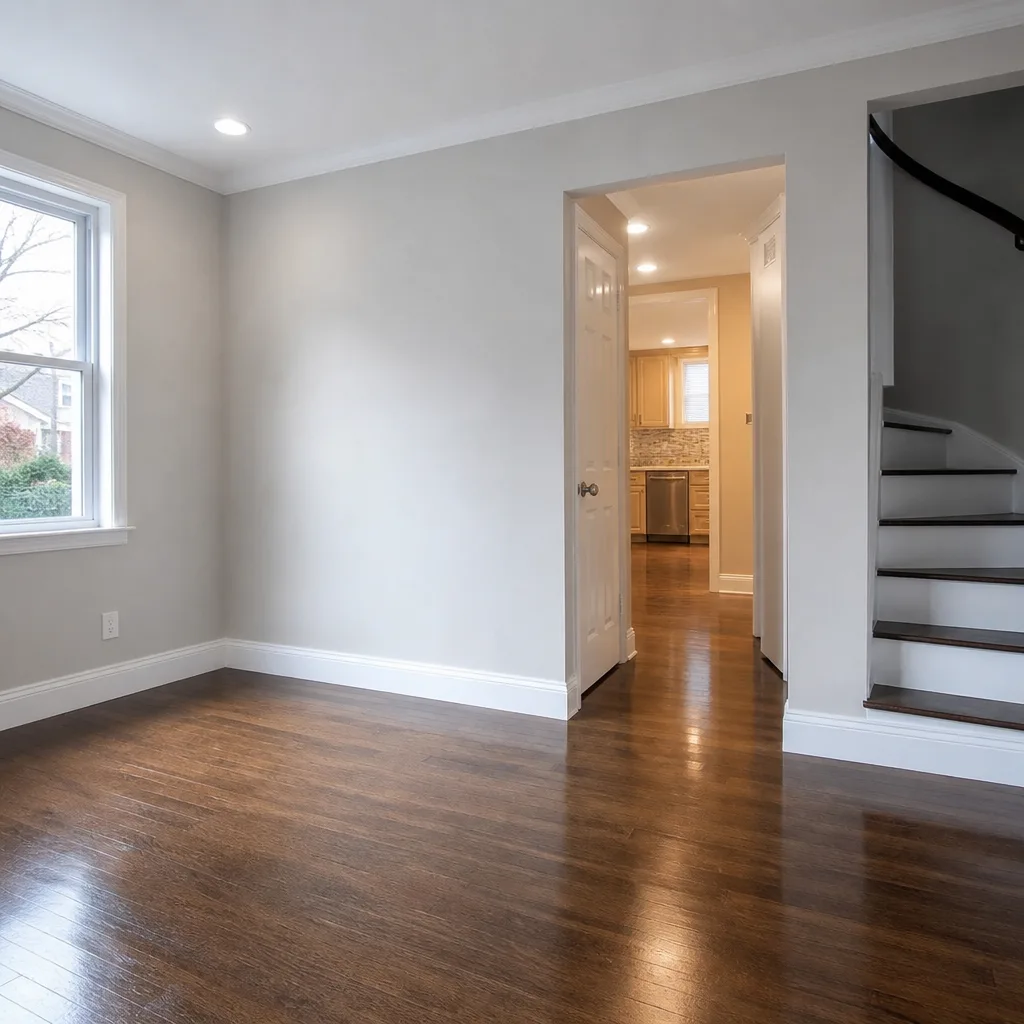 After
After24/7 Emergency Water Damage Restoration in Richmond Hill
Water damage restoration in Richmond Hill costs between $1,800 and $4,600 for a typical basement flood or burst pipe on a single floor, with multi-unit attached row house claims often reaching $8,000 to $15,000 when shared party walls are involved. Our crews answer live at (518) 872-6111 around the clock and can be running extraction equipment inside your home in Richmond Hill within 45 minutes of your call. The first hour matters more in this neighborhood than almost anywhere else in Queens because most homes share walls and attic cavities with at least one neighboring family. Water that sits in an original plaster-and-lath wall for even six hours starts wicking into the adjoining property, and by hour twelve you are likely managing two insurance claims instead of one. We respond the same visit, map the moisture with thermal imaging and Dri-Eaz meters, and hand you a written scope of work before we open a single wall. No answering service recordings. No callback delays. A live human picks up at 2 a.m., because that’s when the cast-iron pipe in a 1908 row house gives out on 107th Avenue, and by 3 a.m. extraction is running.
Understanding Water Damage Restoration Severity in Richmond Hill Properties
Water damage in Richmond Hill falls into three categories that change everything about how the job is priced and performed. Category 1 is clean water from a burst supply line or overflowing tub. It is the easiest to dry but still demands fast extraction because the original horsehair plaster and lath used in pre-1925 row houses holds moisture like a sponge. Category 2 is gray water with contaminants: washing machine discharge, sump pump failures, or condensation overflow from a roof leak that has been running for days. Category 3 is black water: sewage, storm surge from the combined sewer laterals that back up along Jamaica Avenue during nor’easters, or any floodwater that has picked up soil and waste. In Richmond Hill, Category 3 calls are disproportionately common because the neighborhood’s original 1900s sewer laterals were sized for a fraction of today’s density, and many finished basements sit a few critical inches below the nearest sewer grate. Moisture mapping reveals exactly what category you are dealing with – we meter every affected wall, floor cavity, and shared party wall before we choose equipment and containment. Structural drying with professional-grade dehumidifiers and high-velocity air movers follows, with daily readings logged until the dry standard is met and the moisture log is ready for your insurer.
Why Richmond Hill Property Owners Choose Floodline Restoration Co.
- 45-minute response commitment. Our dispatch board tracks crews in real time and routes the nearest certified team to your block, not the next borough.
- Live answer, 24 hours a day. A real dispatcher picks up at (518) 872-6111, every call, every hour. No menus, no answering service, no voicemail.
- IICRC-certified crews. Our technicians carry WRT, ASD, and AMRT certifications, and every job follows the current industry standard for structural drying and microbial remediation.
- Free visual inspection. We assess the damage, meter the moisture, and give you a written scope of work before you commit to a dollar of restoration.
- Direct insurance billing. We bill your carrier directly and coordinate with your adjuster from the first day, so you never play messenger.
- One team from extraction to reconstruction. The same crew that reads the moisture map on day one handles daily readings, dries the structure, and rebuilds whatever needs rebuilding. No mid-job handoff to a subcontractor you never met.
Our Water Damage Restoration Process
Inspection & Assessment
We arrive within 45 minutes, walk every affected room with you, and run thermal imaging and Dri-Eaz moisture meters across walls, floors, and shared party walls. For row houses, we meter the adjoining units too because water travels laterally through continuous masonry. You get a written scope of work before anything is opened.
Extraction & Stabilization
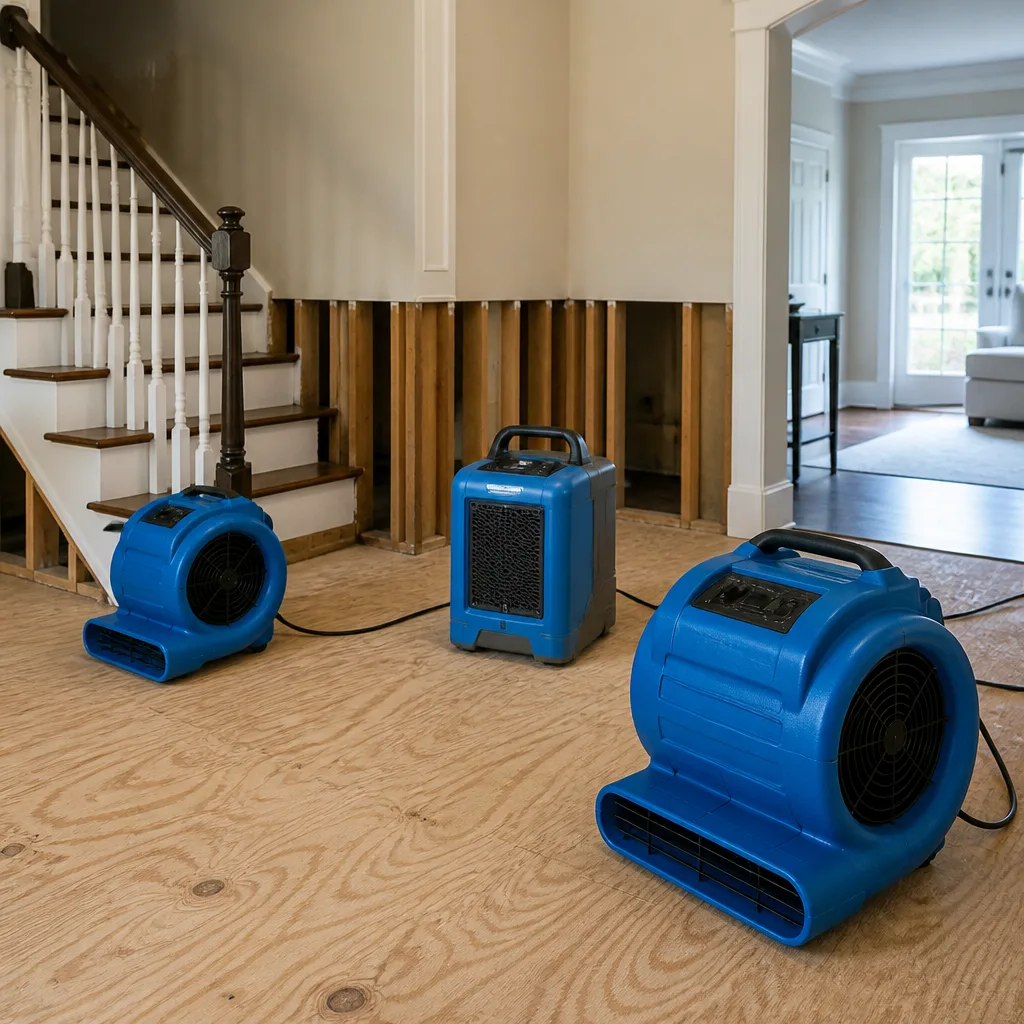
Professional-grade XPOWER and B-Air extraction units remove standing water from floors, carpets, and wall cavities. If the ceiling is sagging from a roof leak, we relieve it with controlled drainage before it collapses onto your furniture or, worse, someone’s head.
Drying & Dehumidification
We set high-velocity air movers and low-grain refrigerant dehumidifiers sized to the cubic footage of each affected space, then take daily moisture readings with hygrometers. In pre-war plaster walls, drying takes longer than in drywall because the substrate is denser and holds water deeper.
Cleaning & Sanitization
All affected surfaces are cleaned with EPA-registered antimicrobials appropriate to the water category. For Category 2 and 3 losses, we fog and treat stud cavities before they are closed back up. We never seal moisture behind new drywall.
Containment & Mold Prevention
In attached Richmond Hill row houses, we contain affected areas under negative air pressure with HEPA-scrubbed exhaust to prevent mold spores from crossing open attics and party walls into neighboring units. This is non-negotiable on any multi-household loss.
Repairs & Restoration
Once the dry standard is met and your carrier approves the scope, we rebuild: plaster repair, new flooring, cabinetry, paint. The Keystone Standard applies to everything we touch, in writing, with the 90-Day Done Right Promise behind it.
Need Emergency Water Damage Restoration in Richmond Hill Now?
Crews minutes away, answering live 24 hours a day. The sooner we start, the less it costs.
Working With Your Insurance Company
Most Richmond Hill water damage claims involve a carrier adjuster, and the difference between a smooth settlement and a denied claim often comes down to documentation from the first hour. We photograph every affected surface before we touch it, log moisture readings daily until the dry standard is met, and write estimates in the exact line-item format insurers expect. Our team communicates directly with your adjuster, sends them the drying logs as they are generated, and flags coverage-sensitive discoveries early. In this neighborhood, that often means documenting a basement that was finished without permits, which changes the coverage picture and needs to be handled carefully with the carrier from day one, not after demolition has begun. Curt Bowman built Floodline Restoration Co. around keeping the whole claim in one file so the homeowner never becomes the unpaid middleman.
What We Provide Your Insurer
- Thorough documentation of the loss
- Photos of all damage, room by room
- Moisture readings and drying logs
- A detailed, line-item scope of work
- Direct coordination with your carrier
Built for Richmond Hill’s Loss Calendar
Richmond Hill takes water damage in four distinct seasonal waves, and each one requires a different response plan. January and February bring deep freezes that burst galvanized supply lines and cast-iron fittings in uninsulated exterior walls – a classic failure point in pre-1920 row houses where the original plumbing was never upgraded. March and April bring thaw cycles and spring rain that saturate the ground around original rubble-stone and brick foundations, and the same basement that stayed dry all winter suddenly weeps through the mortar joints along the floor line. July and August thunderstorms overwhelm the combined sewer system, sending Category 3 sewage back up through basement floor drains and toilets – we respond to those calls on 109th, 110th, and 111th Streets every summer without fail. October through December brings nor’easters and the long tail of roof leaks that have been quietly soaking the attic sheathing since September, by the time the first big storm arrives, the plaster ceiling under the roof valley is often one rain event away from collapse. Each season leaves its own signature on the moisture map, and we read the neighborhood’s patterns every year.
Water Damage Restoration Across Richmond Hill’s Neighborhoods
The blocks around Forest Park, bordered roughly by Myrtle Avenue to the north and 101st Avenue to the south, are dominated by attached Victorian and Edwardian row houses from the 1895 to 1925 era, and a burst pipe on the top floor of one house is frequently our access point to two or three addresses. Over by the Richmond Hill Library near Hillside Avenue, the semi-detached two-families share basement foundation walls, so a Category 3 backup in one unit will meter elevated moisture in the adjoining unit within hours unless containment is set immediately. The corridor along Jamaica Avenue, from 104th to 117th Streets, mixes ground-floor commercial spaces beneath residential units, and a roof leak above a storefront apartment combo means coordinating restoration around a business that cannot close for a week. Down near Atlantic Avenue and the Lefferts Boulevard corridor, the older brick-and-lath construction with original cast-iron waste lines produces recurring basement backups during every heavy rainfall, and many of those basements are not the unfinished storage spaces the insurance file describes. The 11418 ZIP is small but the building stock shifts block by block, and we route crews based on what we know each strip is going to throw at us.
Specialized Water Damage Restoration Services We Offer in Richmond Hill
Basement Water Removal
Richmond Hill basements flood from three directions: sewer laterals backing up during storms, groundwater seeping through original brick and stone foundations, and supply-line bursts in finished spaces below grade. We pump, extract, and dry the basement, then map where the water actually came from so you are not re-flooding next month. If the foundation is the recurring source, we scope a drainage repair and waterproofing as part of the same job, not a separate handoff to a different contractor.
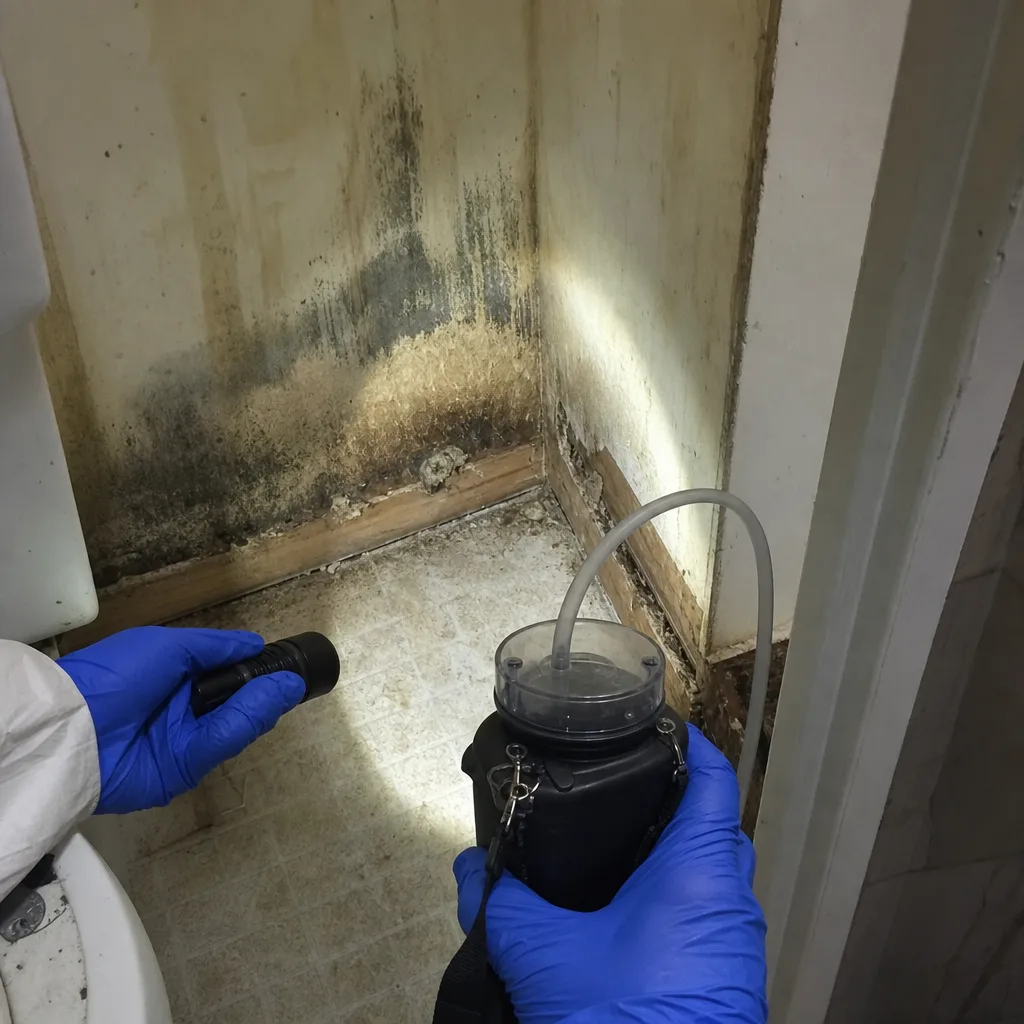
Structural Drying & Dehumidification
Original plaster and lath dries slowly – slower than drywall, slower than most homeowners expect, and slower than insurance timelines assume. We run low-grain refrigerant dehumidifiers and high-velocity air movers on the same continuous electrical circuits that a 1920s house was never designed for, and we take daily moisture readings until every cavity hits the dry standard. That log is what protects you from a future mold claim and what tells your insurer the job was done to code.
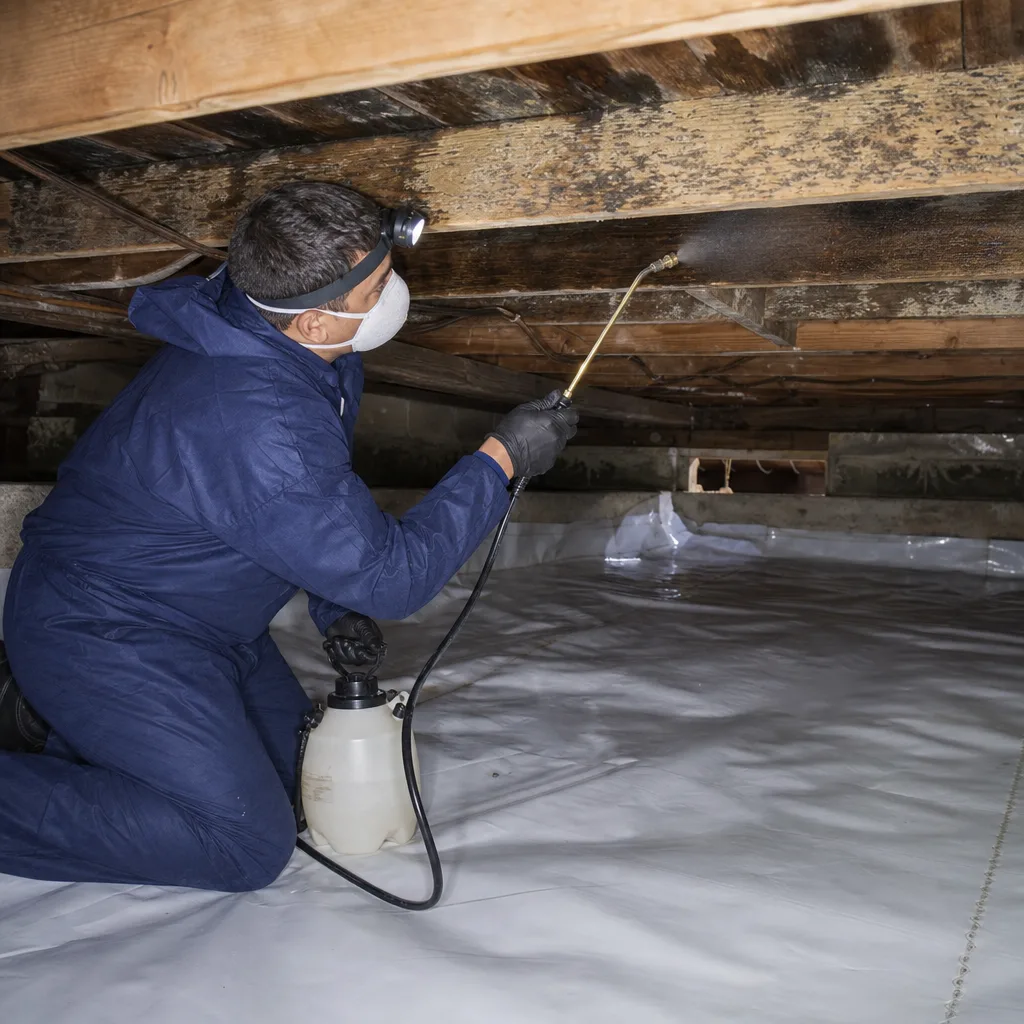
Ceiling & Roof Leak Water Damage
Roof valleys, parapet flashing, and original slate or cedar shingle underlayment all fail on Richmond Hill’s older housing stock, and the water travels down through the attic, along the rafters, and into the top-floor ceilings before anyone notices a stain. We relieve the sagging ceiling before it collapses, dry the rafter bays and top plates with targeted air movement, and then advise whether the roof itself needs repair or replacement before we rebuild the interior. No sense in drying the same ceiling twice.
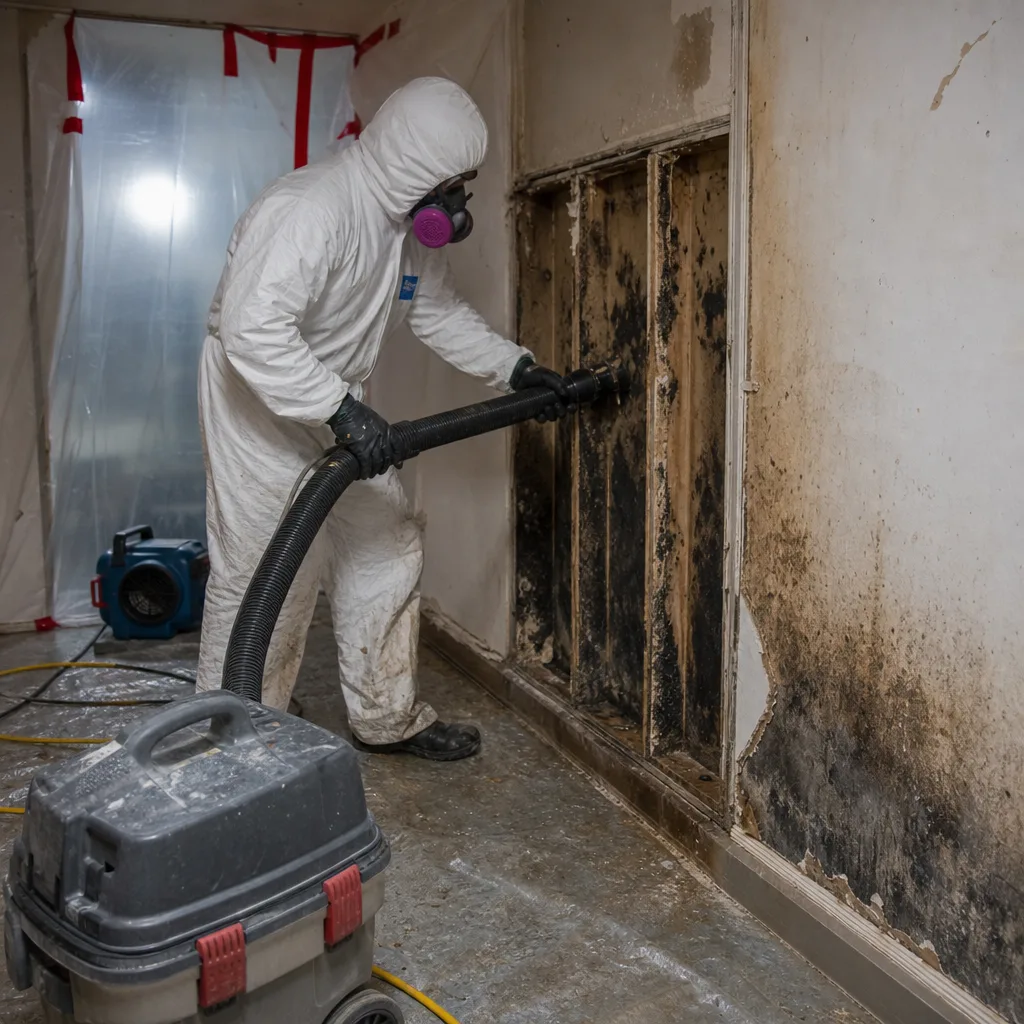
Emergency Water Extraction
When a pipe lets go at 2 a.m., the difference between a $2,000 dry-out and a $15,000 rebuild is often measured in minutes. We arrive with truck-mounted extraction that moves hundreds of gallons an hour, then get air moving on saturated floors and baseboards within the first hour of arrival. Call (518) 872-6111 and a certified crew is dispatched from our New York City office to your block in Richmond Hill immediately.
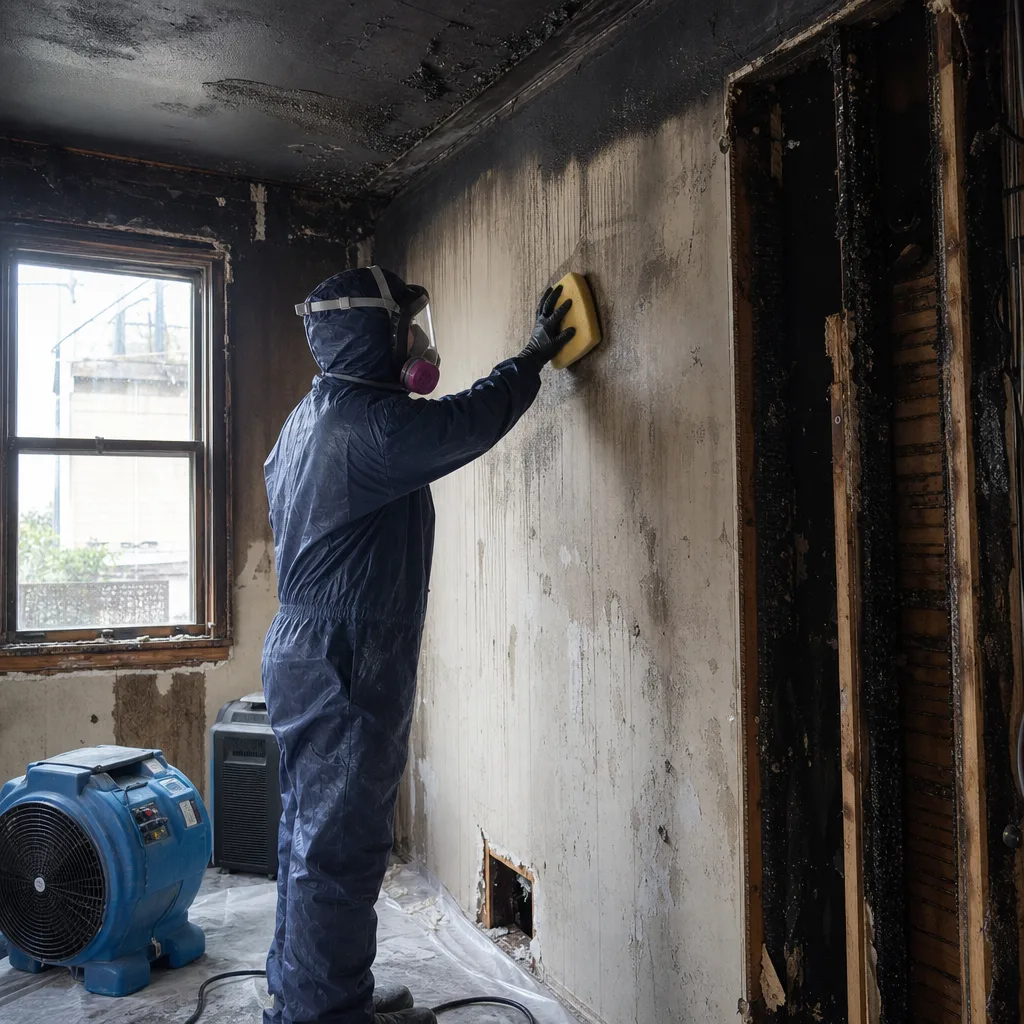
Flood Cleanup
Storm-driven floodwater in Richmond Hill is never clean. The combined sewer system brings sewage, street runoff, and whatever else is in the catch basins straight into basements on 109th Street, 104th Street, and the low blocks south of Atlantic. We treat every storm flood as Category 3, which means full PPE, containment, antimicrobial treatment, and documentation that meets your carrier’s flood rider requirements.
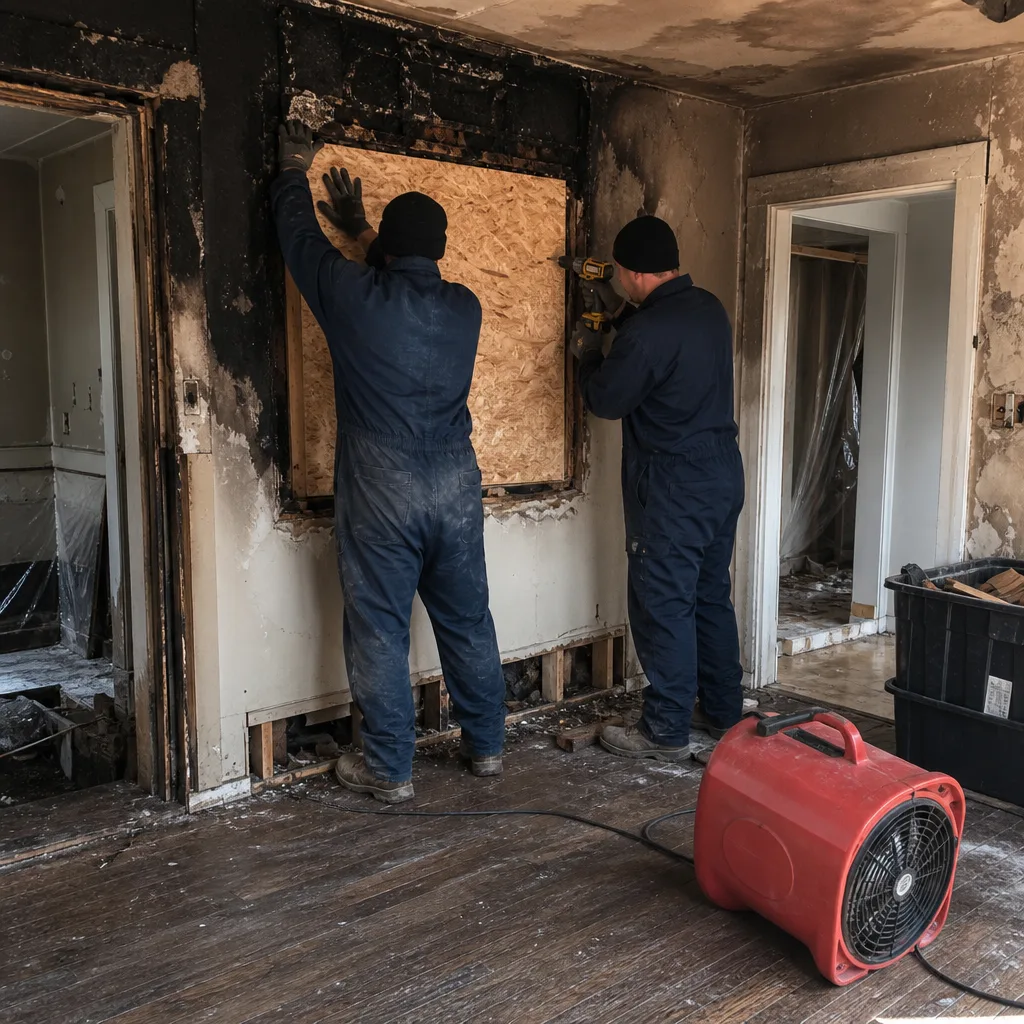
What happens when you call
- 1
A real person answersNo phone trees - you reach a local pro.
- 2
You get an upfront price rangeHonest numbers before anyone is dispatched.
- 3
A background-checked tech heads outLicensed & insured, dispatched right away.
- 4
You approve before work beginsNothing starts until you say go.
Water Damage Restoration Costs in Richmond Hill, NY
A straightforward clean-water extraction and dry-out of a single room in Richmond Hill runs $1,800 to $3,200. A full basement flood with sewage backup, which is the most common call we get in the 11418 ZIP, typically lands between $4,000 and $7,500 when the finished space is under 600 square feet. Multi-household row house claims where water has crossed shared party walls and affected two or three units generally run $8,000 to $15,000, and the cost split across claims is negotiated between carriers. Lead and asbestos testing on original plaster, which NYC DEP rules mandate before any demolition, adds $500 to $1,200 to the project and typically stalls demolition for one to two weeks while samples are processed. Insurance covers most sudden and accidental water losses, but coverage for a long-standing roof leak or a basement that floods every spring depends on your policy’s exclusions, which is why we give you a firm written scope before any work begins. The fastest path to an accurate number is a free visual inspection, and the inspection commits you to nothing. Call (518) 872-6111 and we will be there within 45 minutes.
We Also Serve Cities Near Richmond Hill
Our crews regularly respond to water damage in Forest Hills, Middle Village, Fresh Meadows, and Elmhurst, all within a short drive of Richmond Hill. If you own a property near the border of any of these Queens neighborhoods, the same certified team answers the phone at (518) 872-6111 and the same 45-minute commitment applies.
Serving Richmond Hill, NY - Our Local Coverage Area
We’re based in the Richmond Hill area and know this community well. Use the map below to see our service coverage - if you’re nearby, we can almost certainly help.
Richmond Hill Water Damage Restoration Questions, Answered
How does water damage in a Richmond Hill attached row house spread to the neighbor’s unit, and who pays?
Water moves laterally through continuous masonry party walls and shares attic cavities above the ceiling line, so a leak in one unit routinely wicks into the adjoining home within 6 to 12 hours. Each homeowner’s insurance carrier pays for damage to their own unit, but proving the point of origin matters for subrogation, which is why we meter and photograph both sides of the party wall from the first visit. If your neighbor’s wall reads elevated moisture on our Dri-Eaz meters, we document it immediately and open the claim conversation before the damage becomes a dispute.
Why does my Richmond Hill basement keep flooding even after a mild rain?
The combined sewer laterals under Richmond Hill were engineered around 1900 for a much lower density, and they back up into basements during even modest rainfall because stormwater and sewage share the same pipes. On streets like 109th and 110th near Jamaica Avenue, the basement floor drain is often the lowest point on the lateral, so any surcharge comes up through your floor. The permanent fix is usually a backwater valve or check valve on your sewer line, which we can scope and install as part of the restoration, but the immediate fix is extraction and sanitation because that water is Category 3 and dangerous with raw sewage in it.
I have original plaster walls that got wet from a roof leak. Do they need to be removed or can they be dried?
Original horsehair plaster and lath can often be dried in place with targeted air movement and desiccant dehumidification, but only if we catch the moisture before it saturates the plaster keys and the lath underneath. If the plaster has delaminated from the lath or shows visible staining and blistering, it typically needs to be removed, and any demolition triggers mandatory lead and asbestos testing under NYC DEP rules. We dry what can be dried, cut out what cannot, and rebuild with plaster or drywall that matches your home’s era, not a generic patch job.
My basement was finished years ago without permits and now has sewage backup. Will restoration trigger code issues?
This is common in Richmond Hill’s older homes, and it can complicate an insurance claim if the carrier discovers the finish work was never filed. We photograph what is actually there, document it honestly in our scope of work, and coordinate with your adjuster early so the coverage question is resolved before demolition starts. Floodline Restoration Co. does not report your basement to the DOB, but we also will not falsify a claim document, and that honesty protects you from a denied or rescinded payout down the line.
How long does drying take in a Richmond Hill row house with original brick foundation?
In a pre-1925 row house with brick or rubble-stone foundation and original plaster walls, expect 5 to 10 days of active structural drying, longer if multiple shared walls are affected or the weather is humid. Daily moisture readings track progress against the dry standard, and we do not remove equipment until every cavity reads dry, because stopping early in a brick-and-plaster assembly is how mold gets a permanent foothold. Your carrier gets the full drying log, and so do you.
How fast can you actually get to my house in Richmond Hill?
Our dispatch commitment is 45 minutes from your call to a crew at your door in the 11418 ZIP, day or night, including weekends and holidays. We keep teams stationed across Queens specifically so a Richmond Hill address never waits for a crew from another borough. Call (518) 872-6111 and a live dispatcher confirms the response time while you are still on the phone.
Will my insurance cover this specific water damage?
Sudden and accidental water damage, such as a burst pipe or a storm-driven flood with the right rider, is generally covered. Gradual damage from a long-running roof leak or chronic basement seepage often is not, and Category 3 sewage backups depend entirely on your policy’s sewer and drain endorsement. We review your specific loss against your policy language and tell you honestly what to expect from your carrier so there are no surprises when the adjuster’s report comes back.
What should I do in the first 30 minutes after discovering water damage?
Shut off the water at the main valve if the source is a plumbing failure, and turn off electricity to the affected area at the breaker panel if water is touching outlets or appliances. Do not enter standing water if it may be contaminated with sewage. Then call (518) 872-6111, and while the crew is en route, move any dry belongings out of the path of the water and take photos of the damage on your phone for your own records. Do not use a shop vac on sewage water and do not open walls yourself, especially in a pre-war Richmond Hill house where lead and asbestos testing must happen before any demolition.
Floodline Restoration Co. is the full-cycle Water Damage Restoration team for homeowners in Richmond Hill, from first extraction to finished rebuild, backed by the 90-Day Done Right Promise in writing. We answer live at (518) 872-6111, 24 hours a day, every day. If you have water where it should not be, call now, before it moves into the wall, under the floor, or through the party wall into your neighbor’s home. Estimates are free. The line the water left is where we start.
Written by Curt Bowman, Owner at Floodline Restoration Co., serving Richmond Hill and Queens since 2010.