
Quick Summary
Rapid emergency water damage restoration in Whitestone is critical within the first 24 to 48 hours to halt water migration, structural framing rot, and hazardous mold growth. Floodline Restoration Co. delivers complete local mitigation through rapid emergency response, thermal moisture detection, structural drying, and direct insurance billing management. Property owners will understand essential pre-arrival safety protocols and can call 24/7 for immediate emergency dispatch and a free visual inspection.
Emergency Water Damage Restoration Options in Whitestone
When a supply line bursts, a sewer line backs up, or heavy rains push water into a basement, immediate action makes the difference between routine cleanup and structural damage. In residential settings, such as semi-detached homes or properties near coastal areas, water emergencies present specific challenges. Water does not stay contained to one room. Without prompt extraction, moisture can travel along subfloors and into foundation footings, damaging structural framing and encouraging microbial growth within 24 to 48 hours.[3]
According to NYC Hazard Mitigation records, Queens contains 15,120 buildings within the 1% annual-chance floodplain. Queens and New York City data identify stormwater and storm-surge exposure, while property-level risk varies and cannot be inferred from borough-wide data. Drainage and stormwater infrastructure projects in Whitestone were completed or initiated to reduce flooding risk. Professional mitigation technicians, such as those at Floodline Restoration Co., use moisture meters and thermal imaging to assess migration paths, extract standing water, and stabilize building materials before secondary damage develops.[1]
Quick Answer: Immediate Water Extraction and Structural Drying
Emergency cleanup overview: Restoring water damage involves rapid water removal, moisture assessment, and structural drying. Technicians assess whether the loss involves clean supply water, gray water from appliances, or contaminated Category 3 sewage backup. Prompt drying helps prevent structural weakening and microbial contamination.
Response times vary by provider, demand, traffic, weather, and property location. Property owners should confirm an arrival window directly with their restoration provider. When hiring an emergency crew, verify dispatch availability, certifications, equipment, and billing practices directly with the selected contractor.
How Fast Can Crews Respond to Water and Flood Emergencies in Whitestone?
Response protocols: Response time varies by provider, current demand, traffic conditions, weather severity, and property location. Contact restoration providers directly to confirm their specific arrival window. While waiting for a crew to arrive, prioritize physical safety by addressing electrical hazards and halting the water source if it is safe to do so.
In a water emergency, early action limits how far moisture spreads. In attached or semi-detached structures, delay allows water to soak into shared framing and masonry. Dispatch speed and arrival times depend on local travel conditions, regional weather demand, and crew availability.
Immediate Actions to Take Before the Restoration Team Arrives
Taking these precautions immediately minimizes structural saturation and keeps your household safe:
- Shut off the main water valve: Turn the valve clockwise at the water meter or main shut-off to stop active supply leaks.
- Isolate electrical circuits: If you can safely reach your breaker panel without stepping into standing water, shut off power to flooded areas and rooms with saturated walls.
- Avoid contaminated water: Treat sewer backups as hazardous Category 3 water. Keep family members and pets away from standing water to prevent exposure to contaminants.
- Elevate valuable items: Lift furniture legs onto aluminum foil or wood blocks, and remove porous items from damp floors.
The Critical 24-to-48-Hour Drying Window
Generally, mold growth can begin developing on damp drywall, carpet padding, and wood framing within 24 to 48 hours of water exposure. In residential properties, finished basements can conceal moisture behind baseboards and wall assemblies.
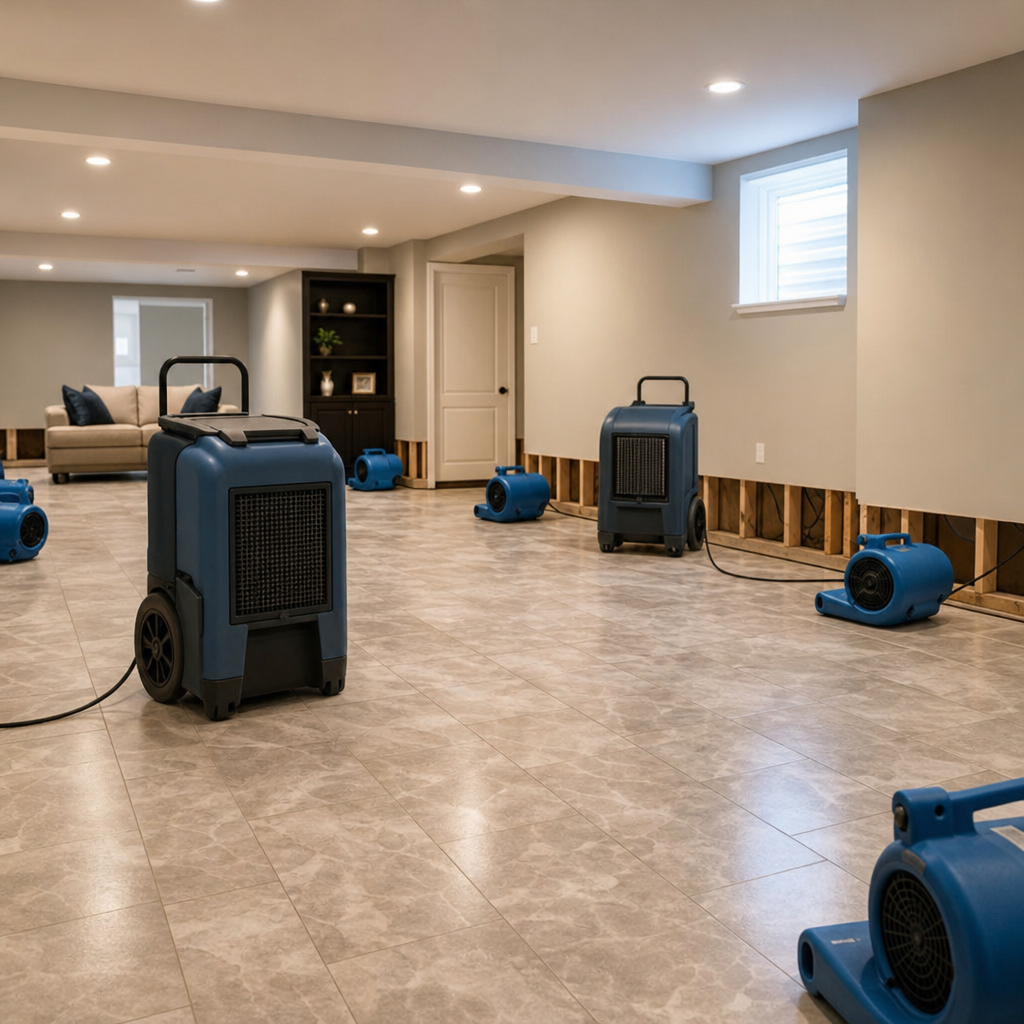
NYC risk estimates include stormwater and storm-surge exposure and do not directly measure restoration-service demand. Reaching a dry standard requires specialized dehumidification and air-moving equipment arranged to create continuous airflow across damp surfaces.[4]
What Does Emergency Water Damage Restoration Cost in Whitestone?
Need emergency water damage restoration in Whitestone?
We’re available now - call for a fast, free estimate.
Restoration costs depend directly on the volume of water, how long materials have been wet, the category of water contamination, and whether structural removal is necessary. Because property layouts and conditions differ, restoration companies like Floodline Restoration Co. typically perform on-site assessments to provide an itemized estimate.
Typical Restoration Service Elements
Costs reflect the labor, extraction equipment, sanitation, and drying procedures required for each water category:
| Service Element | Clean Water (Category 1) | Gray Water (Category 2) | Black Water / Sewage (Category 3) |
|---|---|---|---|
| Water Source | Broken supply pipes, sink overflows, water heater tank leaks | Sump pump failures, washing machine discharge, dishwasher overflows | Sewer line backups, street flooding, storm surge |
| Extraction & Removal | Direct water extraction; salvageable porous materials dried in place | Targeted removal of heavily saturated porous materials | Removal and disposal of contaminated porous materials |
| Sanitation Treatment | Cleaning and treatment applied to vulnerable surfaces as needed | Sanitation applied to affected structural surfaces | Deep cleaning, sanitation, and disinfection required |
| Structural Drying | Air movers and dehumidification equipment | Targeted structural drying and dehumidification | Containment and specialized structural drying |
Insurance Coverage and Direct Carrier Billing
Insurance coverage depends on the water source and specific policy terms. Standard homeowners insurance policies generally cover sudden and accidental internal water damage, but they generally exclude flood damage caused by overland flooding and storm surge. Water backup or sewer coverage may require a specific endorsement.
Property owners should consult their insurance carrier or policy documents to verify coverage details. When arranging mitigation services, verify direct insurance billing options, documentation practices, and contractor certifications directly with the selected provider.
How Do Restoration Teams Treat Flooded Basements and Structural Materials?
Basement water extraction requires a careful approach. In multi-unit or attached residential structures, water pooling on a basement slab can migrate horizontally across shared footings and wick into adjoining party walls.
Restoration technicians, including specialists from Floodline Restoration Co., assess the structure, establish appropriate containment when dealing with contaminated water, and use drying equipment to pull moisture out of affected cavities and materials without unnecessary demolition.
Drywall, Subfloors, and Foundation Footings
Technicians evaluate which materials can be restored and which must be safely removed:
- Drywall and Insulation: Drywall affected by clean water may sometimes be dried in place if addressed quickly, whereas materials saturated by contaminated water typically require removal and replacement.
- Framing and Subfloors: Wood studs, plywood subflooring, and sill plates can often be saved through structural drying if the wood has not begun to rot or buckle. Technicians monitor moisture levels until framing returns to baseline dry standards.
- Finished Flooring: Saturated flooring materials are evaluated based on the water category and moisture trapped beneath the surface to determine whether drying in place or removal is appropriate.
Targeting Hidden Moisture in Residential Structures
A basement floor may appear dry on the surface while holding water trapped beneath floor coverings or within masonry cavities. NYC risk estimates include stormwater and storm-surge exposure and do not directly measure restoration-service demand. Drainage and stormwater projects in Whitestone were completed or initiated to reduce flooding risk. Technicians from Floodline Restoration Co. use moisture meters and thermal imaging to trace moisture paths completely.[2]
Locating every pocket of trapped water ensures that structural drying reaches foundation materials, helping prevent persistent musty odors, warping, and mold growth down the road.
Frequently Asked Questions About Whitestone Water Damage Cleanup
Does homeowners insurance cover emergency water damage from sewer backups?
Coverage depends on the water source and policy terms. Standard homeowners policies generally exclude flood damage and sewer backups. Water backup or sewer coverage may require a specific endorsement. Contact your insurance carrier or agent to verify your policy endorsements and coverage limits.
How do technicians prevent mold growth after finished basement flooding?
Technicians manage microbial growth by rapidly extracting standing water, cleaning and sanitizing affected building materials, removing non-salvageable wet items, and using commercial dehumidifiers and air movers to thoroughly dry structural materials.
What are the emergency water damage restoration options in Whitestone?
Various emergency restoration providers serve the Whitestone area. Because service hours, certifications, equipment, and billing practices vary, property owners should contact local contractors directly to verify 24-hour dispatch availability, arrival estimates, and service terms.[5]
How long does the structural drying process take?
The duration of the structural drying process varies based on the volume of water, the types of materials affected, contamination levels, and environmental conditions. Restoration technicians, such as the team at Floodline Restoration Co., monitor moisture levels throughout the project until materials reach verified dry standards.
Need emergency water damage restoration in Whitestone?
We’re available now - call for a fast, free estimate.
Sources
- Severe Weather Events and Resiliency in New York State – osc.ny.gov (2025)
- 1 – nyc.gov (2025)
- [PDF] Increasing extreme hourly precipitation risk for New York City after … – repository.library.noaa.gov (2023)
- Flood Resilience Text Amendment II – nyc.gov (2015)
- https://data.cityofnewyork.us/api/views/7n9x-tbtd/… – data.cityofnewyork.us (2026)
Emergency Water Damage Restoration in Nearby Cities
We also serve the communities around Whitestone:
- Emergency Water Damage Restoration in Flushing
- Emergency Water Damage Restoration in Astoria
- Emergency Water Damage Restoration in Bayside
- Emergency Water Damage Restoration in College Point
- Emergency Water Damage Restoration in Corona
- Emergency Water Damage Restoration in Ditmars Steinway
- Emergency Water Damage Restoration in Douglaston
- Emergency Water Damage Restoration in East Elmhurst
Frequently Asked Questions
How quickly can emergency water damage restoration crews arrive at a Whitestone property?
Floodline Restoration Co. provides 24/7 dispatch with a rapid 45-minute on-site response time throughout Whitestone. Prompt arrival allows technicians to immediately halt water migration, set up containment, and conduct a free visual inspection.
How does direct insurance billing work for emergency water damage restoration in Whitestone?
Floodline Restoration Co. directly manages carrier billing by compiling comprehensive photo documentation, thermal imaging reports, and itemized mitigation logs for your insurer. This direct coordination streamlines the claims process and helps verify coverage for structural drying and water extraction.
How do specialists find and eliminate water trapped inside walls and semi-detached foundations?
Restoration technicians at Floodline Restoration Co. use non-invasive thermal imaging cameras and commercial moisture meters to locate hidden pockets of water behind drywall and along shared structural footings. Once mapped, high-velocity air movers and industrial dehumidifiers thoroughly dry these concealed spaces without unnecessary demolition.
About the author
 |
Sarah Miller Sarah Miller is a certified water damage restoration specialist with over 8 years of experience working with residential and commercial properties in the New York area. She holds a B.S. in Environmental Science from SUNY College of Environmental Science and Forestry and is passionate about helping property owners navigate emergency situations and prevent long-term damage. |
Water damage, flood, or mold emergency?
We’re available now - call for a fast, free estimate.
Call Now - Free Estimate