
Free visual inspection and a written scope of work before any mitigation begins - photos, moisture readings, and drying logs go in your claim file
The scope we write is the scope we bill. Anything new gets shown to you, in writing, before we touch it.
Storm responseSewage cleanup
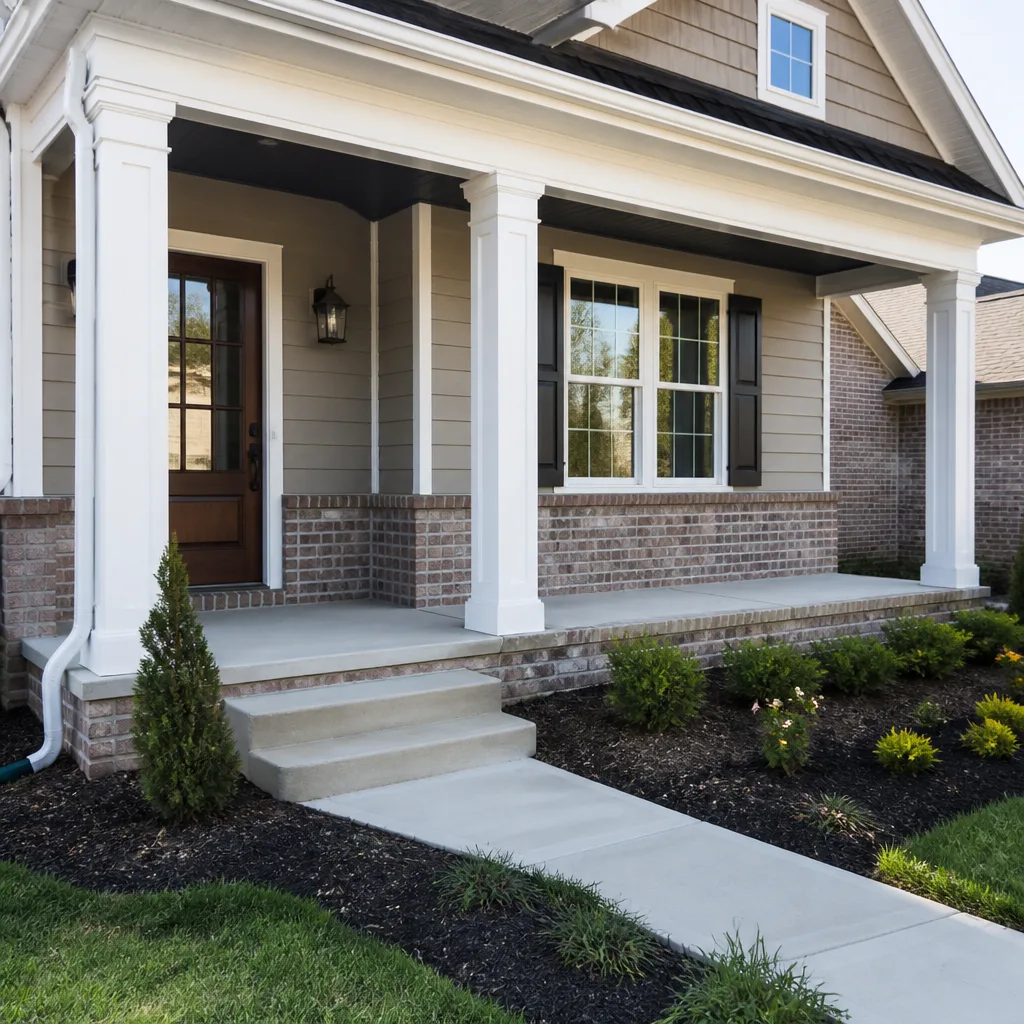
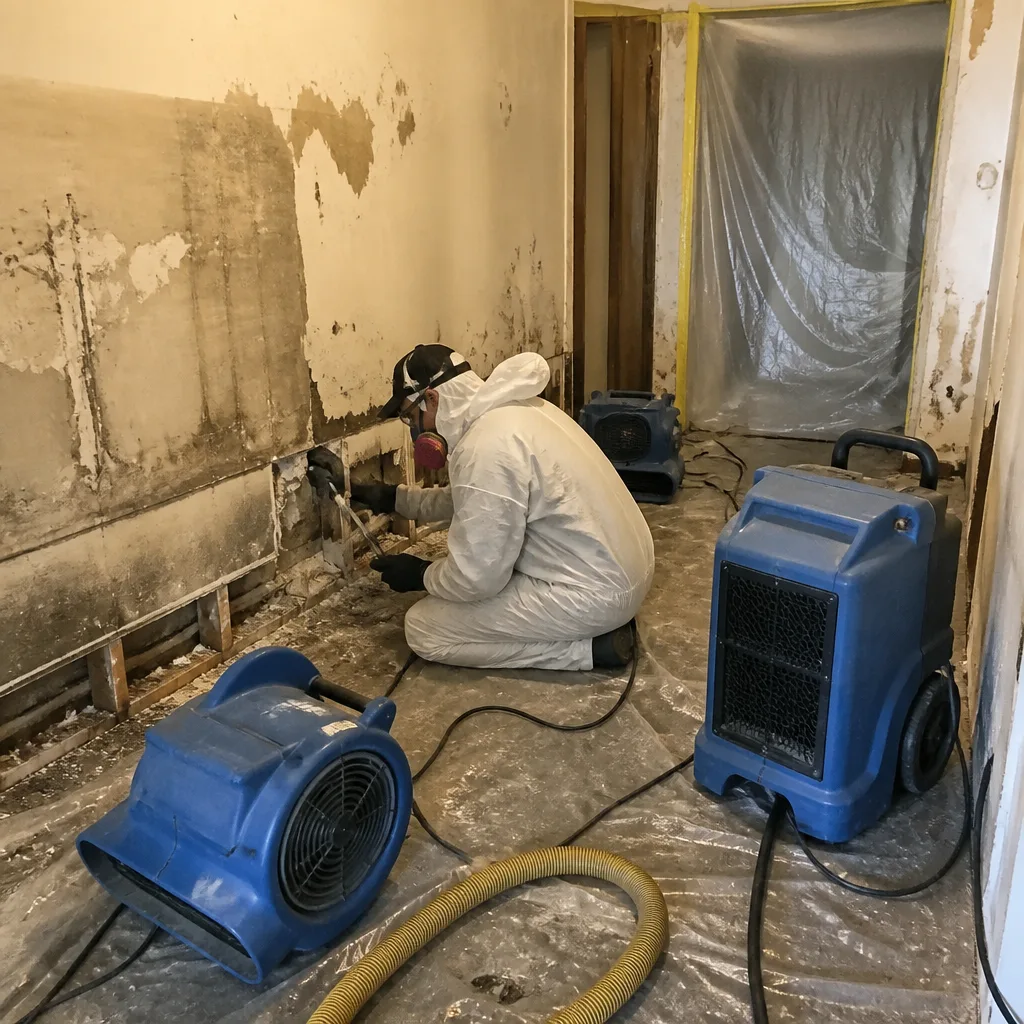 Before
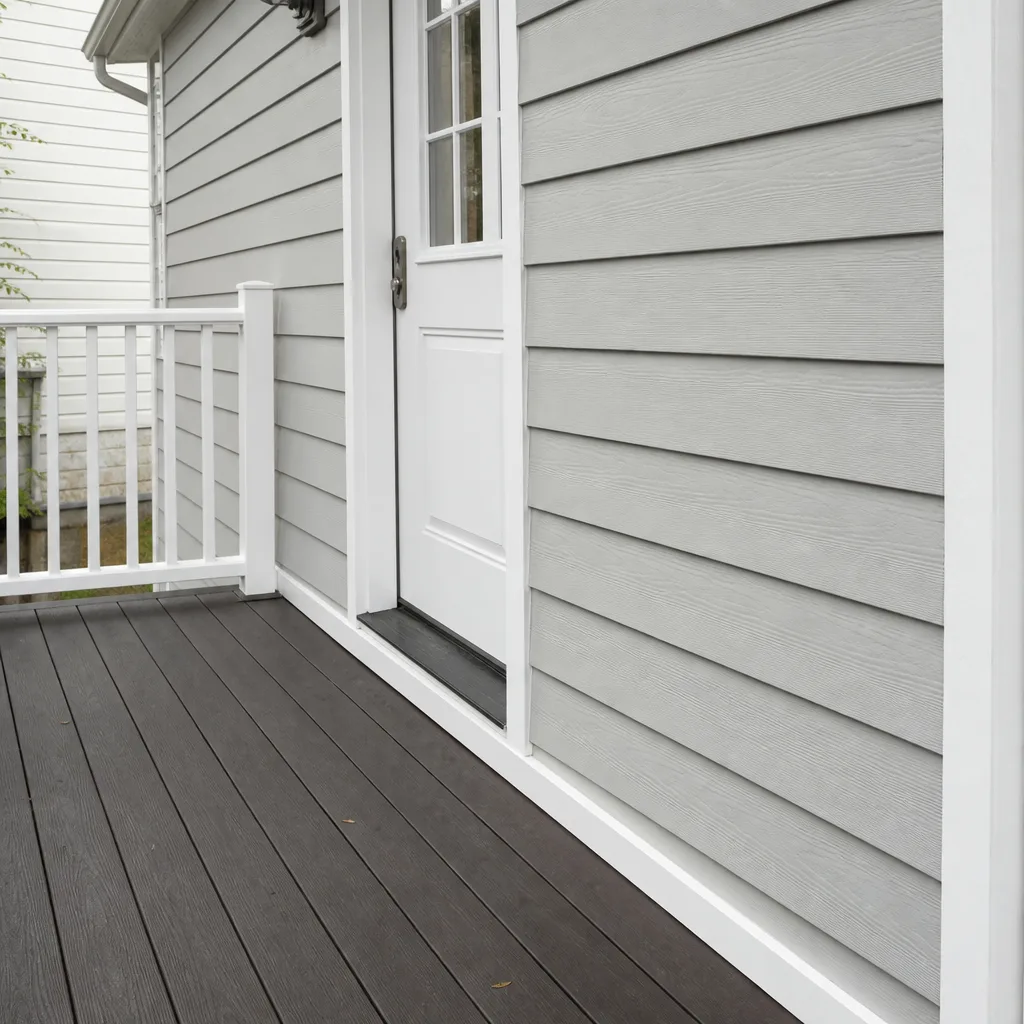 After
After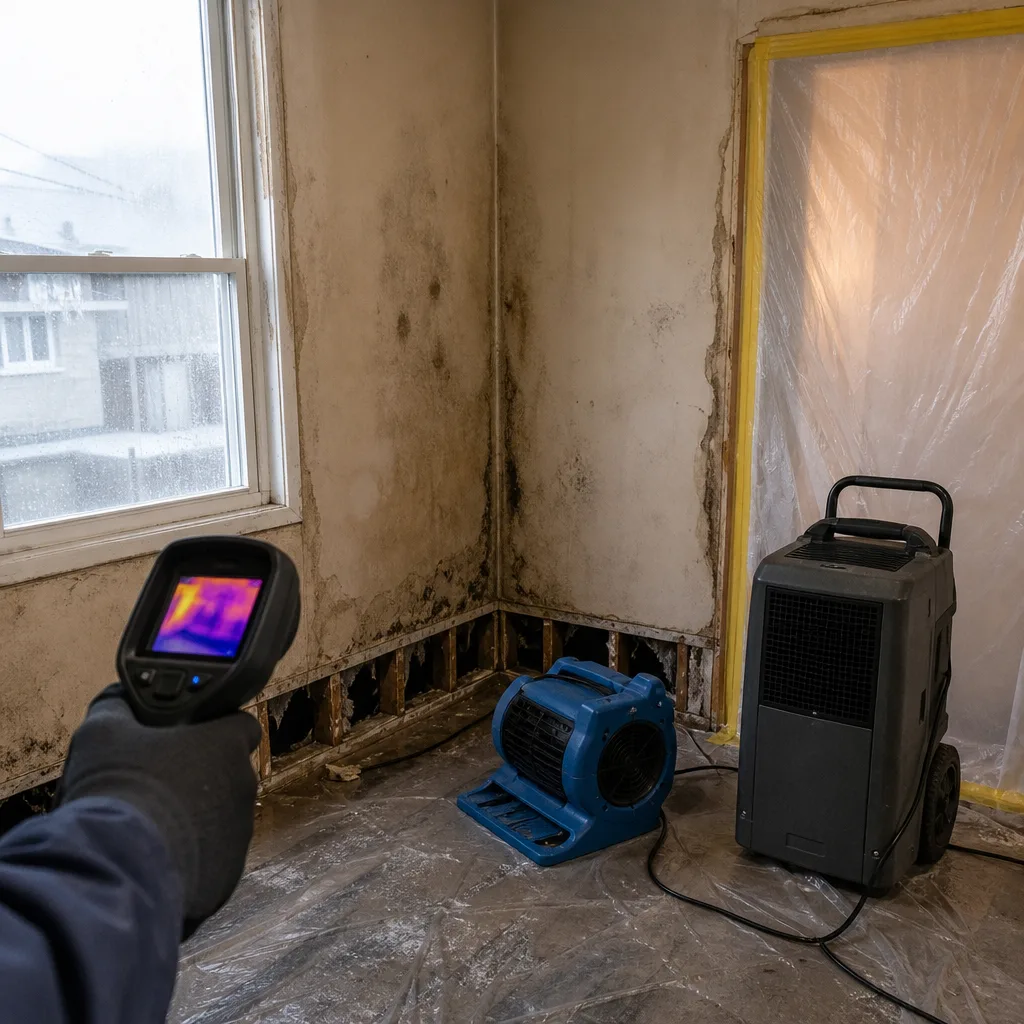 Before
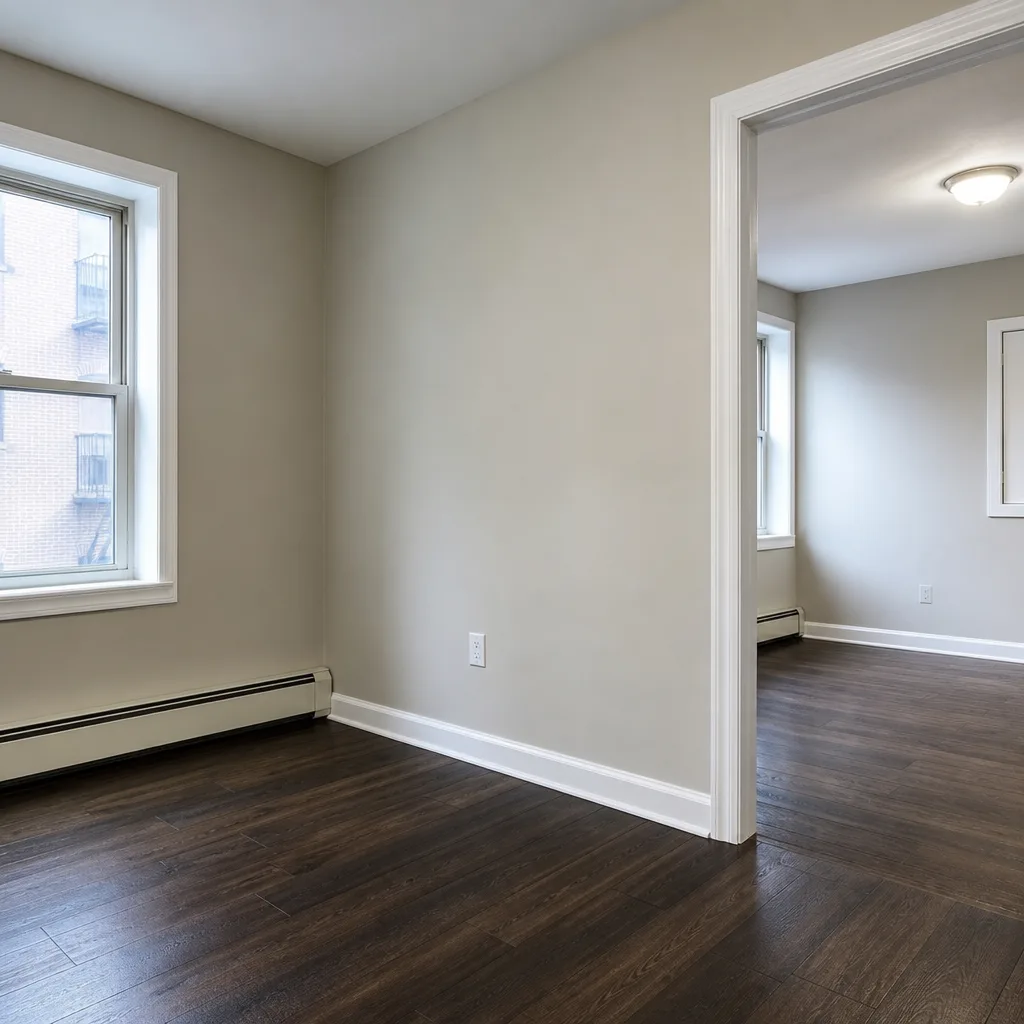 After
After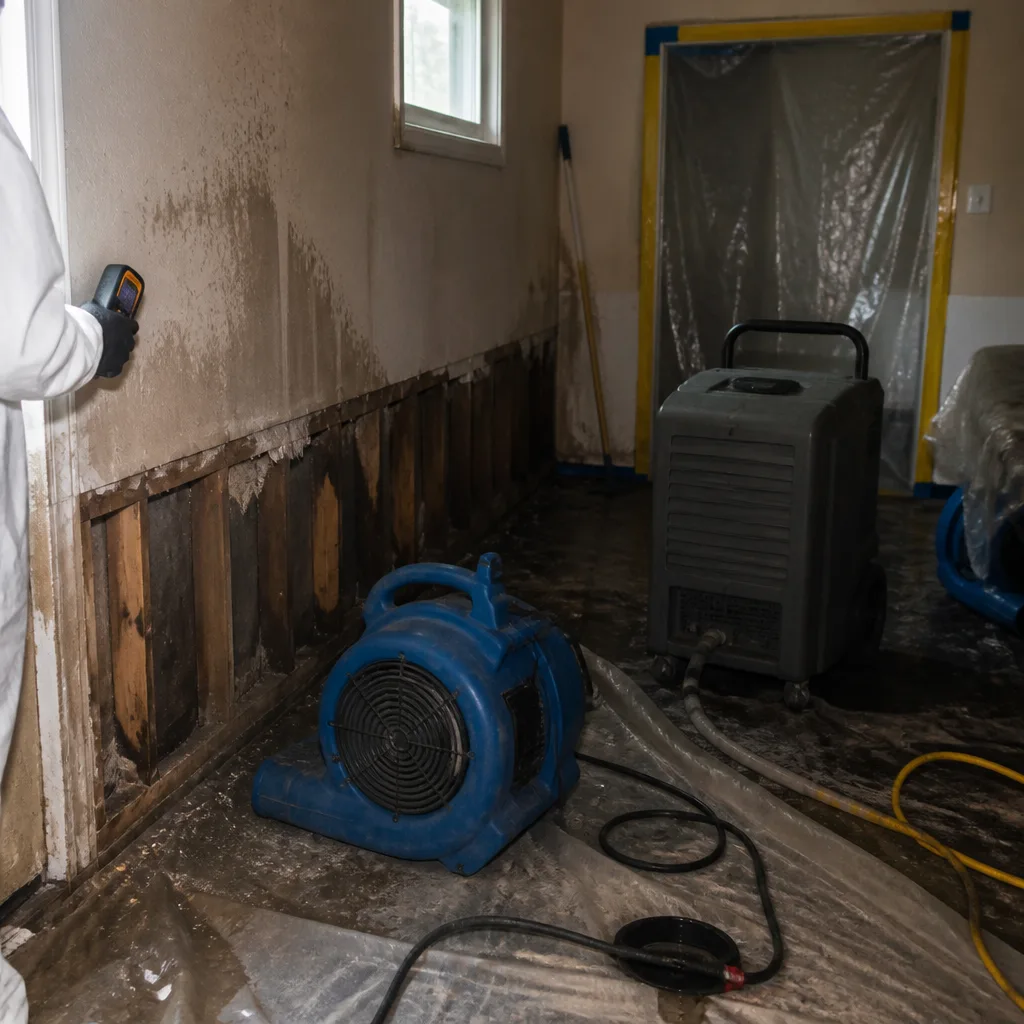 Before
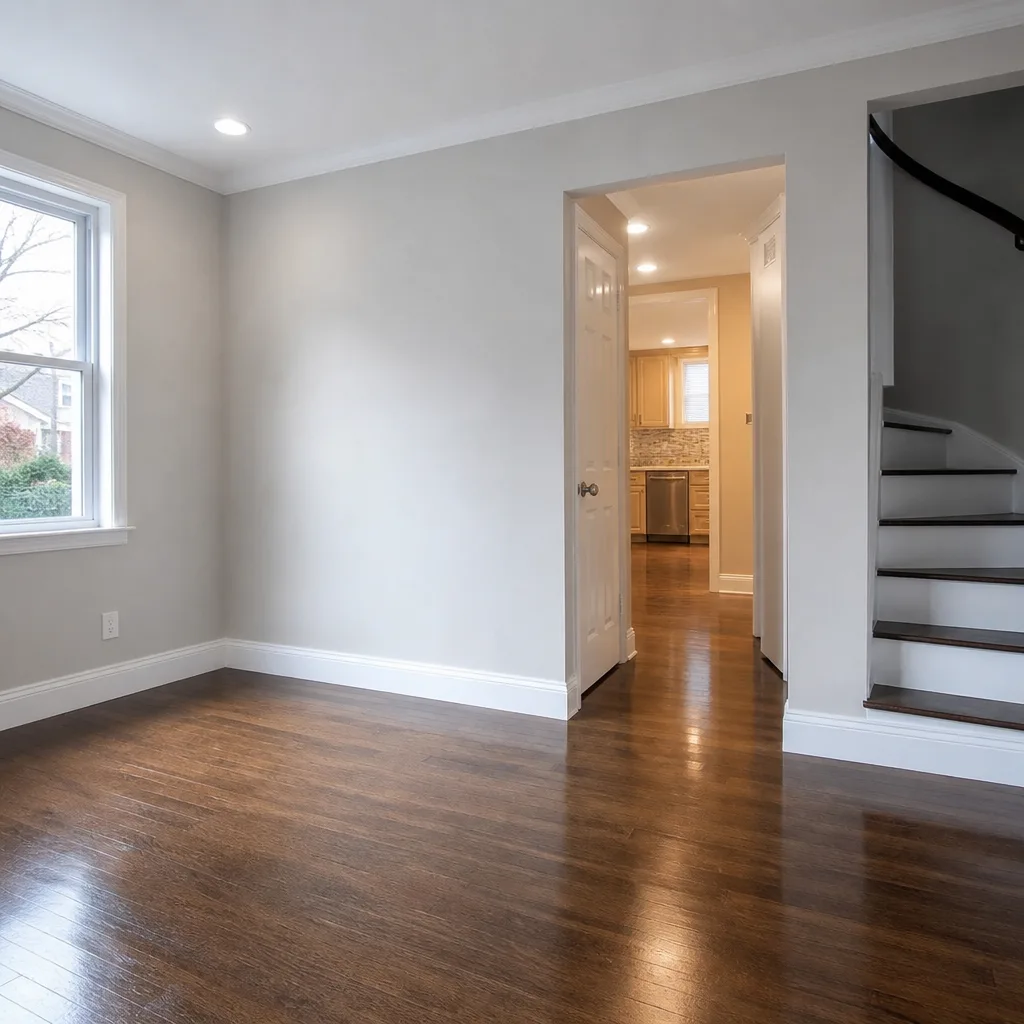 After
After24/7 Emergency Mold Remediation in College Point
Mold remediation in College Point runs $800-$3,400 for most jobs, with black mold and crawl space work at the upper end because tidal backflow contamination changes the scope. A crew can be onsite within 45 minutes of your call to (518) 872-6111, day or night. We answer live, every hour of every day, and begin with a free visual inspection so you know exactly what you’re facing before any work is approved.
College Point’s position as a low-lying peninsula off Flushing Bay means mold here rarely comes from a single leak. It comes from storm surge, tidal backflow, and a water table that sits close to your foundation all year. The first hour matters because mold colonies establish in as little as 24 to 48 hours, and in a house built between the 1920s and 1950s, plaster-and-lath walls and cellulose insulation hold onto that moisture like a sponge. You’re not just drying a room. You’re stopping a progressive contamination from spreading into wall cavities and floor assemblies.
We’re Floodline Restoration Co., and we’ve built our reputation in Queens on a simple standard: fix it right the first time, document everything, and stand behind the result in writing. For immediate help in College Point, call (518) 872-6111. A dispatcher picks up immediately. Not a recording.
Understanding Mold Remediation Severity in College Point Properties
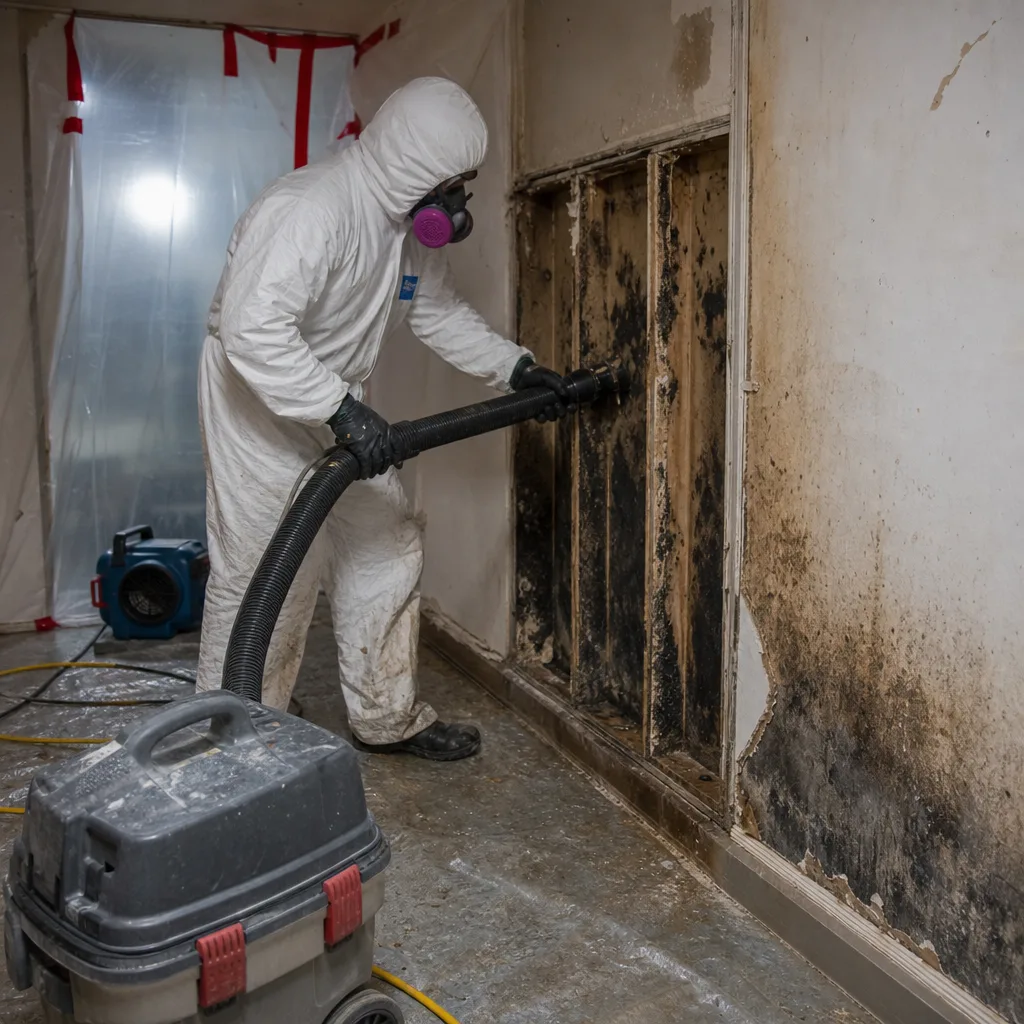
Mold problems in College Point don’t follow the same playbook as mold problems in inland Queens. Here, the water that feeds mold is frequently Category 3, meaning contaminated with sewage, pathogens, or seawater from Flushing Bay. We sample and test before we classify. If a coliform test comes back positive, the entire job shifts from standard drying into full biohazard remediation: containment barriers, HEPA air scrubbing, and removal of porous materials that cannot be sanitized. Skipping that step is how homeowners end up with mold behind fresh paint two years later.
The housing stock in College Point, largely single and two-family detached homes from the 1920s through 1950s, complicates matters further. Plaster-and-lath walls are beautiful and durable, but they dry slowly. Cellulose insulation, common in that era, wicks moisture upward and holds it against framing members. A basement that floods with four inches of brackish water can leave elevated moisture readings inside walls above the flood line for weeks. That’s why our Mold Remediation team insists on moisture mapping, not guesswork, and daily drying logs until the dry standard is reached. You don’t repair a 1940s house on a timeline built for a 1990s sheetrock box.
The high water table along Powell’s Cove and the Flushing Bay waterfront keeps basements perpetually damp even without a storm. Chronic seepage through fieldstone or poorly sealed concrete foundations creates the kind of low-grade, persistent moisture that supports mold growth behind finished basement walls for months before a musty smell gives it away. In College Point, we treat moisture control and mold remediation as one continuous problem, not two separate invoices.
Why College Point Property Owners Choose Floodline Restoration Co.
We know you’ve been burned before. Maybe not by a restoration company. But you’ve been around long enough to know that the lowest bid usually means the most headaches. Here’s what you get when you call us:
- 45-minute response commitment for emergency calls in College Point. We dispatch from our New York City office with crews already stationed in the area.
- A live person answers, 24/7. Not a phone tree. Not a callback service. A dispatcher who knows the difference between a Category 1 and Category 3 event.
- IICRC-certified crews trained to WRT, FSRT, and AMRT standards, plus RIA and IFA protocols. Background-checked and uniformed on every job.
- Free visual inspection with moisture readings. If you don’t need full remediation, we’ll tell you that and hand you a written scope for cleaning only.
- Direct insurance billing. We coordinate with your adjuster, send photos and documentation, and you never play messenger.
- One team from first extraction to final reconstruction. No handoff to a subcontractor you never vetted. The crew that reads the moisture map on day one is the crew that patches the wall on the last day.
Every job in College Point is backed by the 90-Day Done Right Promise. It’s in writing. If it’s not done right, we make it right. No arguing, no paperwork battles. That’s the Keystone Standard, and it’s tied to how we run this company: Krafted right, Every time, Your home first, Standing behind it.
Current offers for College Point homeowners: $50 off any repair over $250, an $89 seasonal tune-up, and a Senior & Veteran 5% discount, always. No expiration dates, no fine print.
Our Mold Remediation Process
Inspection & Assessment
We start with visual inspection, thermal imaging, and moisture mapping across walls, floors, and ceiling cavities. In College Point, we also water-sample for coliform before classifying the damage category. You get a written scope, not a sales pitch.
Containment & Stabilization
If mold or sewage-contaminated water is confirmed, we seal the affected area with 6-mil containment barriers and run HEPA air scrubbers to prevent spore migration into the rest of your house. This step protects your lungs and your furniture.
Drying & Dehumidification
We calculate the exact drying load using industry psychrometrics, then deploy Dri-Eaz and Phoenix dehumidifiers with XPOWER and B-Air air movers. Injectidry systems handle wall cavities and under-cabinet spaces where standard equipment can’t reach. Daily readings are logged and shared with you and your insurer.
Cleaning & Sanitization
All salvageable surfaces get HEPA vacuuming and antimicrobial treatment appropriate to the contamination level. For Category 3 events, that means full biohazard protocols and EPA-registered disinfectants, not just a light cleaning.
Specialty Mold Treatment
For persistent mold in crawl spaces, we address the moisture source first: vapor barriers, drainage corrections, and humidity controls. Then we treat the mold itself. You cannot out-clean a moisture problem, and in College Point, the water table means the moisture source never takes a day off.
Repairs & Restoration
Once the structure passes clearance testing, we rebuild what we removed. Drywall, insulation, trim, paint. The same Floodline crew handles it, and the 90-Day Done Right Promise covers every piece of it.
Need Emergency Mold Remediation in College Point Now?
Crews minutes away, answering live 24 hours a day. The sooner we start, the less it costs.
Working With Your Insurance Company
We’ve handled thousands of Queens claims, and we know what adjusters need to see. From the first hour, we document everything: thermal images, moisture readings, a line-item scope of work with industry-standard pricing. Our team communicates directly with your carrier so you don’t have to translate contractor language into insurance language. If your adjuster has questions, we answer them. If they push back on a line item, we justify it with data.
For College Point homeowners, the big insurance question is always the same: is tidal backflow covered? The answer depends on your policy and your flood rider. We document the cause clearly and accurately. We don’t fudge categories to make coverage easier, and we don’t downgrade a Category 3 event just to avoid a tough conversation. Accuracy protects you in the long run, and it’s what we stand behind.
What We Provide Your Insurer
- Thorough documentation of the loss
- Photos of all damage, room by room
- Moisture readings and drying logs
- A detailed, line-item scope of work
- Direct coordination with your carrier
Built for College Point’s Loss Calendar
Mold in College Point is not a summer problem. It’s a year-round threat because the peninsula’s hydrology never stops working against your foundation. January deep freezes burst supply lines in unheated basements and crawl spaces along 14th Avenue and 18th Avenue. Spring thaw hits at the same time the water table peaks, pushing hydrostatic pressure against foundation walls and creating seepage in older homes that never had drainage systems by design. Summer thunderstorms dump inches of rain in an afternoon, overwhelming perimeter drains and pooling against the low-lying streets near Powell’s Cove.
Nor’easters are the real wildcard. Flushing Bay storm surge backs up into basement drains and floods finished basements with water that already mixed with combined sewer overflows. That’s not a “clean water” event. That’s black water, and it requires biohazard protocols and mold prevention work from day one. If your home in College Point has flooded even once before, you already have the moisture history that mold needs. We inspect for what’s already growing, not just what the last storm left behind.
Mold Remediation Across College Point’s Neighborhoods
College Point is not one uniform housing market. The blocks near the College Point Boulevard corridor and 14th Avenue hold a dense mix of 1930s and 1940s one-family homes, many with finished basements and original fieldstone foundations. Those fieldstone walls breathe, but they also leak under hydrostatic pressure, and that constant dampness feeds a particular kind of mold behind basement drywall and under carpet padding. Our crews in this area spend more time correcting drainage issues than treating visible mold, because the drainage problem is the mold problem.
Closer to Powell’s Cove and the waterfront, homes sit at or near tidal grade. A storm surge that barely gets noticed in Flushing will put six inches of contaminated water into a basement near the Bay. These homes need flood cuts, not just mold dots. We remove drywall to the flood line plus 24 inches, treat the exposed framing, and dry the structure before any rebuild starts. On the eastern side of College Point, toward 23rd Avenue and the East River corridor, the housing skews slightly newer but the water table is still close enough to warrant vapor barrier upgrades in crawl spaces. We recommend crawl space encapsulation for those properties, and we install it to a standard that holds against College Point’s humidity, not one designed for inland Queens.
Specialized Mold Remediation Services We Offer in College Point
Mold Inspection & Testing
Free visual inspection, then sampling when needed: air samples, surface swabs, and coliform water testing for flood-sourced events. In College Point, we don’t assume any basement flood is clean until the lab report says so. You’ll get a written findings report with moisture readings and a recommended scope.
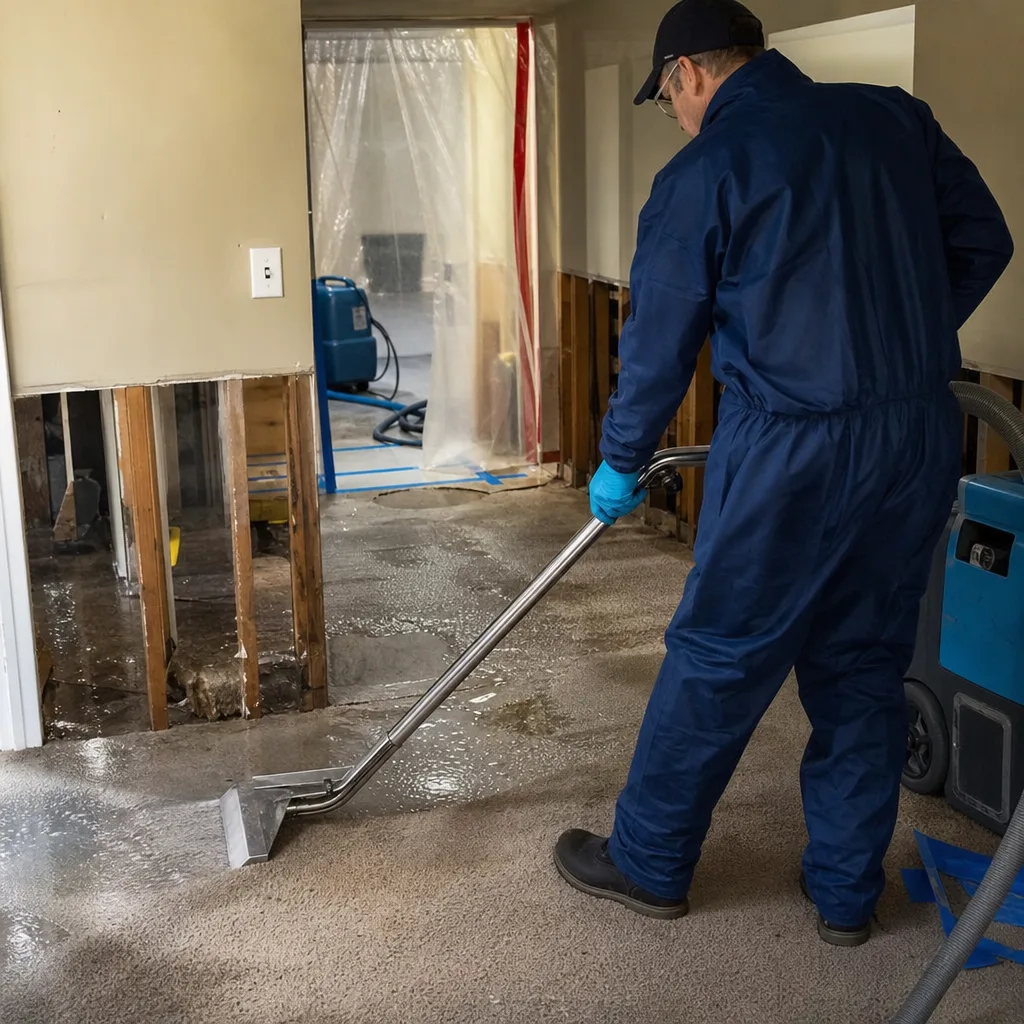
Mold Removal
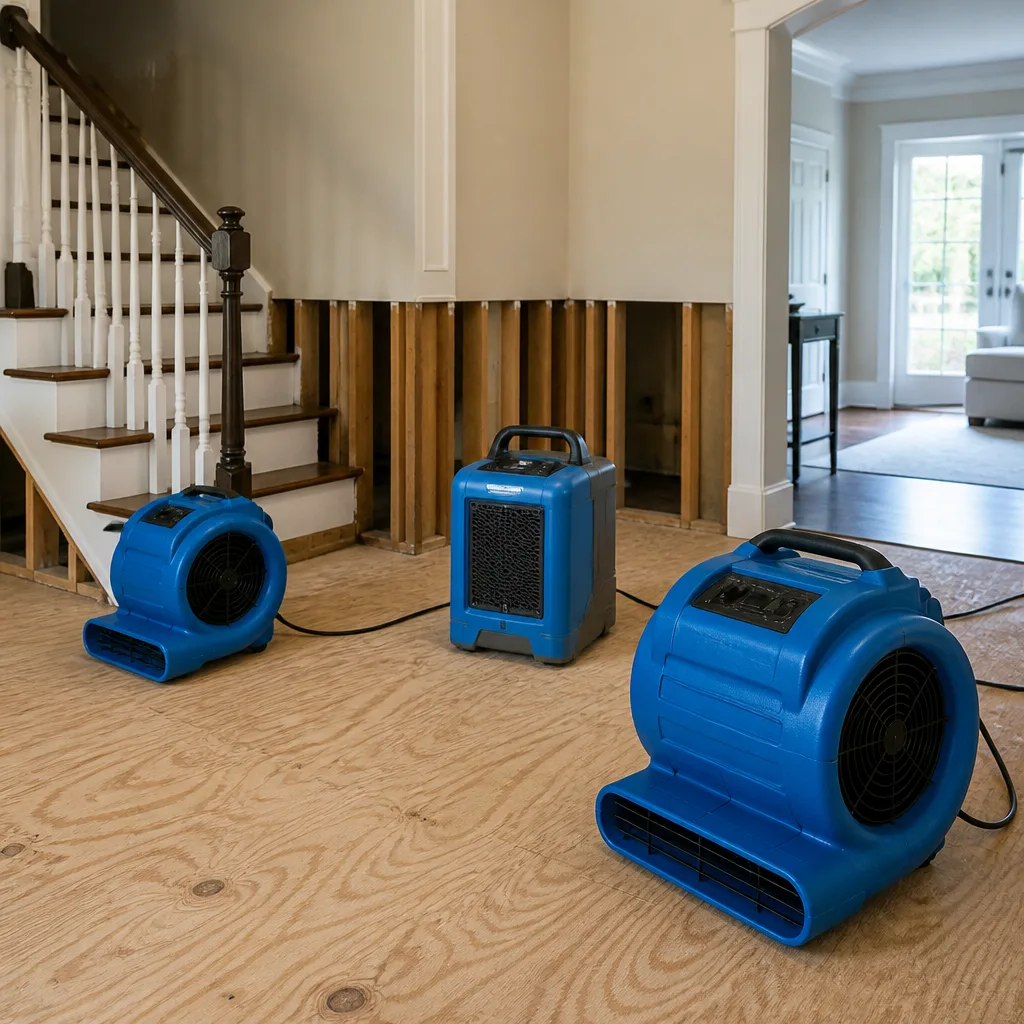
Containment, HEPA air scrubbing, and physical removal of mold-affected porous materials. On 14th Avenue in College Point, our crew arrived after a nor’easter pushed Flushing Bay storm surge into a 1940s one-family home’s finished basement. Moisture mapping found elevated readings across plaster-and-lath walls and cellulose insulation, and a coliform test came back positive, confirming Category 3 water. We set containment, removed saturated wallboard and insulation, applied antimicrobial treatment, and ran structural drying with air movers and dehumidifiers until moisture readings matched pre-loss condition. That’s what done right looks like: no shortcuts, no guesswork.
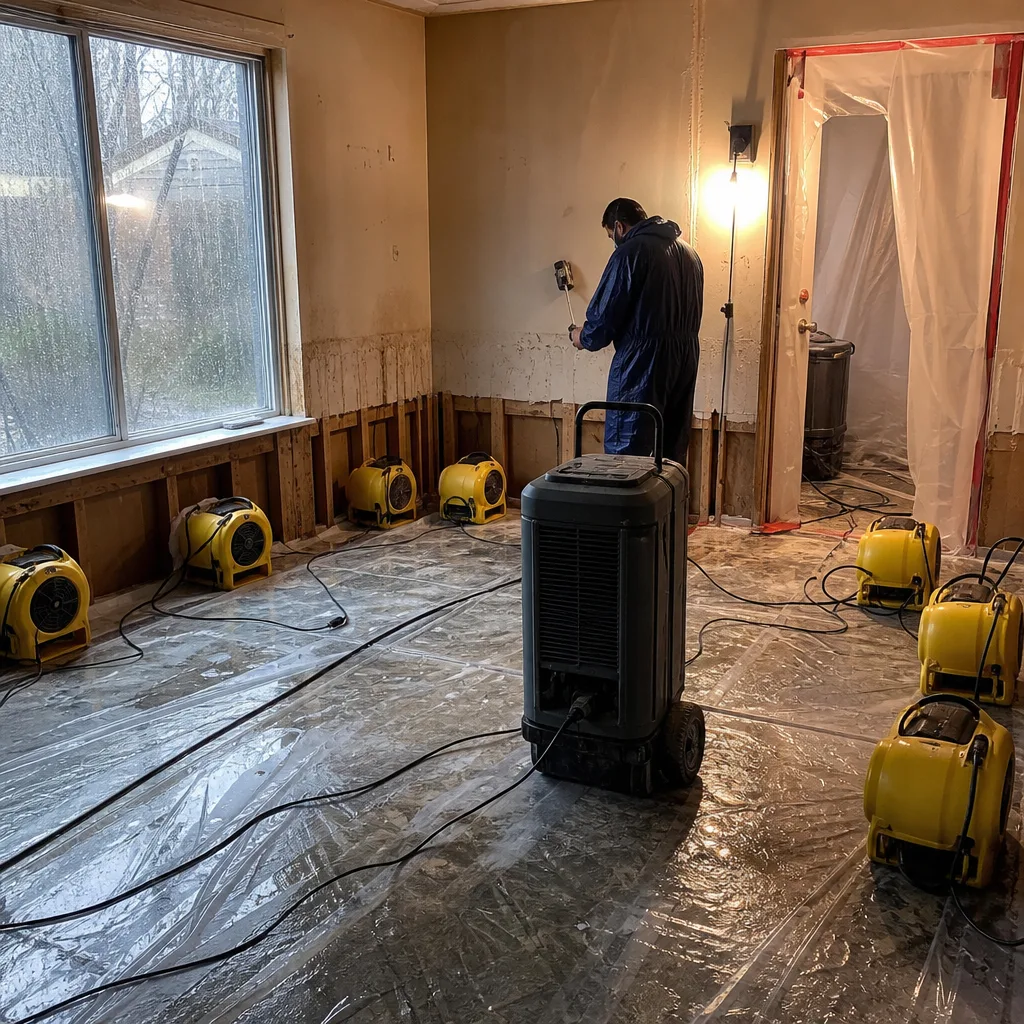
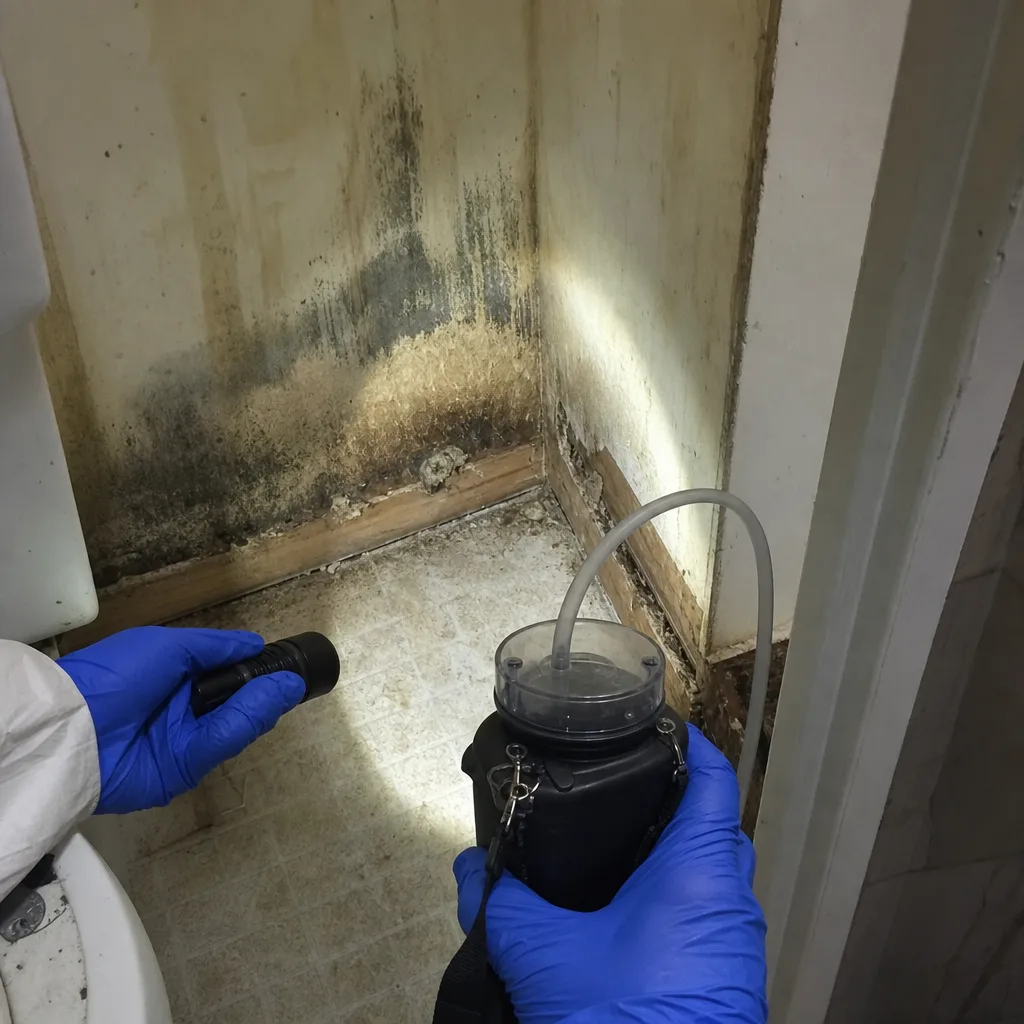
Black Mold Remediation
Black mold, or Stachybotrys, shows up in College Point basements that have experienced repeated flooding or chronic seepage. Because it’s mycotoxin-producing, containment and PPE protocols are non-negotiable. Our crews are trained to handle it, and our 90-Day Done Right Promise covers the result specifically. If black mold returns because we didn’t address the moisture source, we fix it. That’s the point.
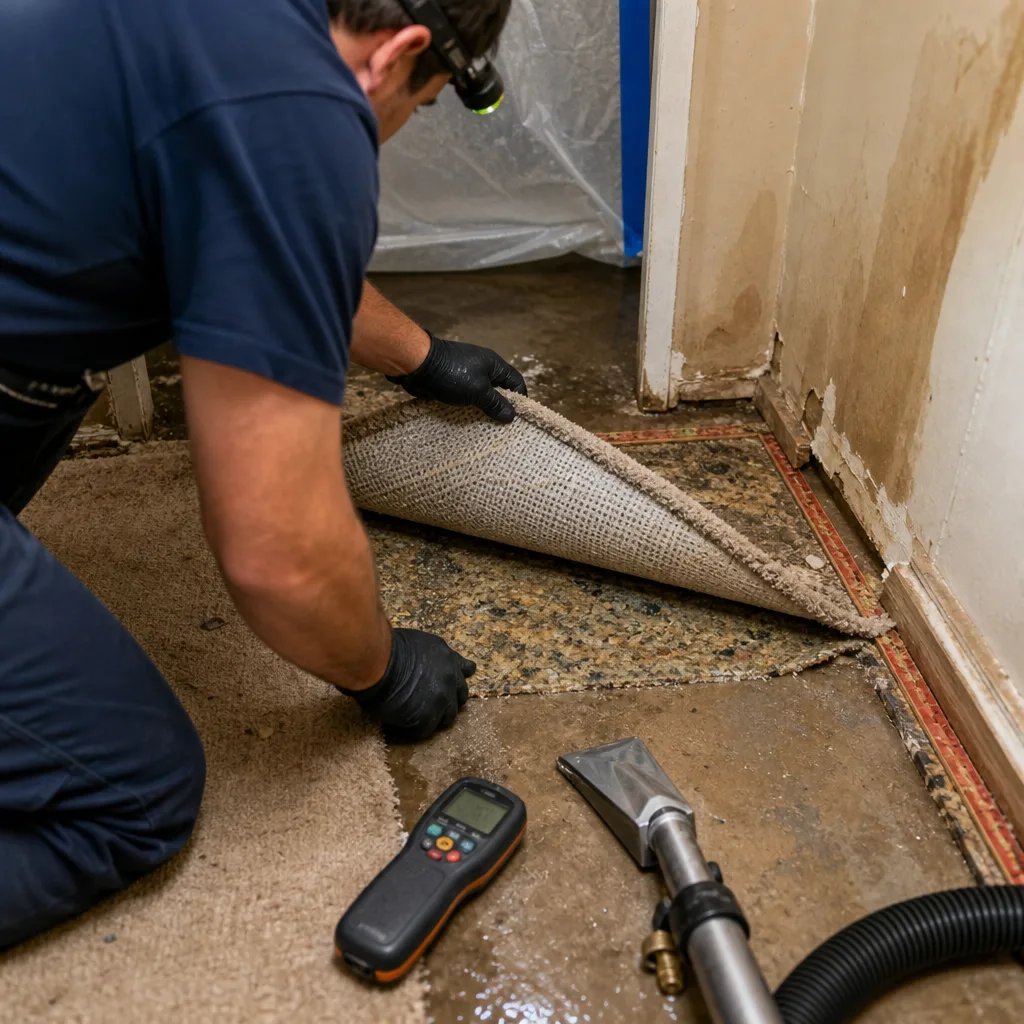
Air Quality Restoration
After remediation, we run HVAC cleaning and HEPA filtration to restore indoor air quality. This matters in College Point because finished basements here often share air handlers with the rest of the house, meaning mold spores from a basement contamination event can circulate through every room in the home. We clean the whole system, not just the affected room.
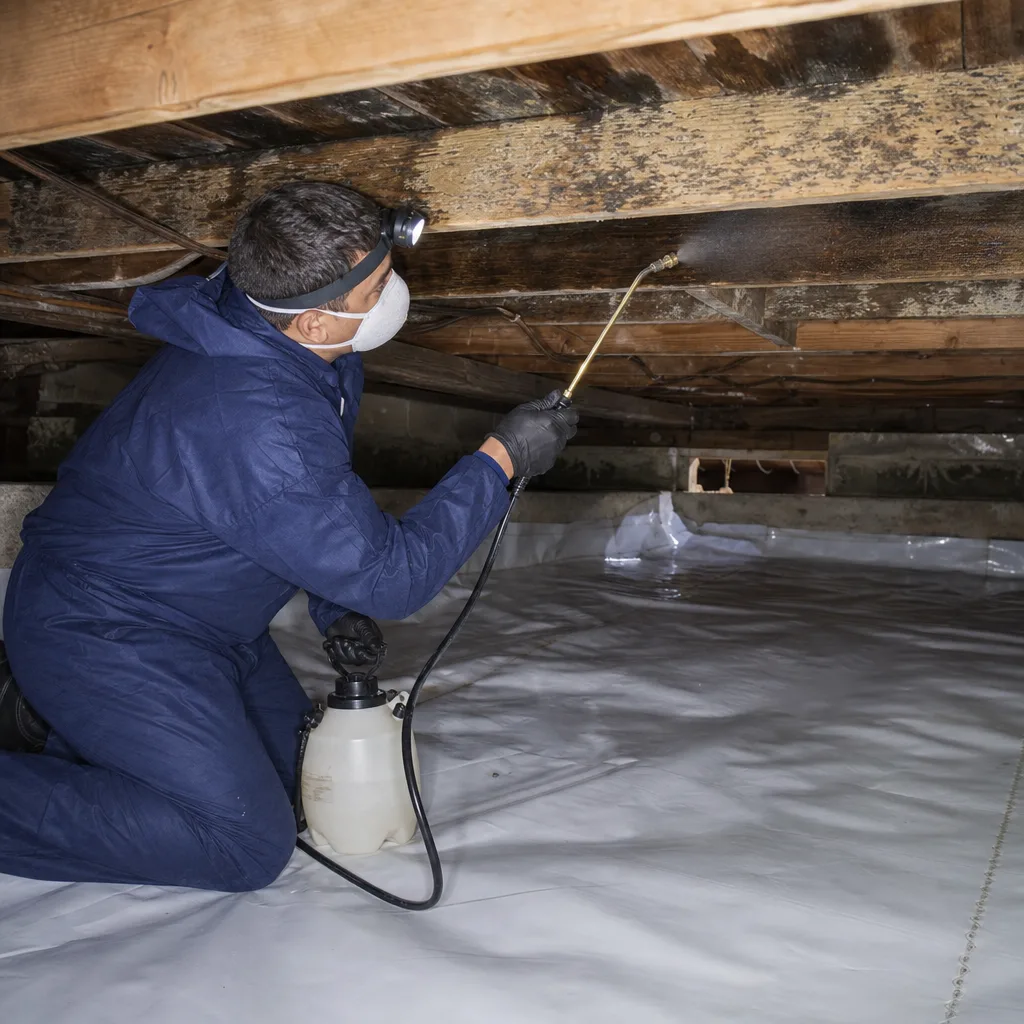
Crawl Space Treatment
College Point’s high water table makes crawl spaces the single most common source of hidden mold growth. We inspect joists, subflooring, and insulation, then address the moisture: drainage corrections, vapor barriers, and dehumidification. If your crawl space smells musty in the summer, there’s already mold activity. We can verify it and fix it.
Moisture & Humidity Control
Prevention is the least expensive remediation. We install and service basement dehumidification systems, sump pumps, and perimeter drainage. For College Point homes, where the water table sits close to the surface, we recommend continuous monitoring and regular seasonal checks. A $89 seasonal tune-up catches a failing sump pump before it becomes a $3,000 mold job.
What happens when you call
- 1
A real person answersNo phone trees - you reach a local pro.
- 2
You get an upfront price rangeHonest numbers before anyone is dispatched.
- 3
A background-checked tech heads outLicensed & insured, dispatched right away.
- 4
You approve before work beginsNothing starts until you say go.
Mold Remediation Costs in College Point, NY
Here are honest numbers for the College Point market. A standard mold inspection with air sampling runs $350-$600. Targeted mold removal from a single wall or ceiling section typically costs $800-$2,200. Full basement remediation in a 1920s-1950s one-family home, including containment, black water protocols, material removal, drying, sanitization, and basic rebuild, runs $3,000-$9,000 depending on square footage and finish level. Crawl space encapsulation with mold treatment runs $4,000-$12,000 depending on crawl space size and access conditions.
What moves the price in College Point specifically: whether the water source was tidal backflow (which adds coliform testing, biohazard PPE, and more aggressive material removal), whether your home has plaster-and-lath walls that dry slowly, and whether your basement is finished. A finished basement with carpet, drywall, and insulation costs more to remediate than an unfinished basement with bare concrete. Your insurance may cover part or all of the work, and we bill your carrier directly when coverage applies. The path to a firm scope starts with a free visual inspection. Call (518) 872-6111 and we’ll come see what you’re dealing with.
We Also Serve Cities Near College Point
Our crews cover the surrounding Queens shoreline and inland neighborhoods, including Flushing, Whitestone, East Elmhurst, and Corona. If you’re just outside College Point proper, call us anyway. We’ll confirm coverage in under two minutes on the phone, and the closest available crew gets moving immediately.
Serving College Point, NY - Our Local Coverage Area
We’re based in the College Point area and know this community well. Use the map below to see our service coverage - if you’re nearby, we can almost certainly help.
College Point Mold Remediation Questions, Answered
Does every basement flood in College Point require Category 3 protocols?
Not every flood, but many do. Because Flushing Bay’s combined sewer overflow outfalls sit close to College Point, water that looks like plain groundwater frequently tests positive for sewage contamination. We send samples for coliform testing before classifying any flood as Category 1 or 2. If it tests positive, we treat it as Category 3 with full biohazard protocols. That protects the health of anyone living in the house and ensures the remediation actually removes the contaminants, not just the visible water. Call (518) 872-6111 and we’ll walk you through the testing.
Why does mold seem to return faster in College Point homes than in other Queens neighborhoods?
Because the water table is higher and the housing stock is older. Plaster-and-lath walls and cellulose insulation from the 1920s through 1950s hold onto moisture far longer than modern drywall. If you dry the surface but not the wall cavity, mold comes back inside months. Our moisture mapping and daily drying logs address the real problem: hidden moisture in structural cavities. We don’t call a job done until readings match pre-loss condition, not just until the surface feels dry.
Do you need to remove plaster-and-lath walls after a black water flood in College Point?
Usually yes. Plaster is porous and cannot be thoroughly sanitized after Category 3 water saturation. Lath and stud cavities behind it hold contaminated moisture and mold spores. In most black water events, we remove the affected plaster-and-lath assembly, treat the exposed framing, dry the cavity completely, and then rebuild with modern materials. It’s more work than drywall demolition, but leaving contaminated plaster in place is how hidden mold problems start.
How does Floodline Restoration Co. handle mold in College Point crawl spaces?
We start with the moisture source. In College Point, that’s usually hydrostatic pressure from the high water table or poor drainage around the foundation. We install vapor barriers, correct drainage, and set dehumidification before treating the mold itself. Then we clean and treat affected joists and subflooring. Attempting mold removal without correcting the water source is a waste of your money, and we won’t do it. Call (518) 872-6111 for a crawl space assessment.
Will my homeowner’s insurance cover mold remediation in College Point if the water came from tidal backflow?
Coverage depends on your policy and whether you carry flood insurance. Standard homeowner’s policies often exclude flood-related damage, including tidal backflow. Some policies cover mold remediation if it follows a covered water event, like a burst pipe. We document the cause of the loss accurately and work directly with your adjuster. We won’t shade the facts to get a claim through, but we will make sure every legitimate line item is documented and justified. Estimates are free, and we bill your carrier directly when coverage applies.
How fast can someone actually get to my College Point house?
In most cases, within 45 minutes of your call. We answer live 24/7 and dispatch crews already stationed in the College Point area. For active water intrusion or visible black mold, we treat it as an emergency. The first hour matters because mold establishes quickly and spreads through wall cavities and HVAC systems faster than homeowners expect. Call (518) 872-6111 now if you have standing water or visible mold growth.
Do I really need full remediation or just a cleaning?
It depends on the source and the extent. Surface mold on a small area with a known, fixed moisture source can sometimes be cleaned. Mold behind walls, under flooring, or connected to Category 3 water events requires full remediation. We’ll tell you the truth either way. Our free inspection includes moisture readings and a written scope. If it’s a cleaning job, we’ll give you that price and not a remediation proposal.
What certifications do your mold remediation technicians hold?
Our crews are IICRC-certified in Water Damage Restoration, Fire and Smoke Restoration, and Applied Microbial Remediation. They also train to RIA and IFA standards. Every technician is background-checked and uniformed. In College Point specifically, our field team carries additional protocol training for testing and treating sewage-contaminated floodwaters, because the Bay’s CSO outfalls make that a routine part of the job here.
Written by Curt Bowman, Owner at Floodline Restoration Co., providing mold remediation and full-cycle restoration across College Point and nearby Queens neighborhoods. Founded in 2010 and still answering the phone live, 24 hours a day.