

Free visual inspection and a written scope of work before any mitigation begins - photos, moisture readings, and drying logs go in your claim file
The scope we write is the scope we bill. Anything new gets shown to you, in writing, before we touch it.
Storm responseSewage cleanup
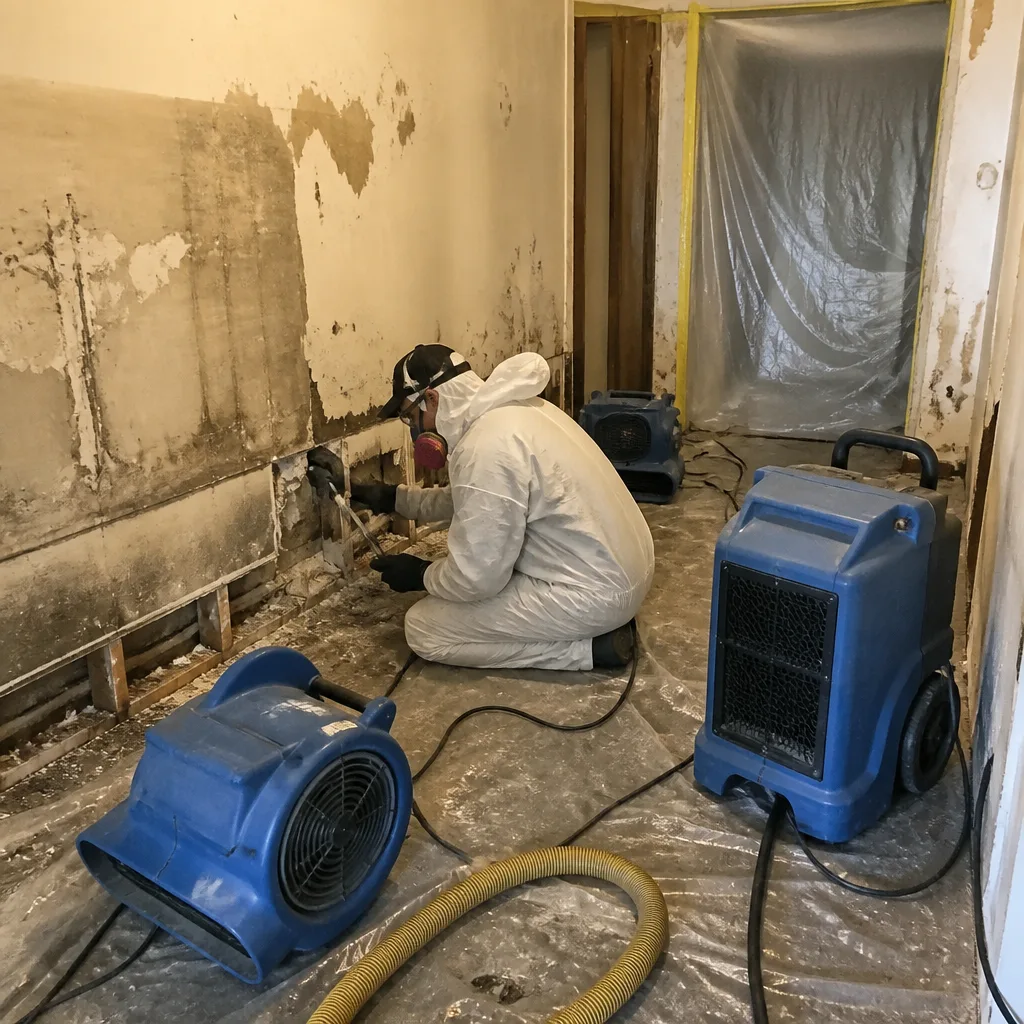 Before
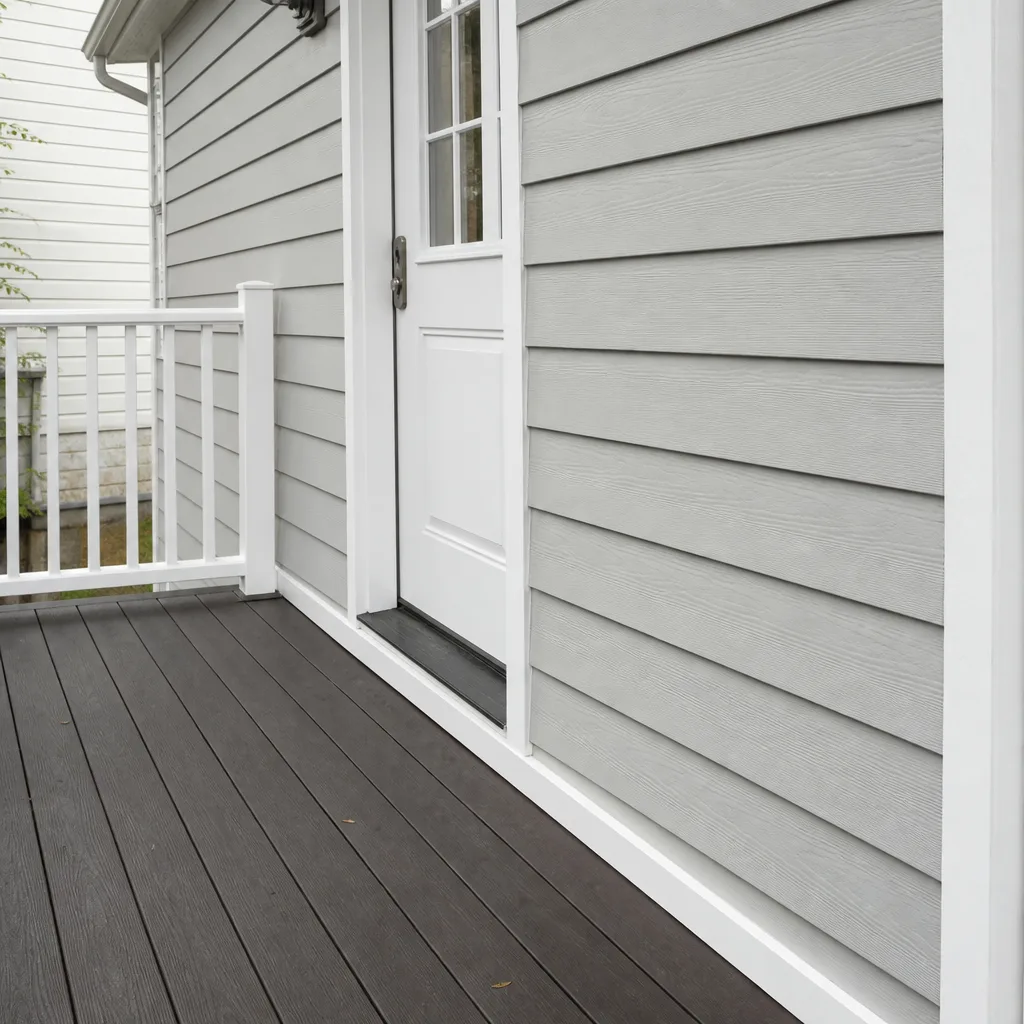 After
After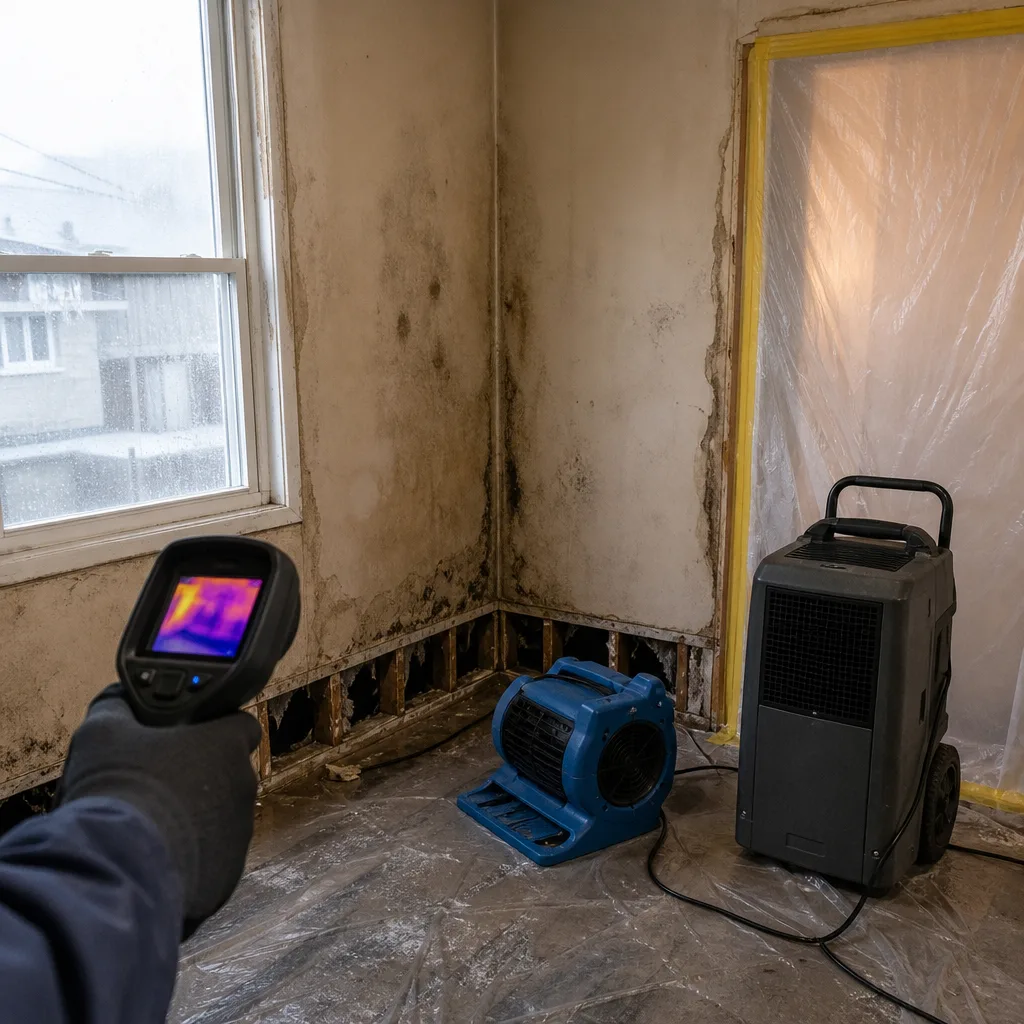 Before
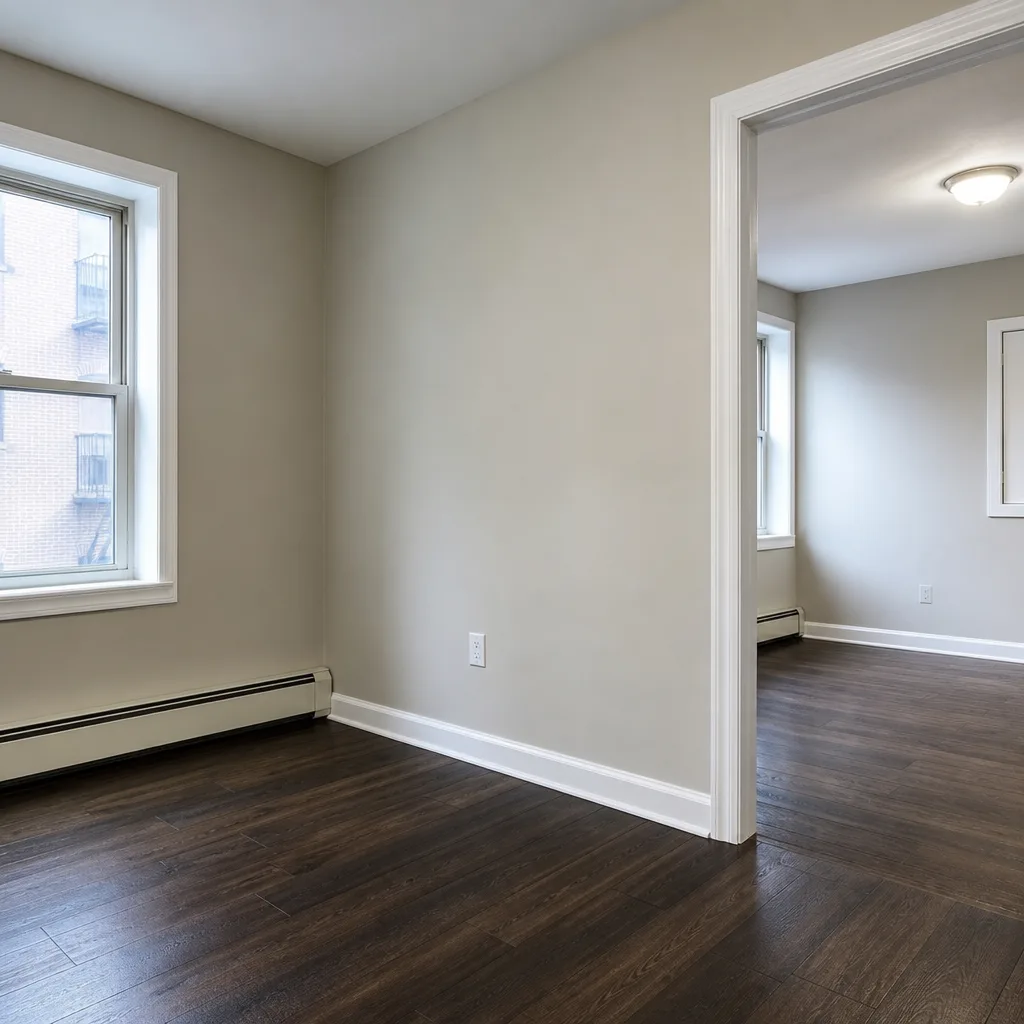 After
After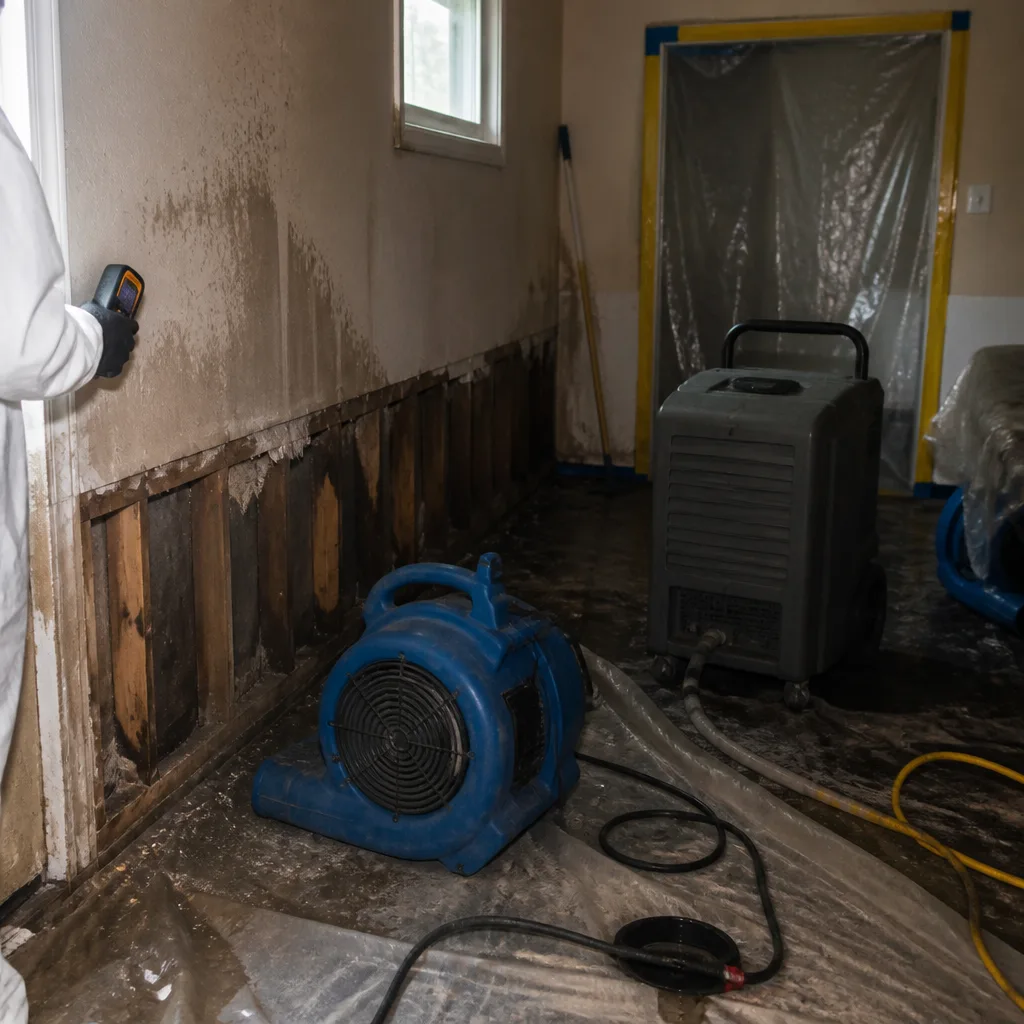 Before
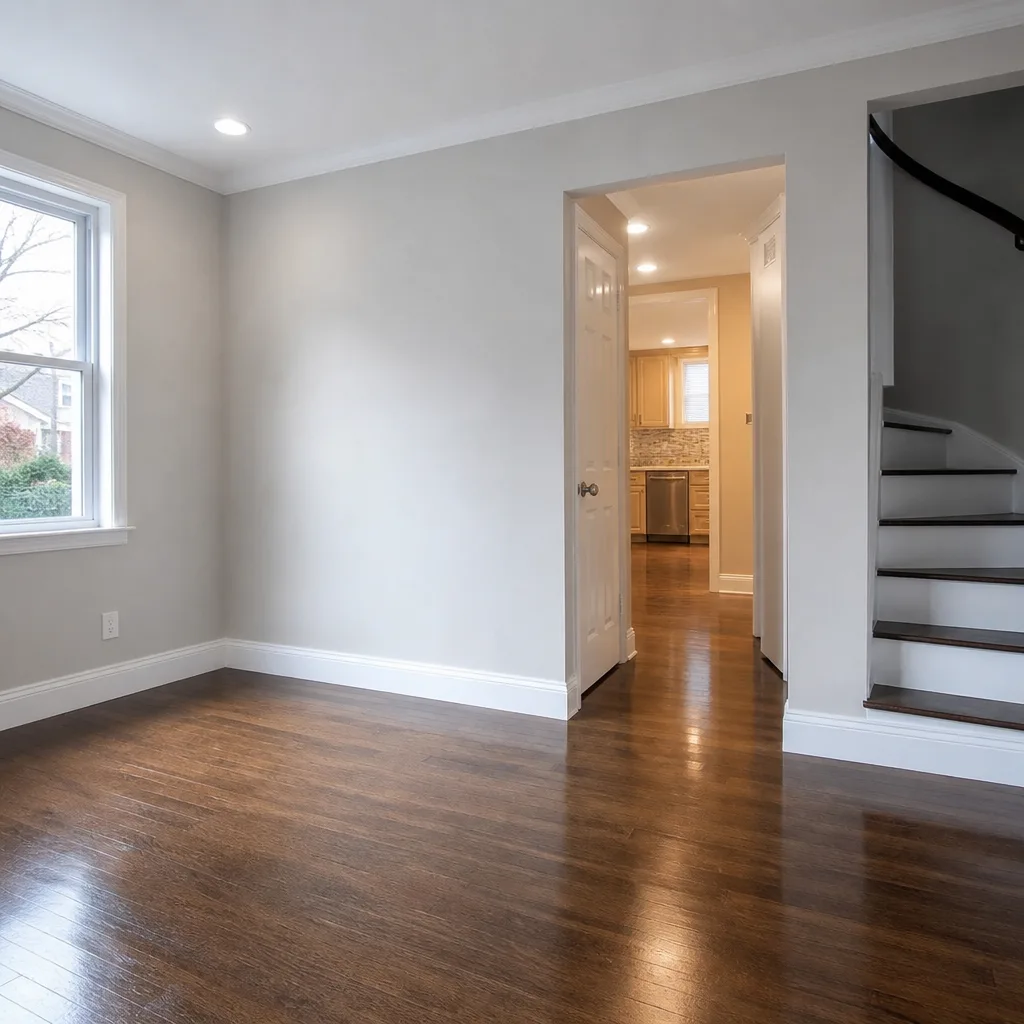 After
After24/7 Emergency Mold Remediation in Whitestone
Mold remediation in Whitestone typically runs $1,800-$6,500 depending on how far the growth has spread and whether it’s behind walls or in crawl spaces. Most jobs in the area take 3-7 days from containment to clearance testing. If you’ve found mold, call Floodline Restoration Co. at (518) 872-6111 - a live person answers, day or night, and we’ll have a certified crew at your door within 45 minutes for a free visual inspection.
Whitestone homes don’t give you much warning. A finished basement near Flushing Bay can look dry for months after a nor’easter while mold colonizes the wall cavities behind fresh drywall. The first hour after you spot it matters because mold spreads through HVAC returns and open wall cavities faster in the humid, salt-laden air that sits over this peninsula. We dispatch from our New York City office directly into Whitestone, so there’s no transfer delay and no crew you’ve never met showing up at your door.
Every job starts with moisture mapping, not guesswork. We find where the water is hiding, contain the affected area, and start air scrubbing the same visit. Done right, and backed in writing.
Understanding Mold Remediation Severity in Whitestone Properties
Mold severity in Whitestone breaks down along the age and construction of the house. The brick colonials, Cape Cods, and ranches built between the 1940s and 1970s share a common problem: thick masonry walls that absorb water slowly and release it even slower. When floodwater or groundwater gets into a brick wall cavity, the surface can feel dry while the interior stays damp for months. That’s where the worst mold hides.
We classify remediation work by the extent of contamination. Level 1 is surface growth under 10 square feet, often from condensation on basement walls or a minor leak. Level 2 covers 10-100 square feet, frequently triggered by plumbing failures or seasonal groundwater pushing through foundation cracks. Level 3 goes beyond 100 square feet or into HVAC systems and wall cavities, which is common in Whitestone’s waterfront blocks after storm surge. Level 3 requires full containment, negative air pressure, and HEPA air scrubbing until post-remediation clearance testing shows spore counts back to normal.
Older galvanized plumbing in 1950s-era Whitestone homes adds another layer. Pin leaks inside walls can run unnoticed for months, feeding concealed mold that no surface cleaning will fix. That’s why we start every job with thermal imaging and moisture meters, not just a visual walkthrough.
Why Whitestone Property Owners Choose Floodline Restoration Co.
- 45-minute response commitment. We reach Whitestone addresses fast because our dispatch board routes local crews from within the borough, not from a regional hub two hours away.
- A live person answers, 24/7. At 2 a.m. you get a dispatcher, not a recording. You’ll know who’s coming and when they’ll be there.
- IICRC-certified technicians. Our crews hold WRT and AMRT certifications through the IICRC, with additional RIA and IFA training. The person running remediation on your Whitestone basement has done this work before.
- Free visual inspection with moisture mapping. Before we quote anything, we find the moisture. No charge for the assessment, no obligation to proceed.
- Direct insurance billing. We work with your carrier, provide the documentation they need, and bill them directly. You’re not the messenger between us and your adjuster.
- One team from start to finish. Extraction, drying, remediation, and rebuild are handled by the same certified crew. No mid-job handoff to a subcontractor you’ve never met.
Our Mold Remediation Process
Inspection & Assessment
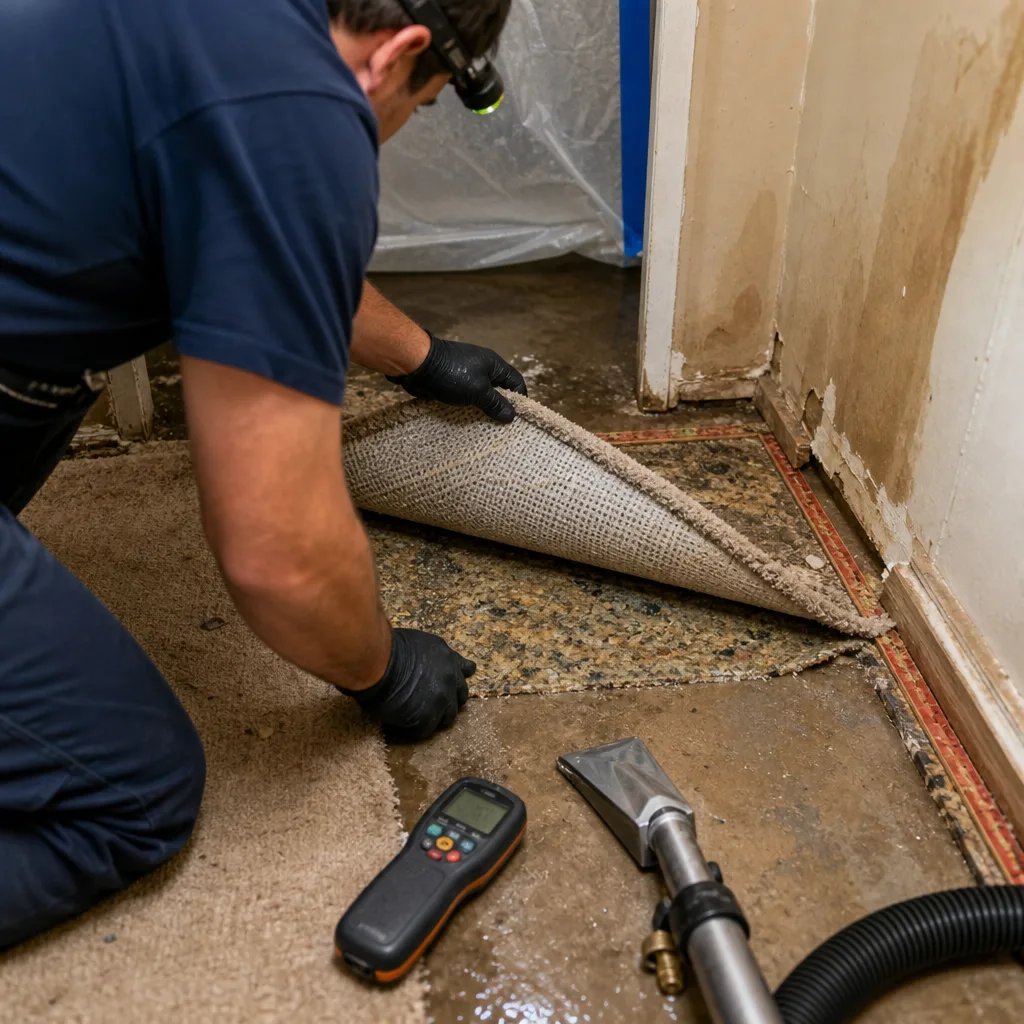
We start with a visual inspection plus thermal imaging and moisture meters to map exactly where water has intruded. In Whitestone’s brick homes, this means checking wall cavities, not just surfaces.
Containment & Source Stabilization
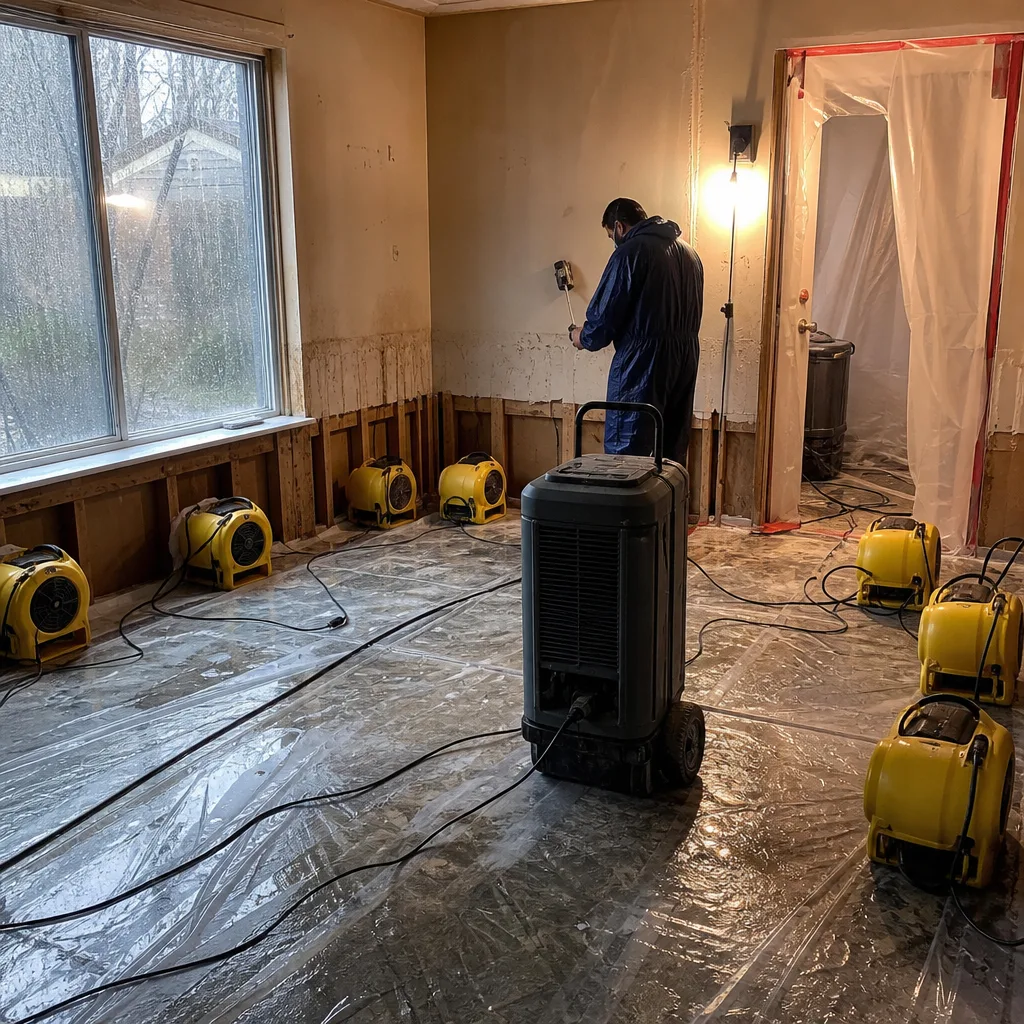
Before any removal begins, we seal off the affected area with 6-mil polyethylene sheeting and establish negative air pressure using HEPA-filtered air scrubbers so spores don’t spread to unaffected rooms.
Drying & Dehumidification
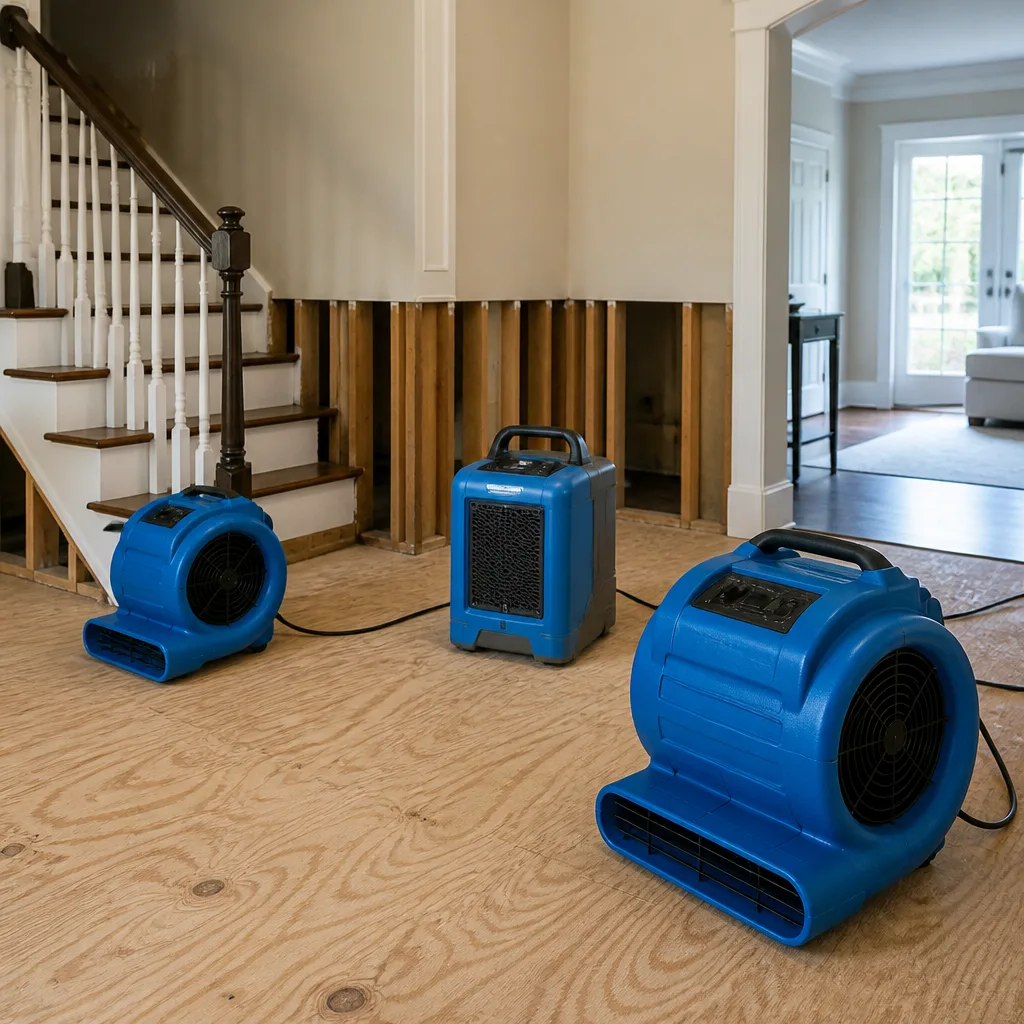
Professional-grade Dri-Eaz and Phoenix dehumidifiers plus high-velocity air movers pull moisture from wall cavities, subflooring, and crawl spaces. Daily readings are logged until the dry standard is met.
Cleaning & Sanitization
Affected surfaces are HEPA-vacuumed, scrubbed, and treated with EPA-registered antimicrobial agents. Contaminated porous materials like drywall and insulation are removed and properly disposed of.
Moisture & Humidity Control Treatment
We address the conditions that caused the mold, sealing foundation cracks, upgrading crawl space vapor barriers, and recommending dehumidification systems where Whitestone’s salt air and high humidity demand it.
Repairs & Restoration
We replace removed drywall, insulation, and trim, then finish surfaces. The same crew that opened the wall closes it back, with a written record of every reading and treatment along the way.
Need Emergency Mold Remediation in Whitestone Now?
Crews minutes away, answering live 24 hours a day. The sooner we start, the less it costs.
Working With Your Insurance Company
Mold remediation claims in Whitestone come with extra scrutiny, especially on waterfront blocks where carriers know repeat flood exposure is likely. That’s why our documentation starts the moment we arrive. We photograph every angle, log moisture readings daily, and write a line-item scope of work your adjuster can verify without three rounds of questions.
If your mold stems from a covered peril, like a burst pipe or storm surge that’s included in your policy, we handle the claim directly. We’ve been doing this for over 42 years and we’ve learned that adjusters approve what they can see and measure. We give them both, in writing, from the first hour. Curt Bowman built this company around a dispatch board, not a sales desk, and that means the person documenting your loss is the same person doing the work.
What We Provide Your Insurer
- Thorough documentation of the loss
- Photos of all damage, room by room
- Moisture readings and drying logs
- A detailed, line-item scope of work
- Direct coordination with your carrier
Built for Whitestone’s Loss Calendar
Whitestone’s mold problems follow the water, and the water follows the seasons. January and February bring deep freezes that stress aging galvanized supply lines inside uninsulated exterior walls. A pinhole leak behind a 1960s brick colonial’s kitchen wall can run for weeks before anyone sees staining. Spring thaw pushes groundwater up against foundation walls, seeping through old mortar joints and into finished basements near Parsons Boulevard and 14th Avenue corridors.
Summer thunderstorms dump inches of rain in an afternoon, overwhelming perimeter drains on blocks that sit just a few feet above sea level. Then comes nor’easter season, from September through March, when storm surge off the East River and Flushing Bay pushes saltwater under basement doors and through utility penetrations. The salt makes it worse, corroding metal and accelerating mold growth behind masonry where you can’t see it. We plan our equipment staging around this cycle because we’ve been answering these calls in Whitestone long enough to know when they’ll come.
Mold Remediation Across Whitestone’s Neighborhoods
The waterfront streets near Flushing Bay and the East River shoreline see the worst of the storm surge, and they’re where we most often find hidden mold that’s been building since Hurricane Sandy. These are the brick colonials where water sat inside wall cavities for weeks in 2012, got patched and painted, and is now showing the consequences. We work these blocks with full containment and wall-cavity moisture mapping on almost every job.
Inland, around Clintonville Street and the residential blocks between Cross Island Parkway and Francis Lewis Boulevard, the pattern shifts. Here it’s more often groundwater seepage through foundation cracks, failed perimeter drains, and crawl space moisture under 1940s-era ranches. The homes are solid, but the crawl spaces were never sealed properly, and decades of Whitestone’s humid summers have left a layer of visible mold on the floor joists and subflooring.
Up near Whitestone’s northern tip, close to Powell’s Cove Park and the Whitestone Bridge approach, homes face both tidal flooding and wind-driven rain that finds every gap in aging brick pointing. Freeze-thaw cycles crack the mortar, water gets inside, and mold grows in the stud bays where nobody looks until the musty smell comes through the baseboard.
Every neighborhood responds differently, and that’s why we never apply a one-size-fits-all remediation plan. A basement near the bay needs different treatment than a crawl space near the park. We read the house before we quote it.
Specialized Mold Remediation Services We Offer in Whitestone
Mold Inspection & Testing
Before any remediation starts, we identify exactly what you’re dealing with. We use thermal imaging to find moisture behind Whitestone’s brick walls, moisture meters to quantify readings, and we can arrange third-party lab testing for mold species identification when the situation calls for it, particularly black mold concerns near occupied bedrooms or for homeowners with respiratory conditions.
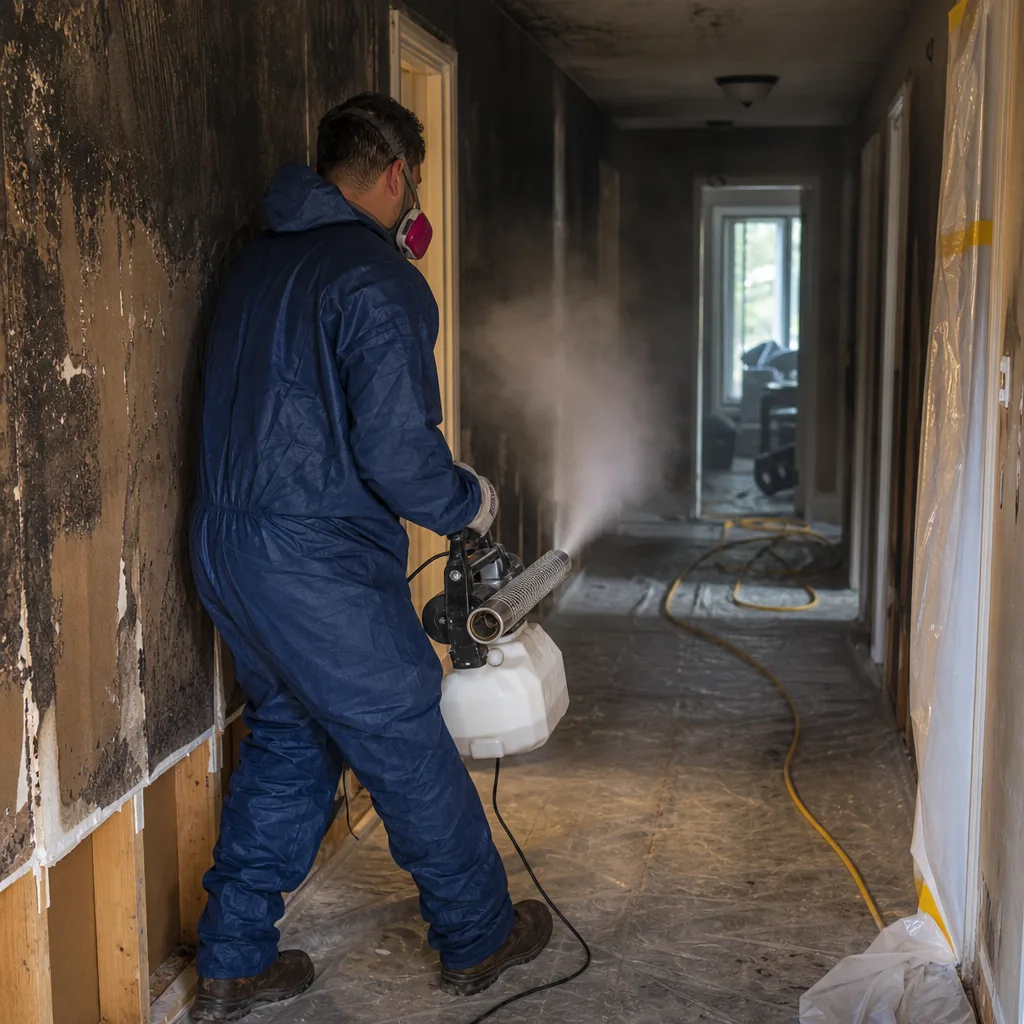
Mold Removal
Removal goes beyond scrubbing visible spots. In Whitestone’s older homes, we remove affected drywall, insulation, and trim to expose the wall cavities where active growth continues unseen. Only then do we treat, dry, and rebuild. Surface cleaning alone is why so many homeowners face recurring mold after previous “fixes.”
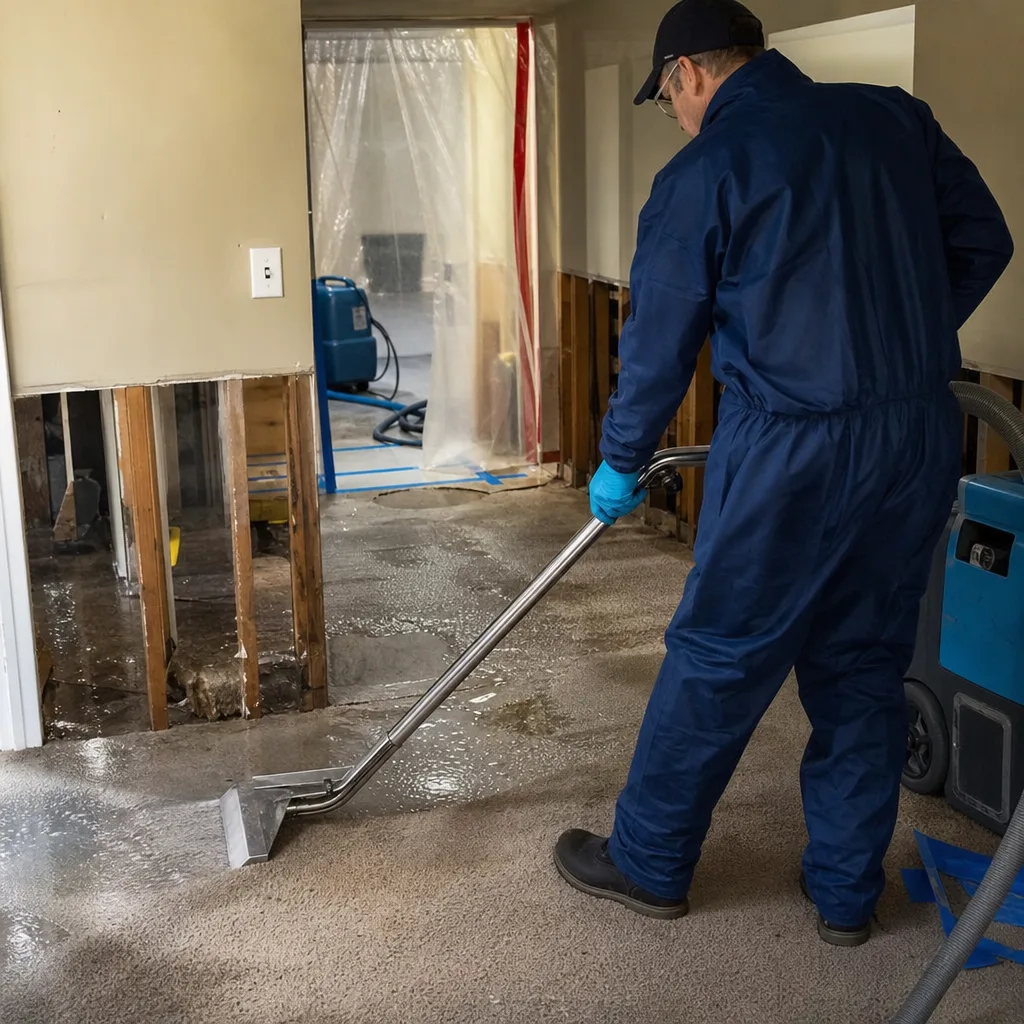
Black Mold Remediation
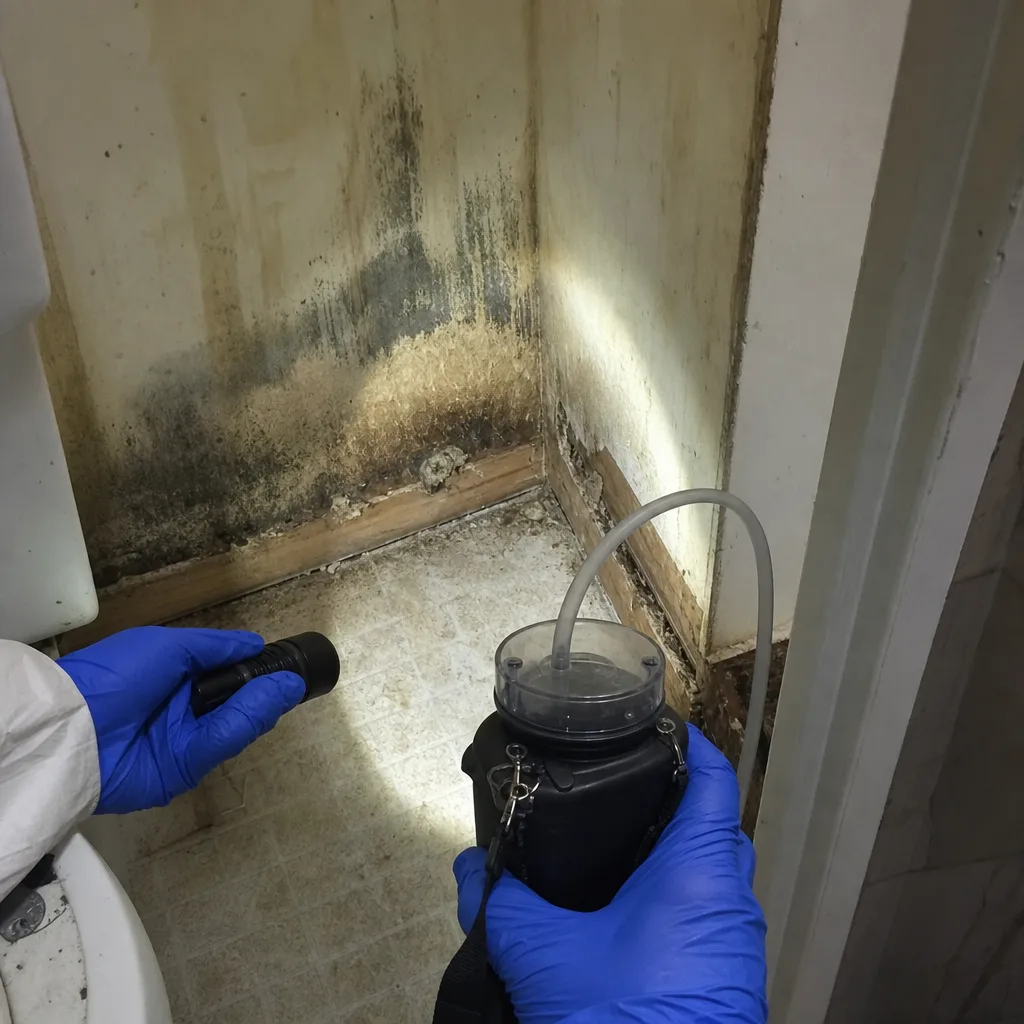
Black mold, or Stachybotrys, is common in Whitestone basements that have seen standing water from storm surge or pipe failures. It grows on water-damaged drywall and cellulose materials, and it requires full containment with HEPA filtration. Our crew holds AMRT certification through the IICRC, so the technician running containment on your basement is trained specifically for mold remediation work.
Air Quality Restoration
After remediation, we run HEPA air scrubbers to bring airborne spore counts down to the post-remediation clearance standard. For Whitestone homes near the water, we often recommend ongoing humidity control, because the salt-laden air keeps indoor humidity high even when the water intrusion is fixed. We’ll tell you what’s needed, not just what’s billable.
Crawl Space Treatment
Crawl spaces under 1940s and 1950s Whitestone ranches are a frequent source of mold that migrates up into living spaces. We remove contaminated insulation, treat the framing, and install proper vapor barriers. Where the salt air from Flushing Bay keeps humidity high, we may recommend an encapsulation or a dehumidification system sized for the space.
What happens when you call
- 1
A real person answersNo phone trees - you reach a local pro.
- 2
You get an upfront price rangeHonest numbers before anyone is dispatched.
- 3
A background-checked tech heads outLicensed & insured, dispatched right away.
- 4
You approve before work beginsNothing starts until you say go.
Mold Remediation Costs in Whitestone, NY
Mold remediation in Whitestone runs between $1,800 and $6,500 for most residential jobs. A small surface mold issue in a basement corner might run $1,800-$2,800. Full basement remediation with containment, drywall removal, cavity treatment, and rebuild typically lands between $3,500 and $6,500. Crawl space treatment with vapor barrier replacement runs $2,200-$4,500 depending on square footage and access.
What moves the price: square footage of affected area, whether mold is inside wall cavities or just on surfaces, whether containment is required, and whether the crawl space or attic is involved. If your insurance covers the loss, you’ll pay your deductible and we bill the carrier directly. If it’s out of pocket, we give you a written, line-item scope before any work begins so the final bill matches the quote. A square deal: no surprises on the bill.
Call (518) 872-6111 and we’ll come out for a free visual inspection and moisture mapping. That gives you a firm number, not a range, before you commit to anything.
We Also Serve Cities Near Whitestone
Floodline Restoration Co. provides the same certified mold remediation service across Mold Remediation in Whitestone and the surrounding Queens communities, including Flushing, Bayside, College Point, and Fresh Meadows. If you’re in any of these areas, the same 45-minute response commitment and live 24/7 dispatch applies.
Serving Whitestone, NY - Our Local Coverage Area
We’re based in the Whitestone area and know this community well. Use the map below to see our service coverage - if you’re nearby, we can almost certainly help.
Whitestone Mold Remediation Questions, Answered
Why does mold keep returning in my Whitestone basement after a flood even though I painted over the walls?
Because the mold was never removed, it was just covered. Painting over damp brick walls in Whitestone’s older colonials seals moisture inside the wall cavity, which is exactly where mold thrives. The brick absorbs floodwater, the paint traps it, and the mold grows behind the fresh coat. Proper remediation requires opening the wall, drying the cavity, treating with antimicrobials, and only then rebuilding. Call (518) 872-6111 for a free inspection with moisture mapping.
How do you know if a Whitestone home has hidden mold after Hurricane Sandy if it looks fine now?
You don’t see it, but you check for it with the right tools. We use thermal imaging cameras and moisture meters to read wall cavities behind drywall. In Whitestone’s 1950s-60s brick colonials, Sandy-era water often sat inside masonry walls for weeks. If a contractor only patched and painted, the moisture stayed trapped. Elevated readings on our meters reveal exactly where hidden mold is still active. We’ve found it in homes that looked spotless.
Can you handle mold in the crawl space of an older Whitestone ranch home near the water?
Yes. Crawl space mold under Whitestone’s 1940s-era ranches is one of the most common jobs we do near the water. We remove contaminated insulation, treat the framing, and install proper vapor barriers. Where salt-laden air from Flushing Bay keeps humidity high, we may recommend crawl space encapsulation or a dehumidification system. We’ll map the moisture first and give you a written scope before any work begins.
Does mold remediation in Whitestone require special containment because of the brick construction?
Yes, in most cases. Whitestone’s brick homes hold moisture in wall cavities that drywall alone doesn’t reveal. When we open those walls, mold spores can release into the living space. Full containment with 6-mil poly sheeting, negative air pressure, and HEPA air scrubbing keeps spores from spreading to unaffected rooms. Our IICRC-certified AMRT technicians run containment on every job where wall cavities are involved.
What’s the fastest way to know if my Whitestone basement has mold from last year’s nor’easter?
Call us at (518) 872-6111 and we’ll come out with thermal imaging and moisture meters. The free visual inspection takes about 30 minutes, and the readings will tell us within that visit whether water is trapped in your walls or under your floor. If there’s moisture, there’s almost certainly mold, and we’ll show you the readings on the spot.
How quickly can you get to a Whitestone home for mold remediation?
We commit to 45 minutes from the time you call. Our dispatch board routes local crews directly into Whitestone, and a live person answers the phone 24/7. For active mold growth, we begin containment and air scrubbing on the same visit, not days later.
Will my insurance cover mold remediation in Whitestone?
It depends on the source of the water. If mold results from a covered peril like a burst pipe or storm surge included in your policy, remediation is often covered. We document everything from the first hour with photos, moisture logs, and a line-item scope written to insurance industry standards, and our team coordinates directly with your adjuster. Call (518) 872-6111 and we’ll help you understand your coverage before any work starts.
Can my family stay in the house during mold remediation?
For Level 1 or Level 2 surface mold limited to a contained area, yes, in most cases. For Level 3 mold where wall cavities are opened or HVAC systems are affected, we recommend staying elsewhere until clearance testing confirms the air is clean. The decision depends on the extent of contamination, whether anyone in the home has respiratory conditions, and what our initial assessment shows. We’ll give you a straight answer, not a guess.
Written by Curt Bowman, Owner at Floodline Restoration Co., serving Whitestone for over 42 years.