

Free visual inspection and a written scope of work before any mitigation begins - photos, moisture readings, and drying logs go in your claim file
The scope we write is the scope we bill. Anything new gets shown to you, in writing, before we touch it.
Storm responseSewage cleanup
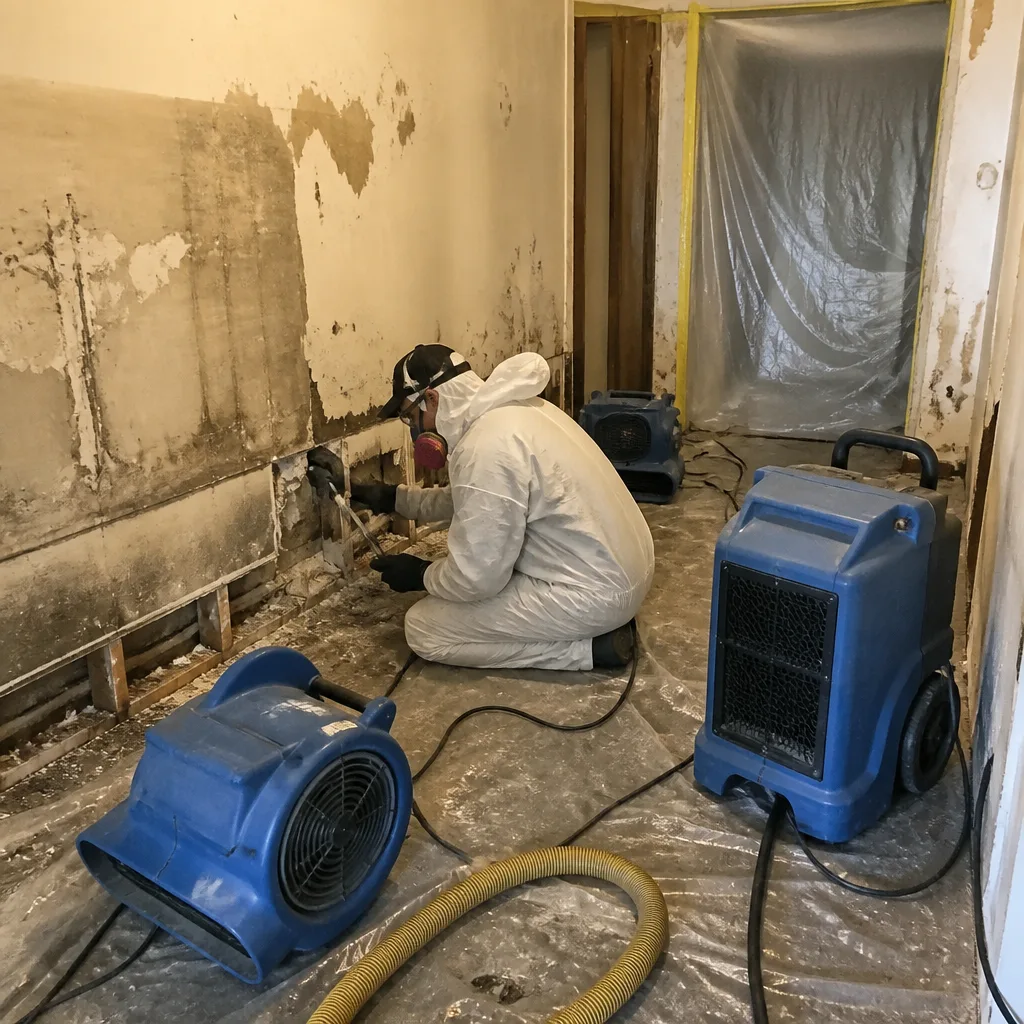 Before
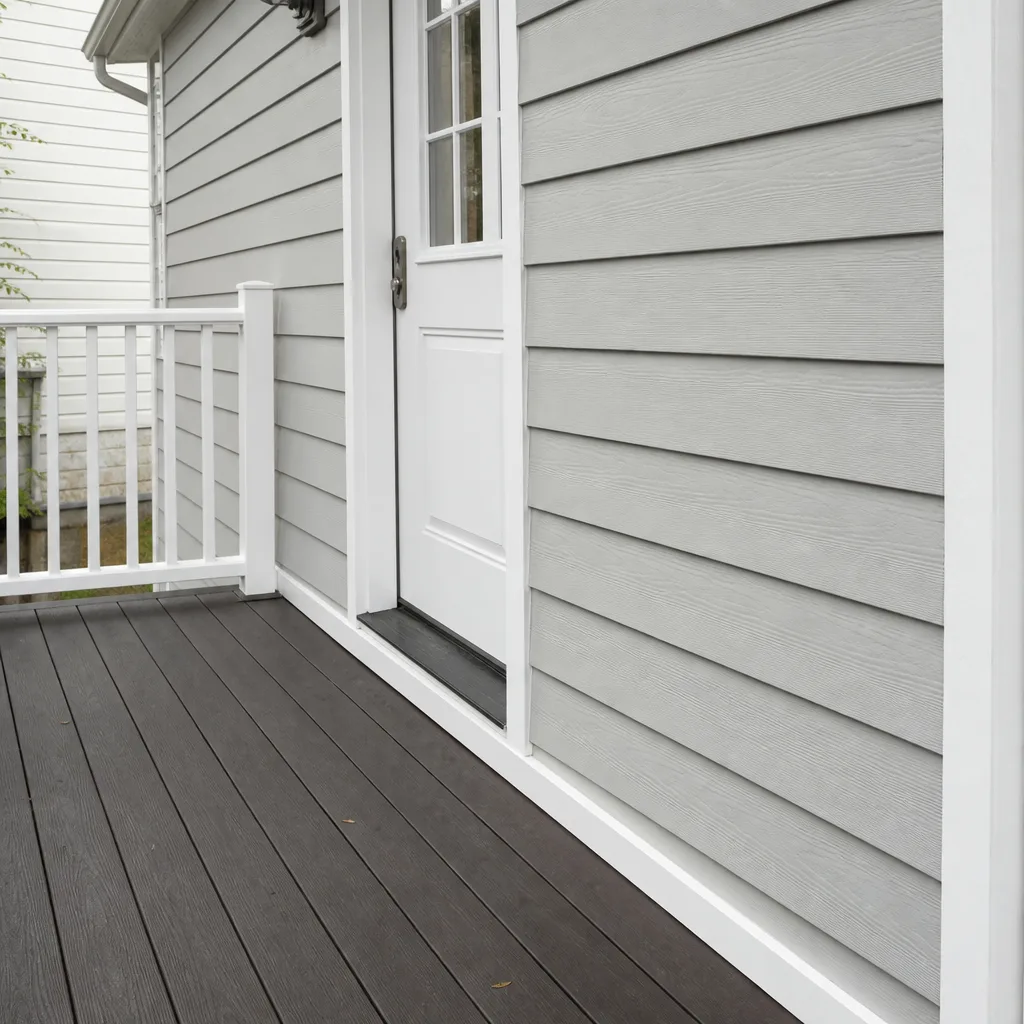 After
After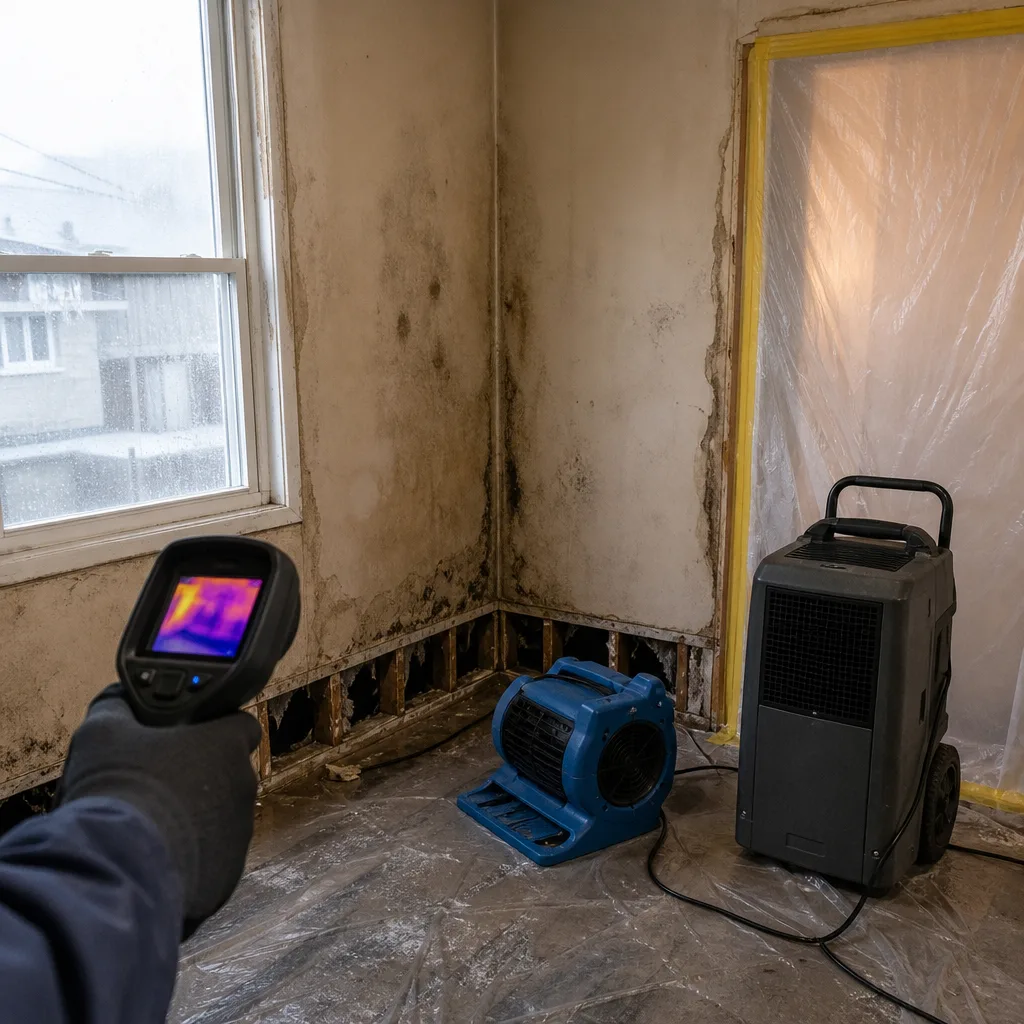 Before
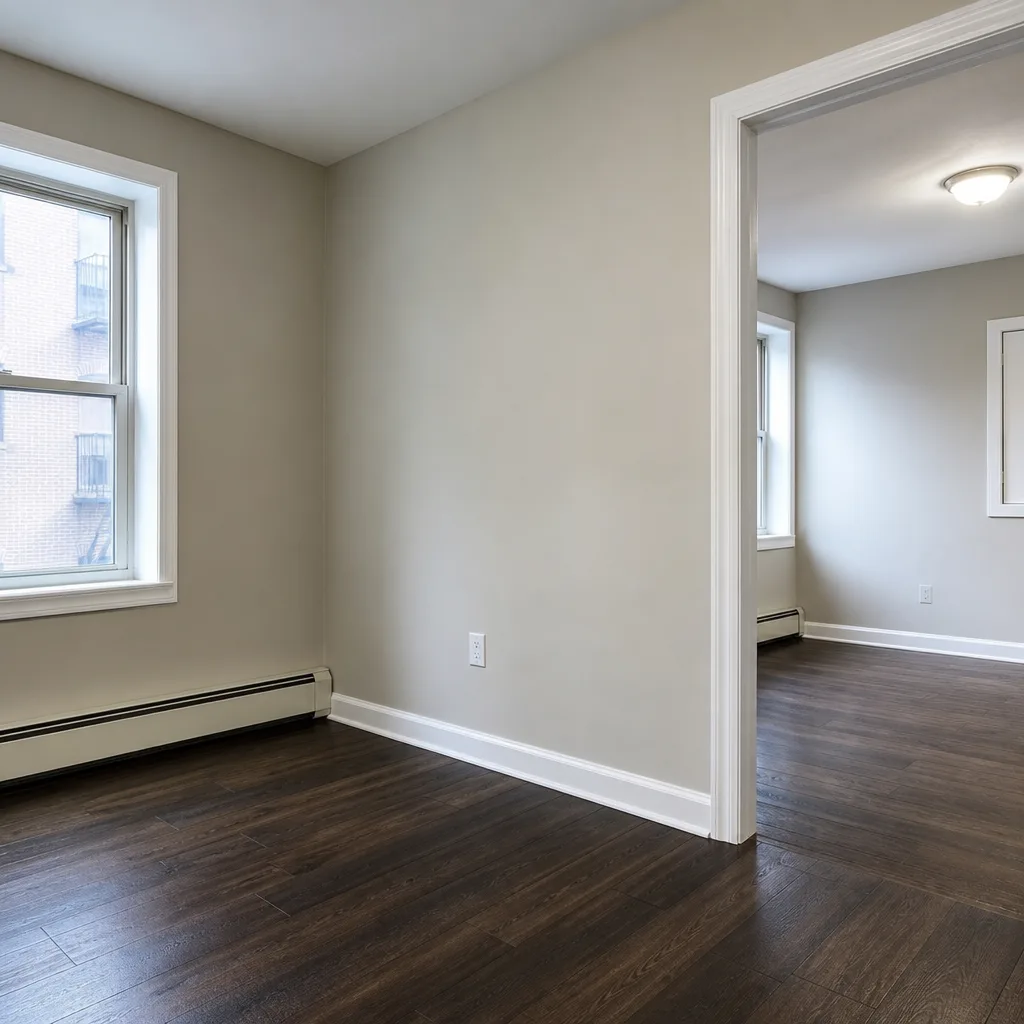 After
After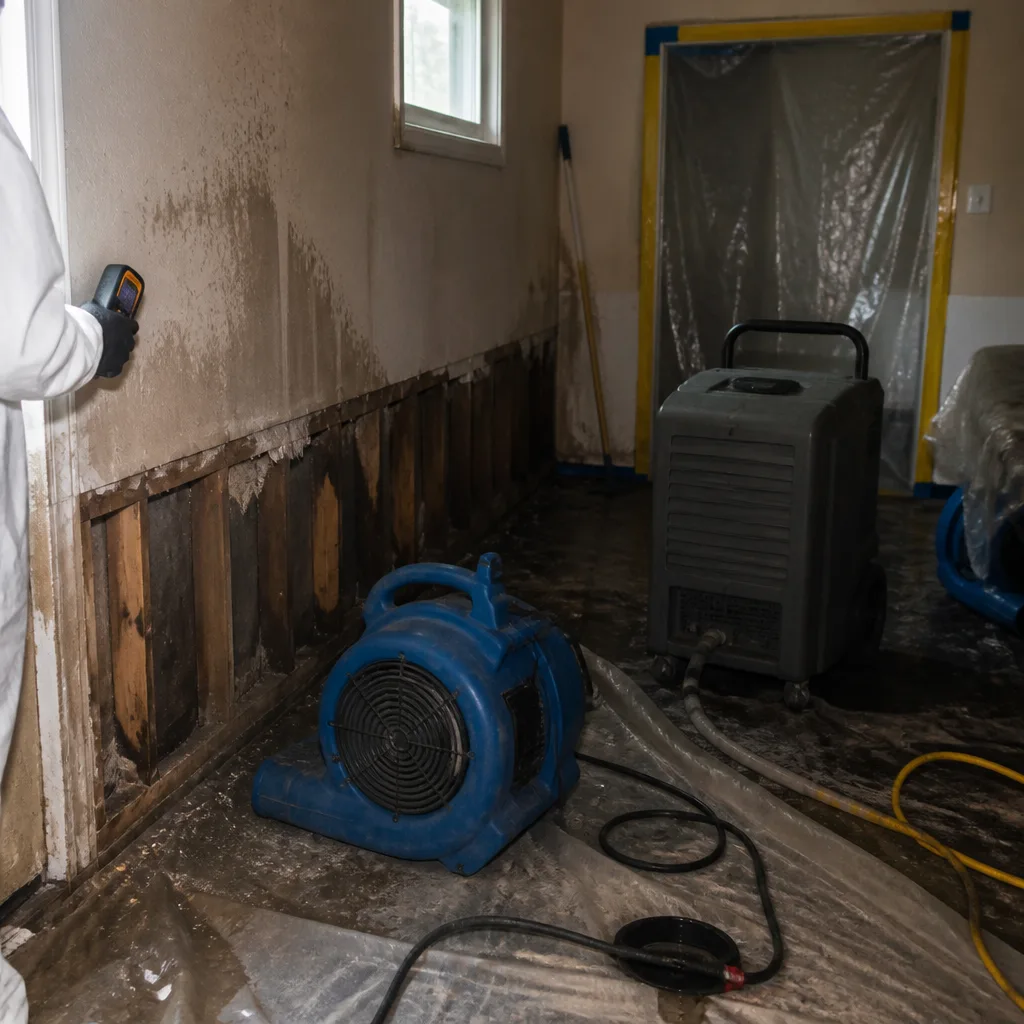 Before
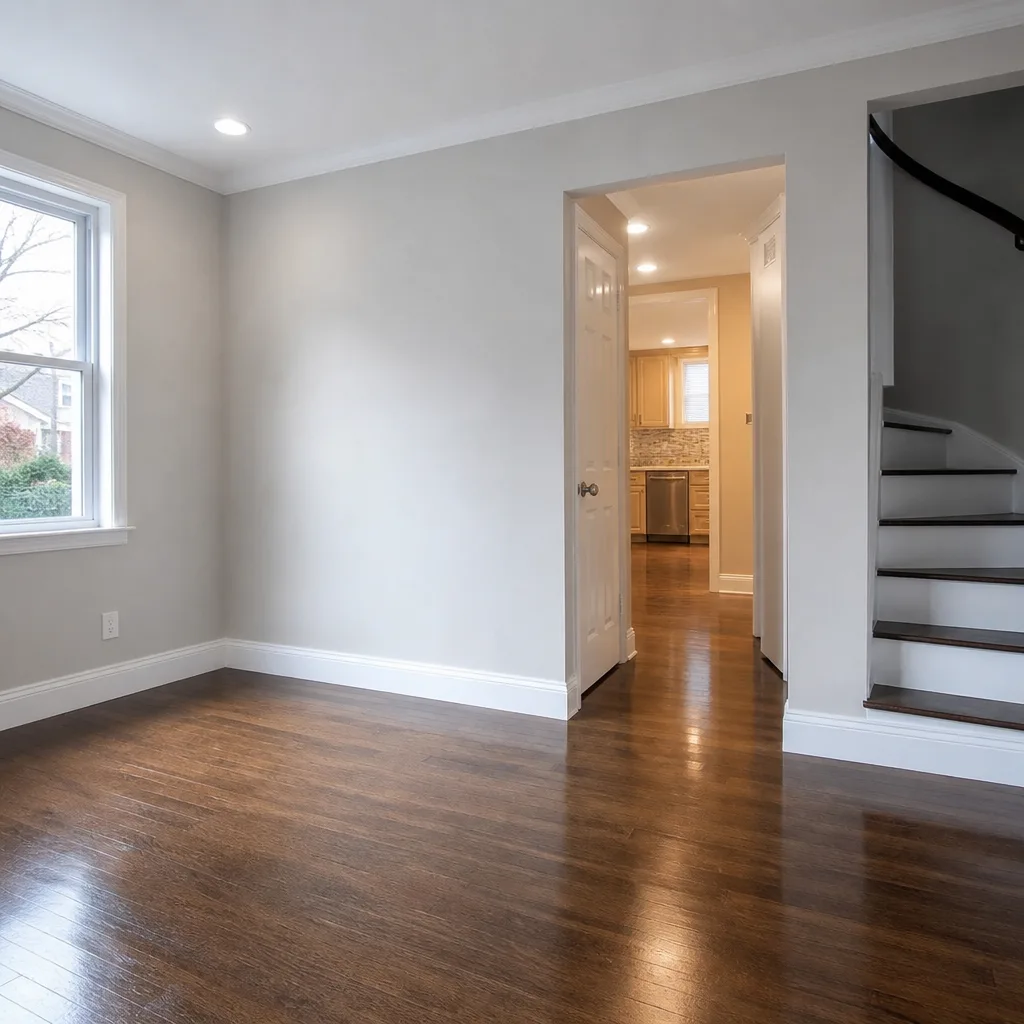 After
After24/7 Emergency Sewage Cleanup in Whitestone
Sewage backing up into a Whitestone home is a job that cannot wait until morning. Black water carries bacteria, viruses, and parasites that get more dangerous by the hour, and every minute it sits in a finished basement or crawl space it pushes deeper into porous materials. Call (518) 872-6111 any hour of the day or night. A live dispatcher answers, not a recording, and a certified crew starts extraction the same visit. We run 24/7 because sewage does not check a clock before it floods a 1950s colonial on 150th Street or a waterfront ranch near Powell’s Cove. The first hour decides how much of your basement we can save.
Understanding Sewage Cleanup Severity in Whitestone Properties
Sewage damage is Category 3 water, the most hazardous class. It contains raw human waste, pathogens like E. coli and hepatitis A, and in Whitestone it often carries an added ingredient that changes everything: salt water and marine debris from Flushing Bay and the East River storm surge. When a nor’easter pushes tidal water over bulkheads near Francis Lewis Park or Malba, the flood is not clean rainwater. It is Category 3 from the moment it enters the home, even when it looks clear. That distinction matters because Whitestone’s housing stock, solid brick colonials and Capes built between the 1940s and 1960s, traps moisture inside double-wythe masonry walls. Galvanized drain pipes from that era corrode faster in salt-laden air, which is why the same homes get recurring sewage backups and why surface-only cleanup fails. The contamination has already wicked into the wall cavities, sill plates, and subfloor before the standing water is even gone. Proper sewage cleanup means moisture mapping behind finished walls, containment, and sanitization, not just extraction and a coat of paint.
Why Whitestone Property Owners Choose Floodline Restoration Co.
- 45-minute response commitment. Our dispatch board tracks the nearest certified crew to your block, whether you are off the Cross Island Parkway or down by the East River waterfront. We aim to have boots on the ground inside 45 minutes of your call.
- A live person, 24/7. No phone trees, no answering service reading a script. A dispatcher picks up at 2 a.m. and knows what to do next.
- IICRC-certified crews. Our technicians hold WRT and ASD certifications and carry IICRC, RIA, and IFA training. They know what Category 3 water means and they work accordingly.
- Free visual inspection. Before any work starts, we walk the damage with you so you know exactly what we are dealing with. No charge for knowing the facts.
- Direct insurance billing. We bill your carrier directly and handle adjuster communication. You do not play messenger.
- One team, start to finish. The same Floodline crew that extracts the sewage dries the structure, sanitizes it, and rebuilds what needed to come out. No mid-job handoff to a sub you never met.
Our Sewage Cleanup Process
Inspection & Assessment
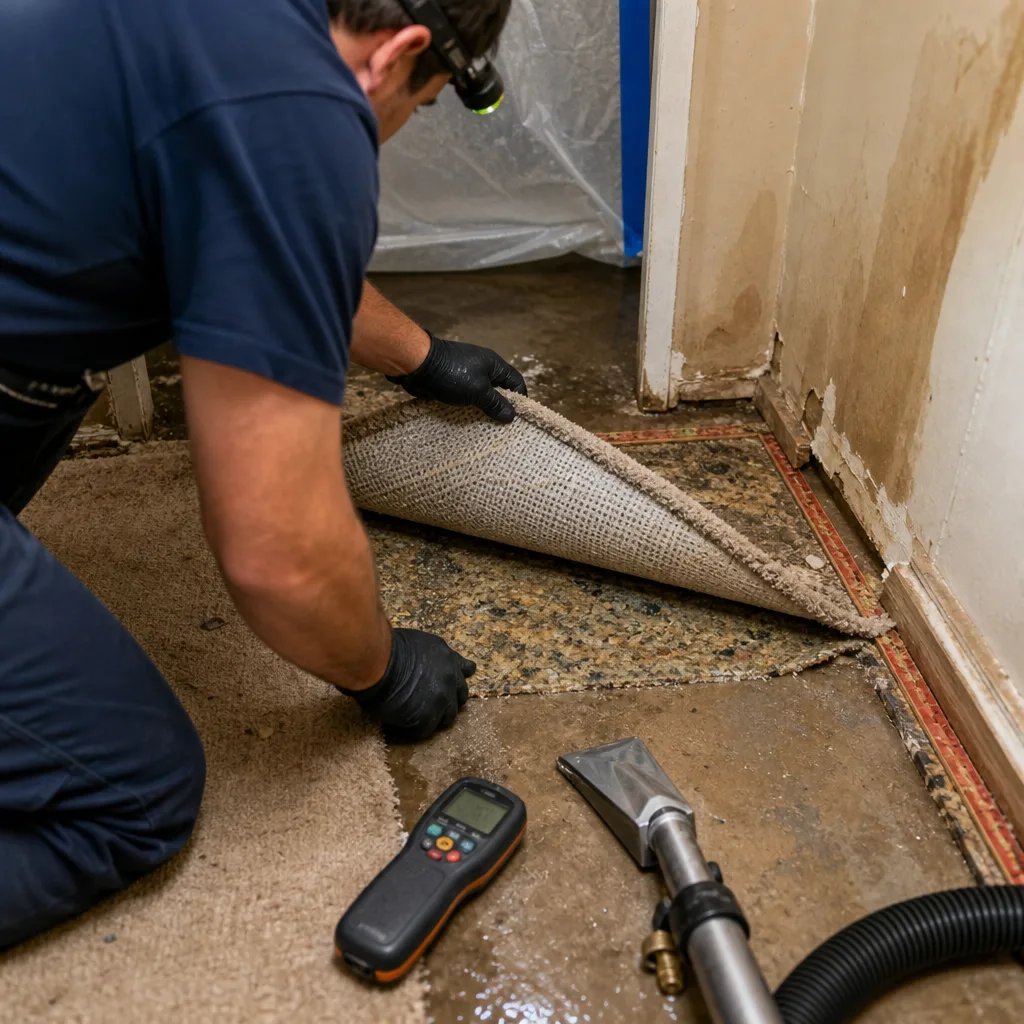
We begin with a full walkthrough to map the water path. Thermal imaging and moisture meters find contamination that is not visible, especially behind finished basement walls and inside crawl spaces under ranch homes where black water travels along floor joists.
Extraction & Stabilization
We remove standing sewage with professional extraction equipment, not a shop vac. On a solid-brick Whitestone colonial, this step must happen fast because saturated masonry pulls water sideways into wall cavities.
Drying & Dehumidification
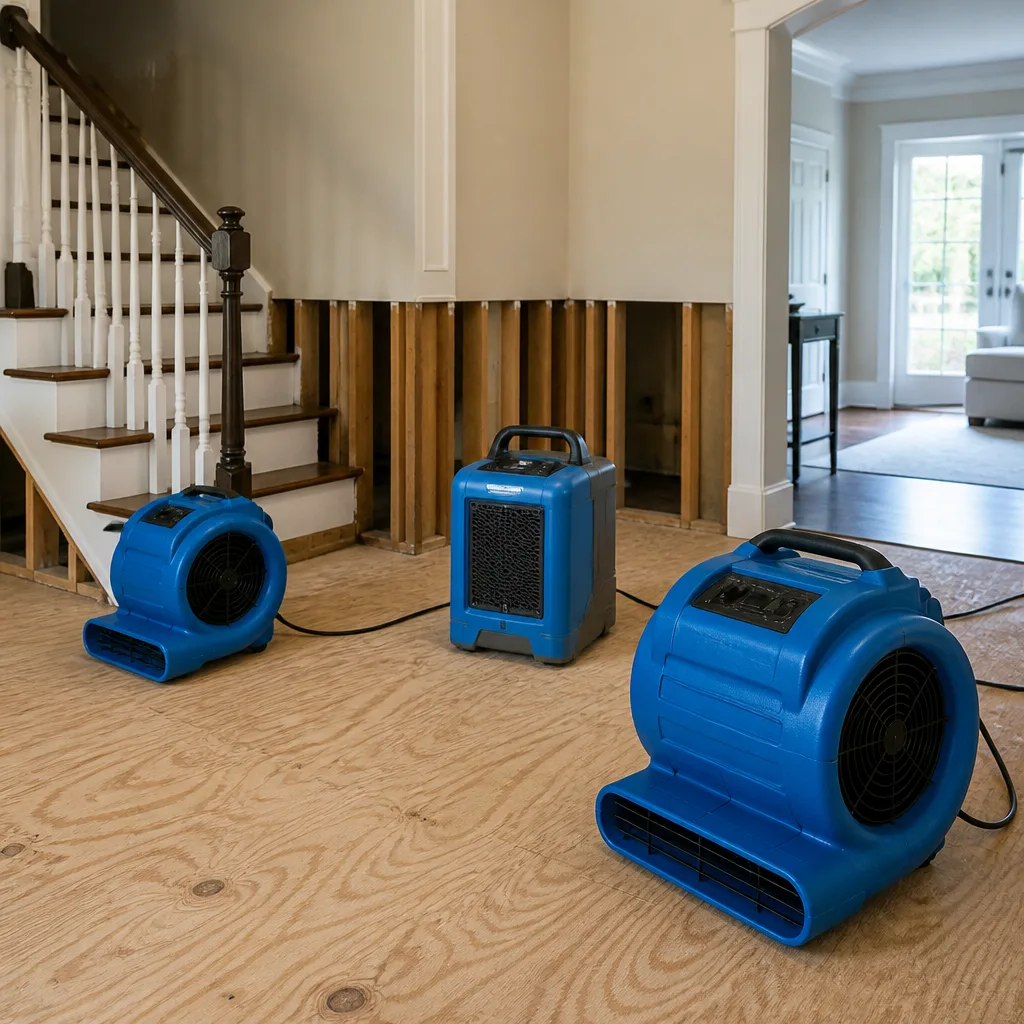
Dri-Eaz dehumidifiers and XPOWER air movers run continuously until daily moisture readings hit the dry standard. Brick and old plaster dry slowly, so we log readings every visit and give you and your carrier the log.
Cleaning & Sanitization
HEPA air scrubbers and antimicrobial treatment go to work on every surface the Category 3 water touched. This includes sill plates, subfloor, and stud bays, not just what you can see.
Black Water & Crawl Space Treatment
Sewage that backed into a Whitestone crawl space under a 1950s ranch gets dedicated treatment. We remove contaminated insulation, treat framing with antimicrobials, and run the drying equipment until the crawl space passes clearance.
Repairs & Restoration
Then we rebuild. Drywall, flooring, framing, whatever came out goes back in and gets finished. One crew, one warranty, one name to hold accountable when the job is done.
Need Emergency Sewage Cleanup in Whitestone Now?
Crews minutes away, answering live 24 hours a day. The sooner we start, the less it costs.
Working With Your Insurance Company
Sewage backups and storm surge coverage are two different things, and Whitestone homeowners learn that difference the hard way. A standard homeowners policy covers sudden sewage backups when a rider is in place, but tidal surge from Flushing Bay is flood damage and falls under FEMA flood insurance. We know both claims inside and out. From the first hour, we document everything: photos room by room, moisture readings, and a line-item scope of work that matches the format your carrier expects. Curt Bowman, our founder, built this company around the idea that a homeowner should never be stuck translating between a restoration crew and an insurance adjuster. We talk to your adjuster directly, we provide the drying logs, and we bill the carrier so you are not fronting the money.
What We Provide Your Insurer
- Thorough documentation of the loss
- Photos of all damage, room by room
- Moisture readings and drying logs
- A detailed, line-item scope of work
- Direct coordination with your carrier
Built for Whitestone’s Loss Calendar
Whitestone sits on a peninsula that catches weather from three directions. The exposure shapes our call volume all year. Deep winter freezes split aging galvanized supply lines and drain pipes in unheated basements and crawl spaces. Spring thaw pushes groundwater up through foundations in low-lying blocks near the Flushing Bay shoreline. Summer thunderstorms overwhelm the combined sewer system and send street-level sewage back through floor drains in homes along 14th Avenue and Clintonville Street. But the real driver here is storm season. Nor’easters from October through March push East River water and Flushing Bay surge over bulkheads and into waterfront basements. When that tidal water arrives, it is already Category 3, sewage and marine contaminants mixed in. We plan our dispatch coverage around that calendar because Whitestone homeowners do not get to pick when a bulkhead gives way.
Sewage Cleanup Across Whitestone’s Neighborhoods
The sewer and drainage picture changes block by block here. Along the waterfront edge near Francis Lewis Park and Powell’s Cove, homes face direct tidal surge that brings Category 3 water into finished basements and through shared walls. We know that stretch well; the crew has extracted black water from more than one 1950s brick colonial there and found the same pattern every time: finished drywall hiding saturated brick that never got dried years ago. Inland, around the Beechhurst side and the blocks off the Cross Island Parkway, the problem shifts to aging galvanized and cast-iron pipes. These 1940s and 1950s homes were built when the Cross Island layout was still young and the plumbing is original in many cases. Salt air accelerates corrosion, and a pinhole leak becomes a wall of sewage inside a finished basement. Around Clintonville and the northern commercial strip, we see more mixed housing, smaller lots, and storm-drain backups during heavy rain. The response route changes, but the standard does not: containment first, extraction fast, moisture map every cavity, dry until the log proves the brick is dry. Our Sewage Cleanup crews run the same protocol whether the water came up a drain or over a bulkhead.
Specialized Sewage Cleanup Services We Offer in Whitestone
Black Water Extraction
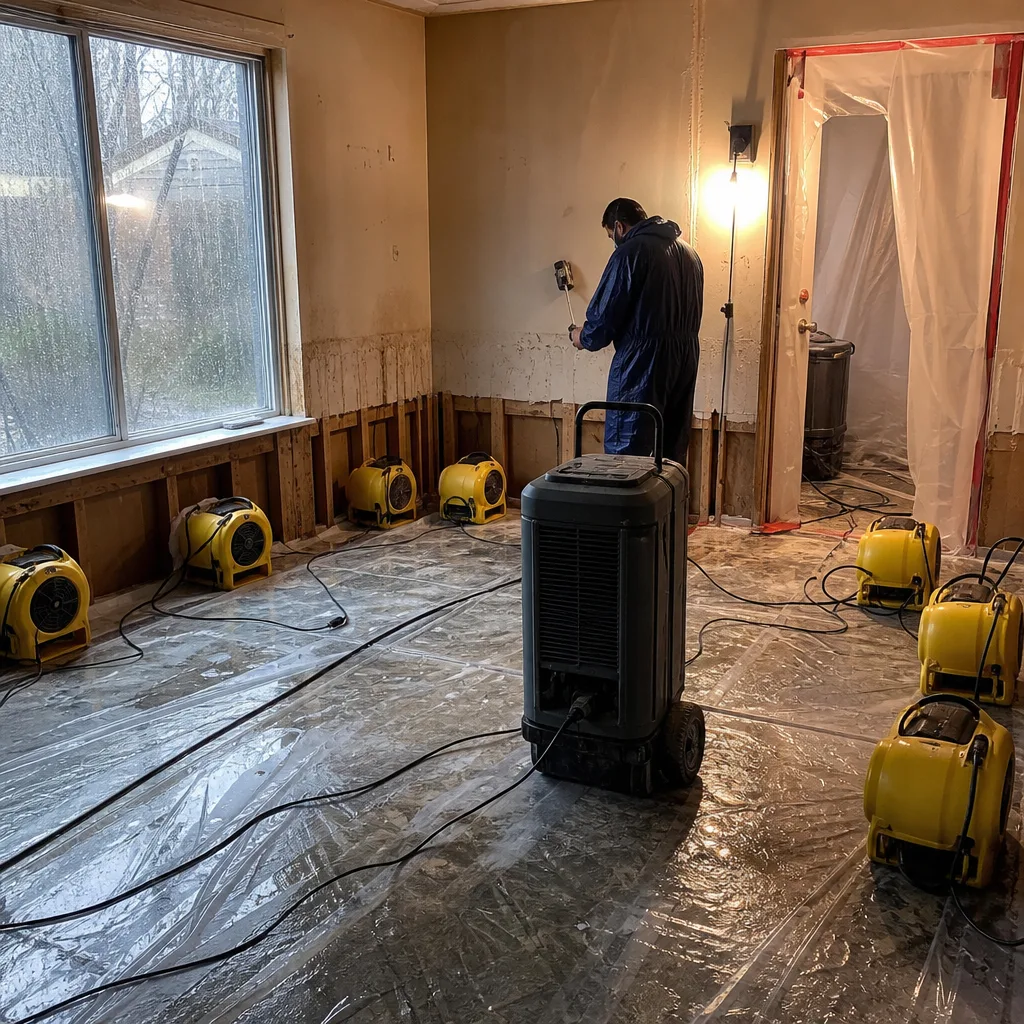
Black water is sewage, and in Whitestone it is also tidal surge that has mixed with Flushing Bay and East River water. Extraction here has to be faster and more aggressive than a clean-water job because the contamination moves into brick and old framing quickly. We run extraction pumps and truck-mounted units to pull standing black water out before it spreads through wall cavities.
Sanitization & Disinfection
After extraction and drying, every surface the Category 3 water touched gets antimicrobial treatment. Stud bays, sill plates, subfloor, and the bottom 18 inches of wall framing all get treated, not just what is visible. Whitestone’s salt air makes this step more important because residual salts wick moisture back even after drying appears complete.
Crawl Space Sewage Removal
Ranch homes and Capes here often sit over dirt crawl spaces, and sewage that backs up under a 1950s ranch travels along shared floor joists into the main house. We remove contaminated insulation, extract the sewage, treat the framing, and run drying equipment until the crawl space is dry and sanitized. Skipping the crawl space is the most common way a “finished” cleanup turns into a mold problem six months later.
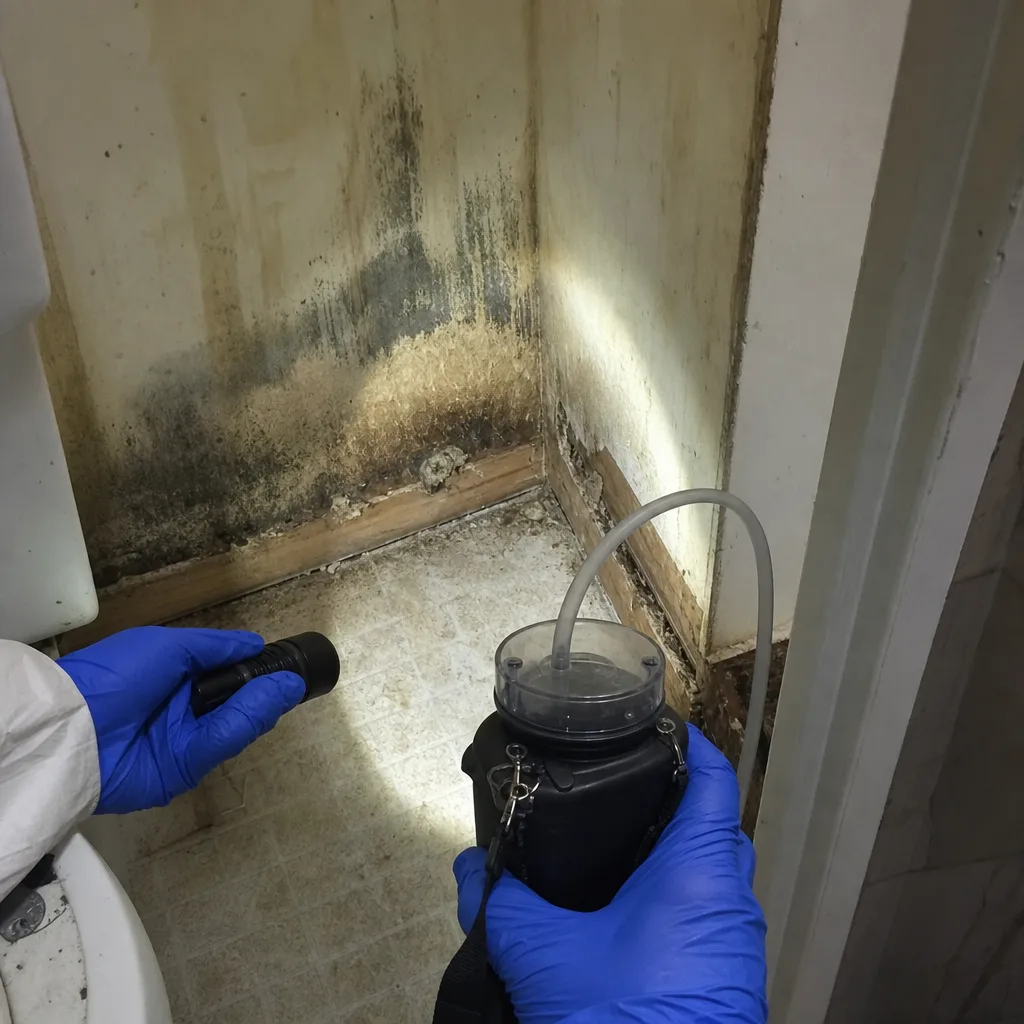
Sewage Backup Cleanup
Recurring backups from corroded galvanized drain lines are a Whitestone signature. We scope the problem honestly because a backup that gets patched without replacing the failed line will happen again. Our crews can do the cleanup and the repair in one scope of work, not two separate visits.
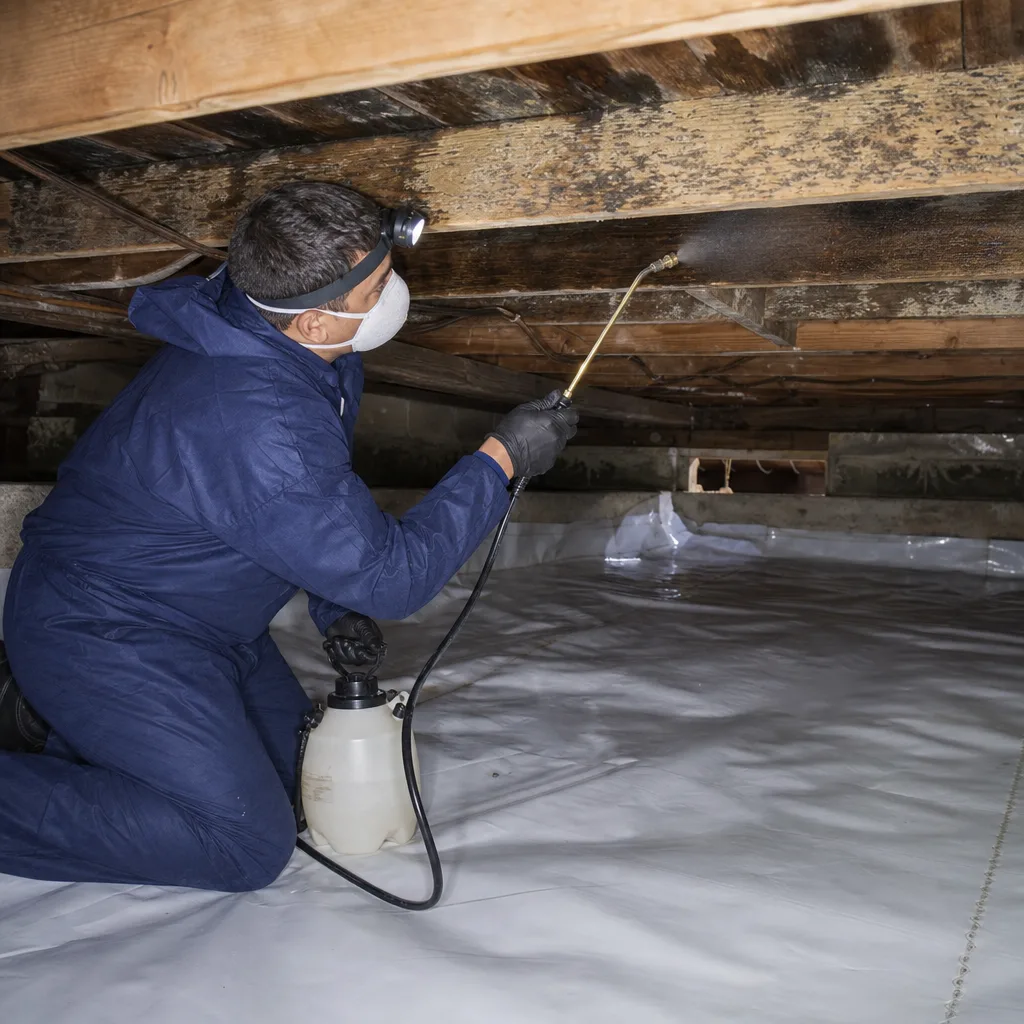
Toilet Overflow Cleanup
A toilet overflow that runs for 20 minutes can send Category 3 water through bathroom flooring and into the ceiling below. In older Whitestone homes, the path from bathroom to the space under the tub is short. We extract, dry, and sanitize the full path, not just the visible puddle.
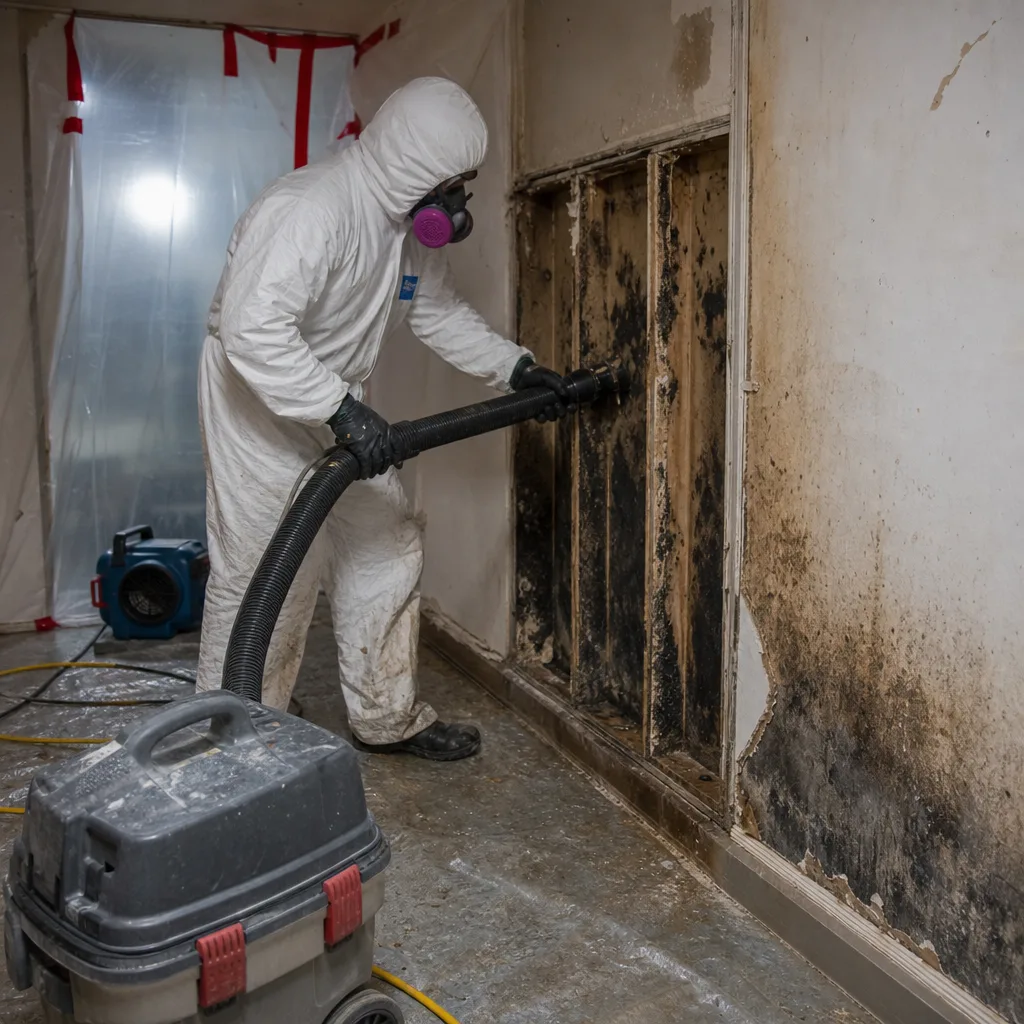
Septic Failure Cleanup
A handful of Whitestone properties still run on septic systems, and failure means raw effluent surfacing in the yard and against foundation walls. We handle the cleanup and coordinate the scope with a septic contractor when needed.
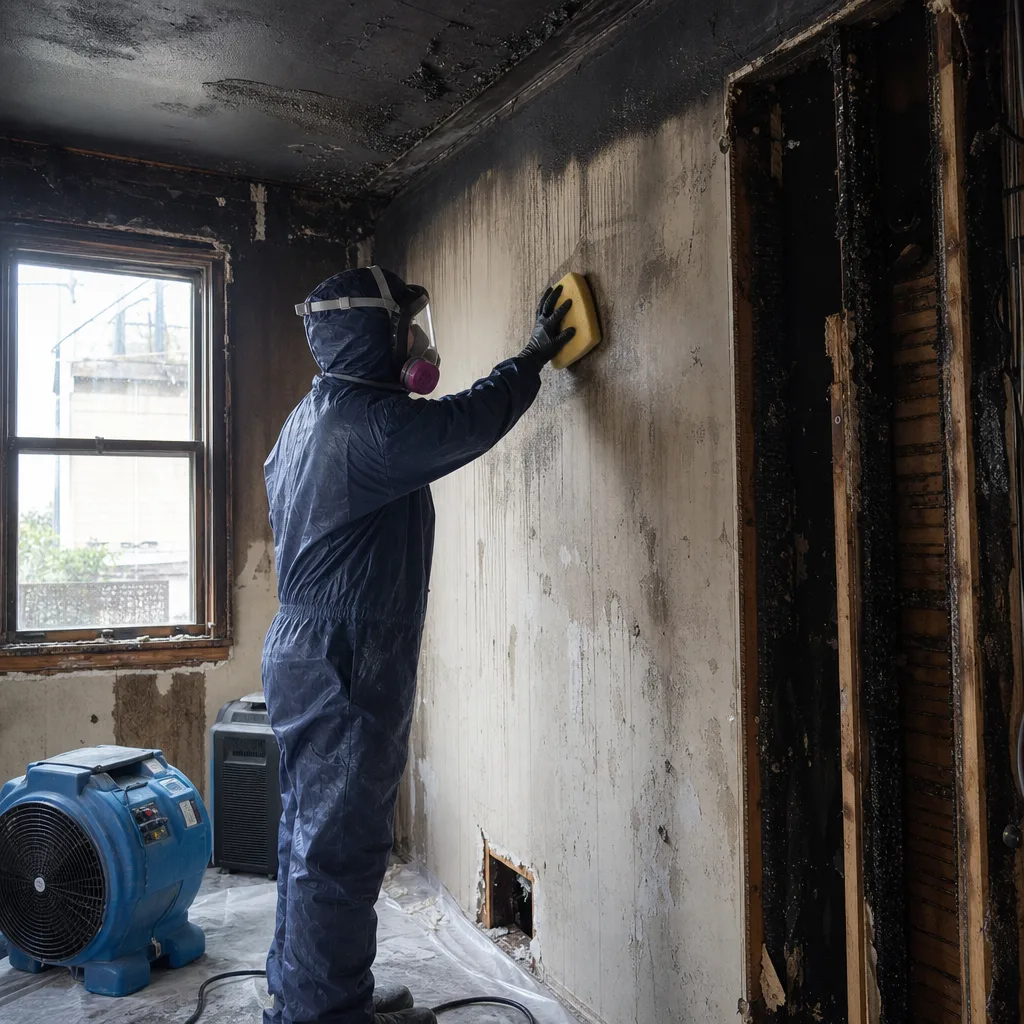
What happens when you call
- 1
A real person answersNo phone trees - you reach a local pro.
- 2
You get an upfront price rangeHonest numbers before anyone is dispatched.
- 3
A background-checked tech heads outLicensed & insured, dispatched right away.
- 4
You approve before work beginsNothing starts until you say go.
Sewage Cleanup Costs in Whitestone, NY
What you will pay depends on how far the water traveled and what it soaked. As a baseline, a contained sewage backup cleanup in Whitestone runs $2,800 to $5,500. Toilet overflow jobs are typically $1,200 to $3,000 when caught early. A basement sewage backup that fills a finished space and requires cutting drywall runs $6,000 to $12,000. Crawl space black water extraction adds $1,800 to $4,500 depending on square footage and contamination depth. Storm surge flooding is the most expensive, usually $8,000 to $25,000 plus because the entire first floor may need gutting and rebuild. What moves the price: how long the water sat, whether brick walls need to be opened, if insulation must come out, and replacement flooring. We give a line-item written scope before any work starts, and we bill insurance directly when the claim applies. Call (518) 872-6111 for a free inspection and an exact number.
We Also Serve Cities Near Whitestone
We run the same crews and the same 45-minute response commitment into neighboring communities: Flushing, Bayside, College Point, and Fresh Meadows. If your home is near the Whitestone line but technically across it, call anyway. Our dispatch board will tell you exactly when a crew can be there.
Serving Whitestone, NY - Our Local Coverage Area
We’re based in the Whitestone area and know this community well. Use the map below to see our service coverage - if you’re nearby, we can almost certainly help.
Whitestone Sewage Cleanup Questions, Answered
Does a sewage backup from Flushing Bay storm surge in Whitestone count as Category 3 water even if it looks clear?
Yes. Any water that enters your home from tidal surge, bay overflow, or sewer backup is classified as Category 3 because it contains sewage, marine organisms, and unknown contaminants. Clear water from a clean pipe is Category 1. The moment it mixes with sewer or marine water, it is black water. Treat it accordingly, with full containment and sanitization.
How quickly does our crew need to start drying a Whitestone basement after sewage extraction to prevent mold?
Mold can begin on wet drywall within 48 hours, and in Whitestone’s humid summer months even faster. We aim to have extraction started within 45 minutes of your call and drying equipment running the same visit. The faster the brick and framing are under negative pressure from dehumidifiers, the less we have to cut out and replace.
Can we save the finished paneling in a Whitestone basement after a sewage backup, or does it all come out?
It depends on what it is made of and how long it sat wet. Wood paneling that was submerged or saturated with Category 3 water almost always comes out because contamination gets behind it into the framing. Drywall and paneling both wick water upward, so the bottom two to four feet typically gets cut away. We make the call based on moisture readings, not a guess.
Why does sewage cleanup in Whitestone often require containment and air movers even when the spill looks small?
Because what you see on the floor is only part of what happened. Sewage travels along flooring joints, behind baseboards, and down into wall cavities before it becomes visible. A small spill in a finished basement can mean several feet of contaminated drywall and insulation behind the finished surface. Containment keeps particles out of the rest of the house, and air movers plus dehumidifiers dry the cavities we cannot reach with towels.
How does our crew handle sewage that backed up into a Whitestone crawl space under a 1950s ranch?
We enter the crawl space, remove all contaminated insulation, extract the sewage with professional pumps, and treat the framing and soil with antimicrobials. Then we set drying equipment inside the crawl space and monitor it daily until readings show the space is dry. Floor joists that run from the crawl space into the main house get special attention because contamination travels along them.
How fast can someone actually get here?
We commit to a 45-minute response for Whitestone calls. The dispatch board shows the nearest available certified crew and we route them straight to your address. Call (518) 872-6111 and a live person will tell you exactly when to expect us.
Will my insurance cover sewage cleanup in Whitestone?
That depends on the source. A sudden backup from a failed drain line is typically covered when a sewer backup endorsement is in place. Storm surge from Flushing Bay is flood damage and falls under FEMA flood insurance. We document the loss from the first hour and provide your carrier with the evidence they need. We bill insurance directly on covered claims.
What should I do in the first 30 minutes after sewage backs up in Whitestone?
Do not flush toilets, do not run water, and do not try to vacuum it up with a shop vac. Shut off electricity to the affected area if you can reach the panel safely. Move people and pets away from the water. Call (518) 872-6111. Then stay out of the basement until we arrive.
We have been doing this work in Whitestone long enough to know which houses on which blocks have the old pipe problems, the low-lying foundations, and the finished basements that hide what a nor’easter really did. The line the water left is where we start. Call (518) 872-6111 for a free estimate, or just to talk through what you are seeing. A real person answers.
Written by Curt Bowman, Owner at Floodline Restoration Co., leading the New York City operations team that serves Whitestone.