

Free visual inspection and a written scope of work before any mitigation begins - photos, moisture readings, and drying logs go in your claim file
The scope we write is the scope we bill. Anything new gets shown to you, in writing, before we touch it.
Storm responseSewage cleanup
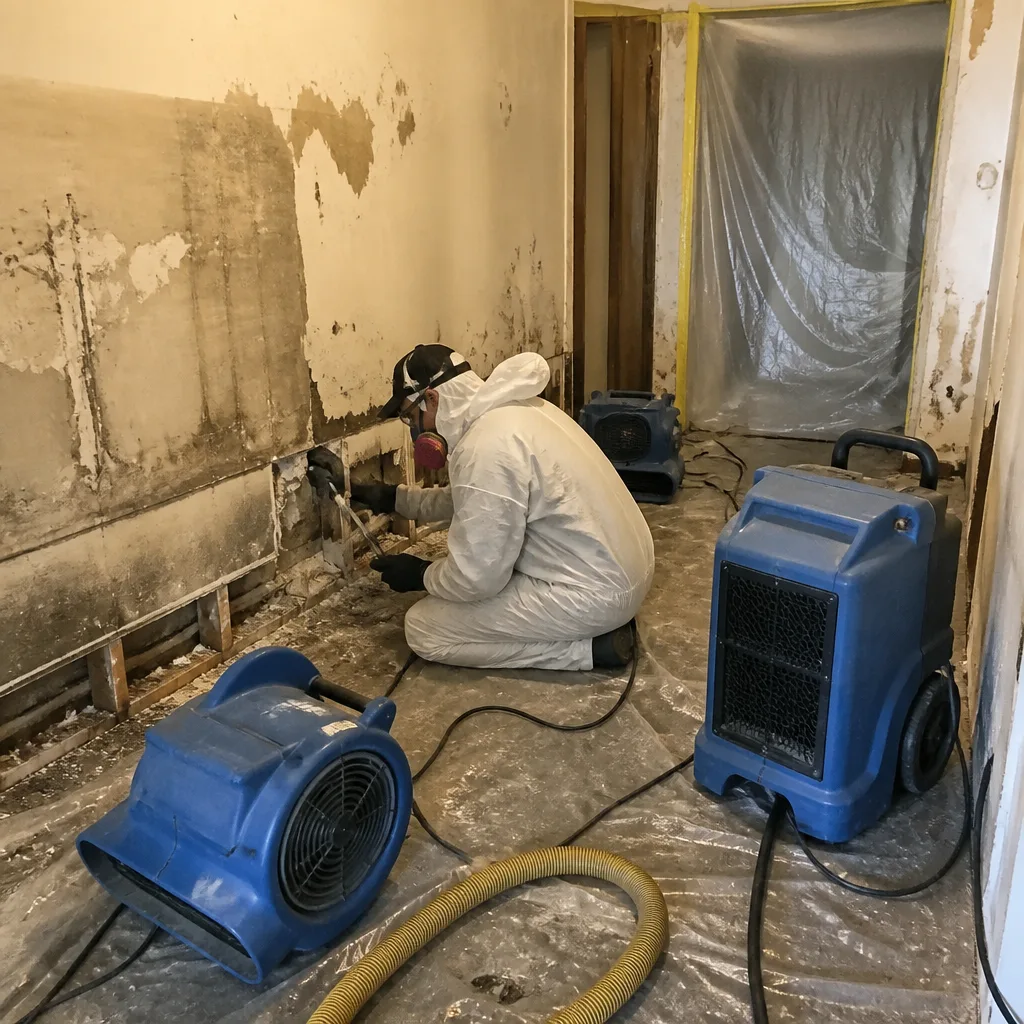 Before
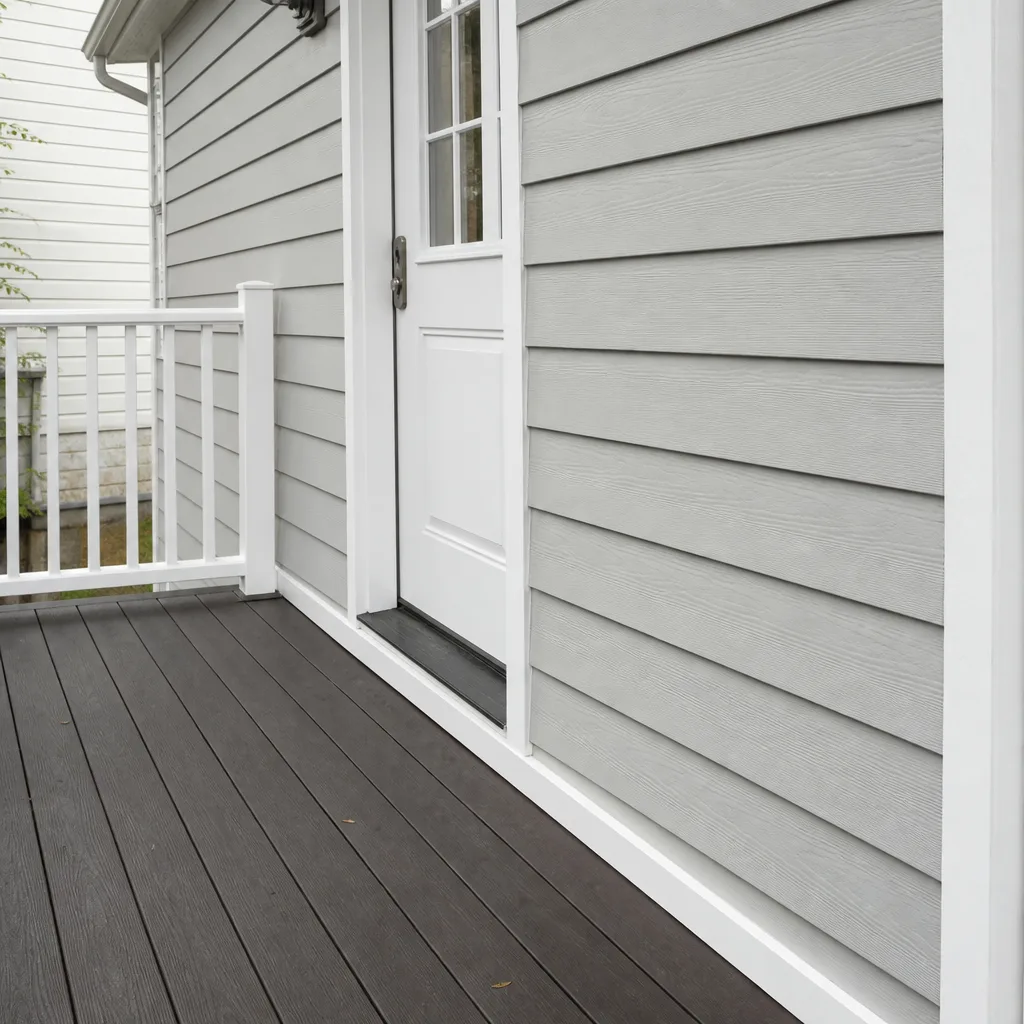 After
After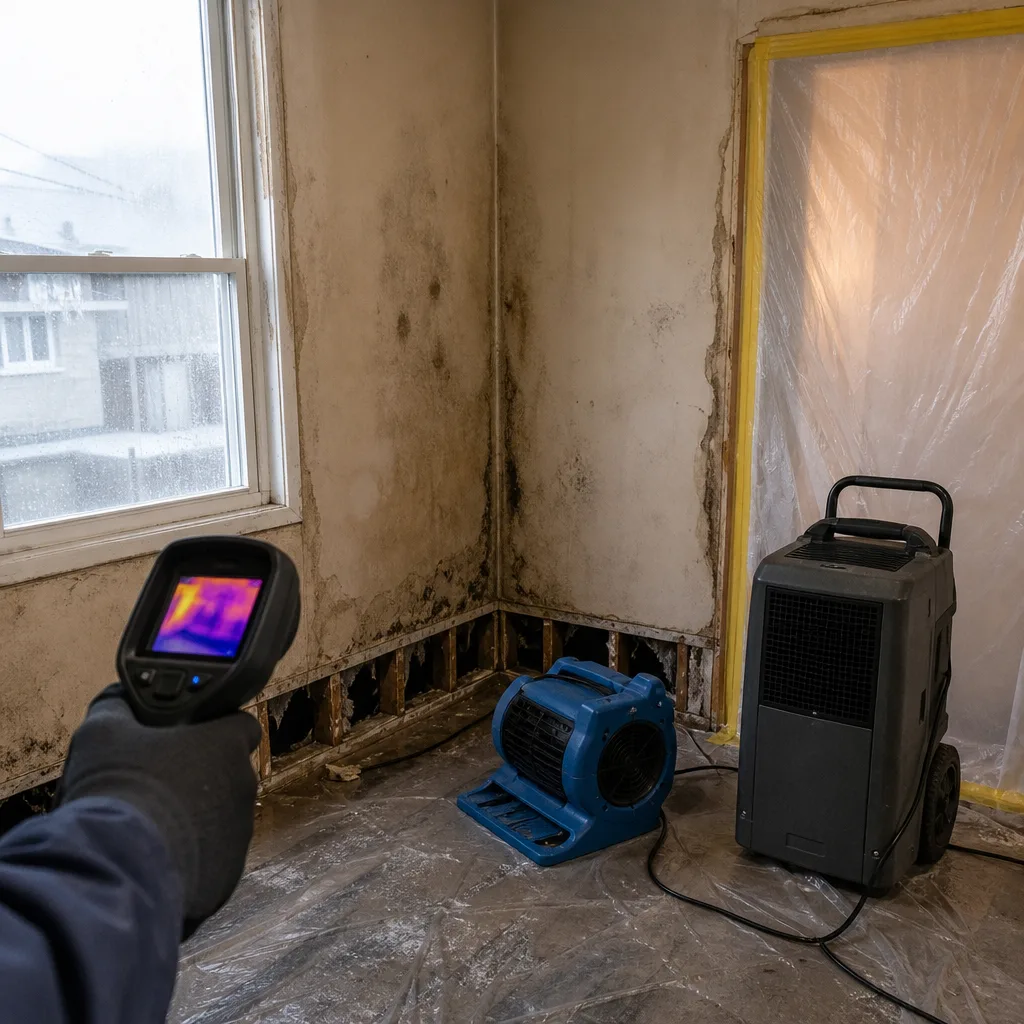 Before
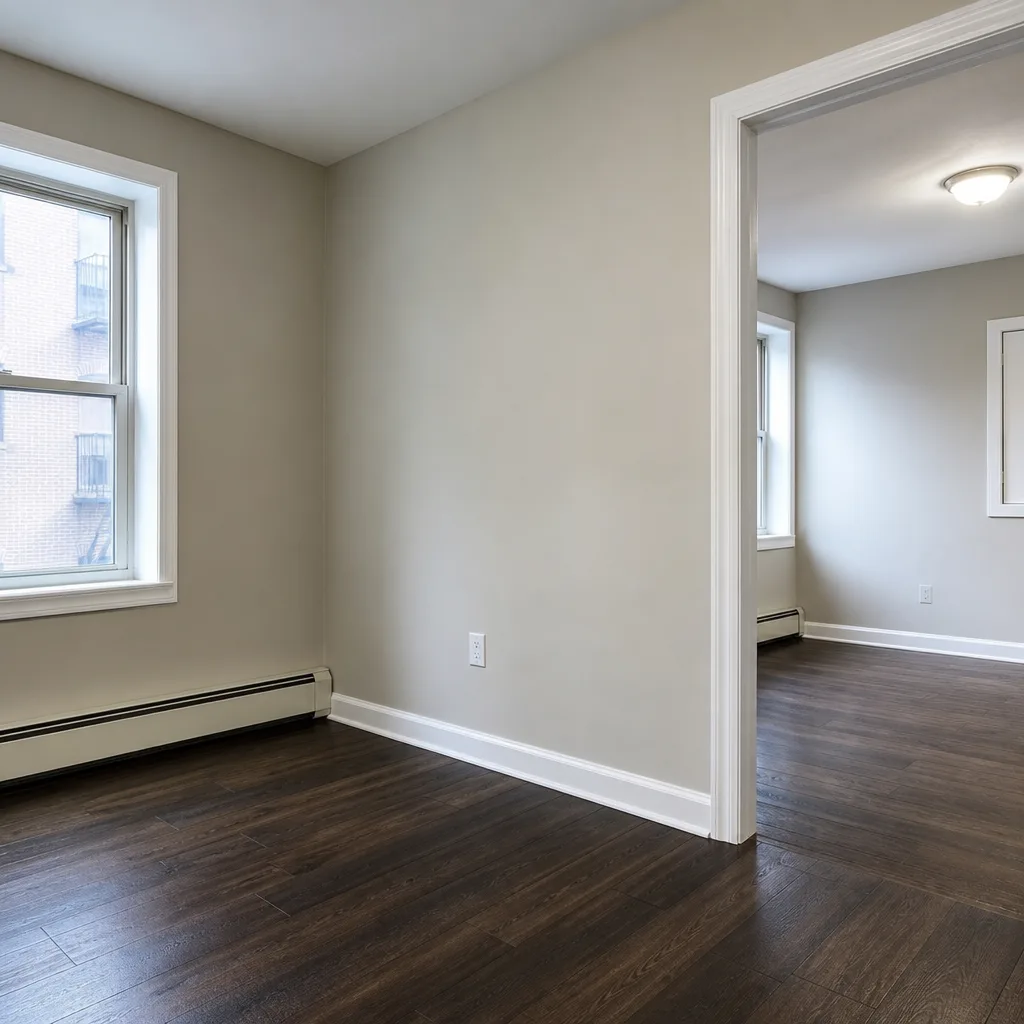 After
After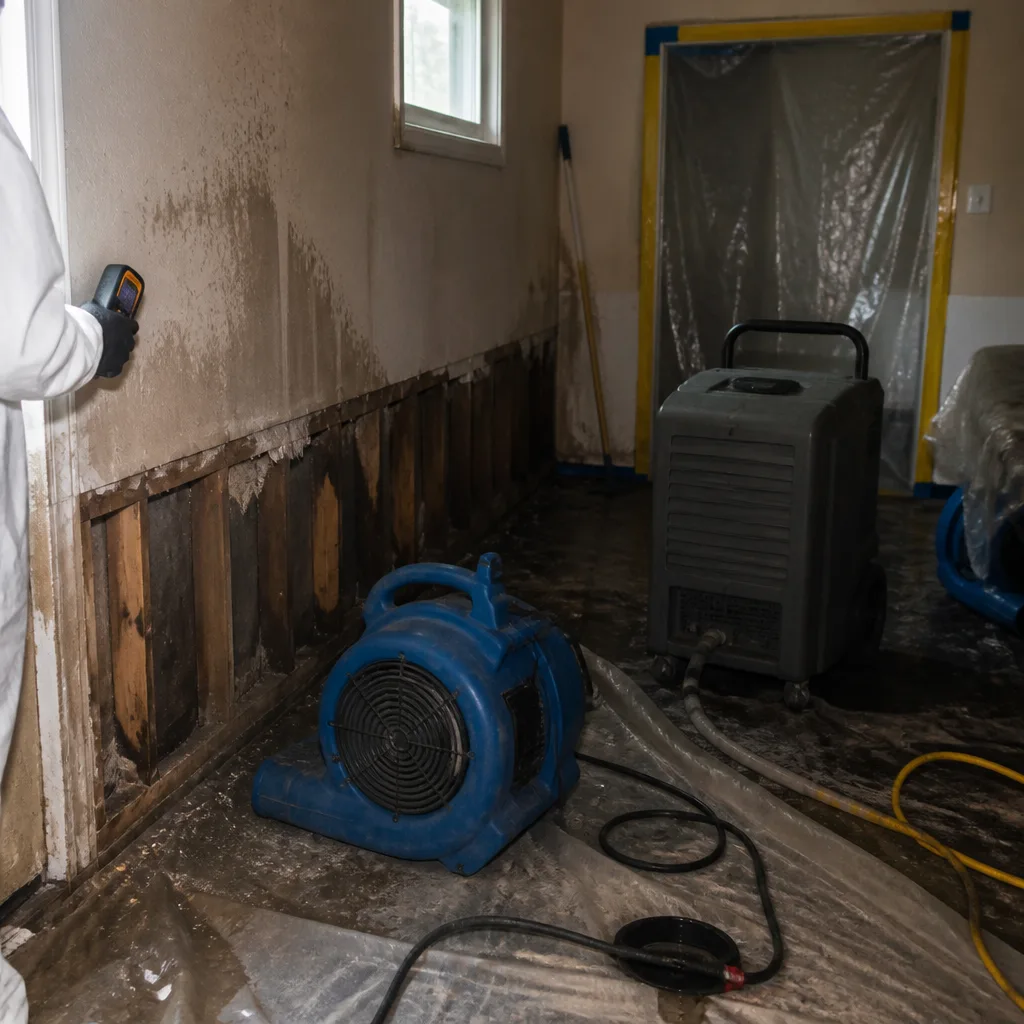 Before
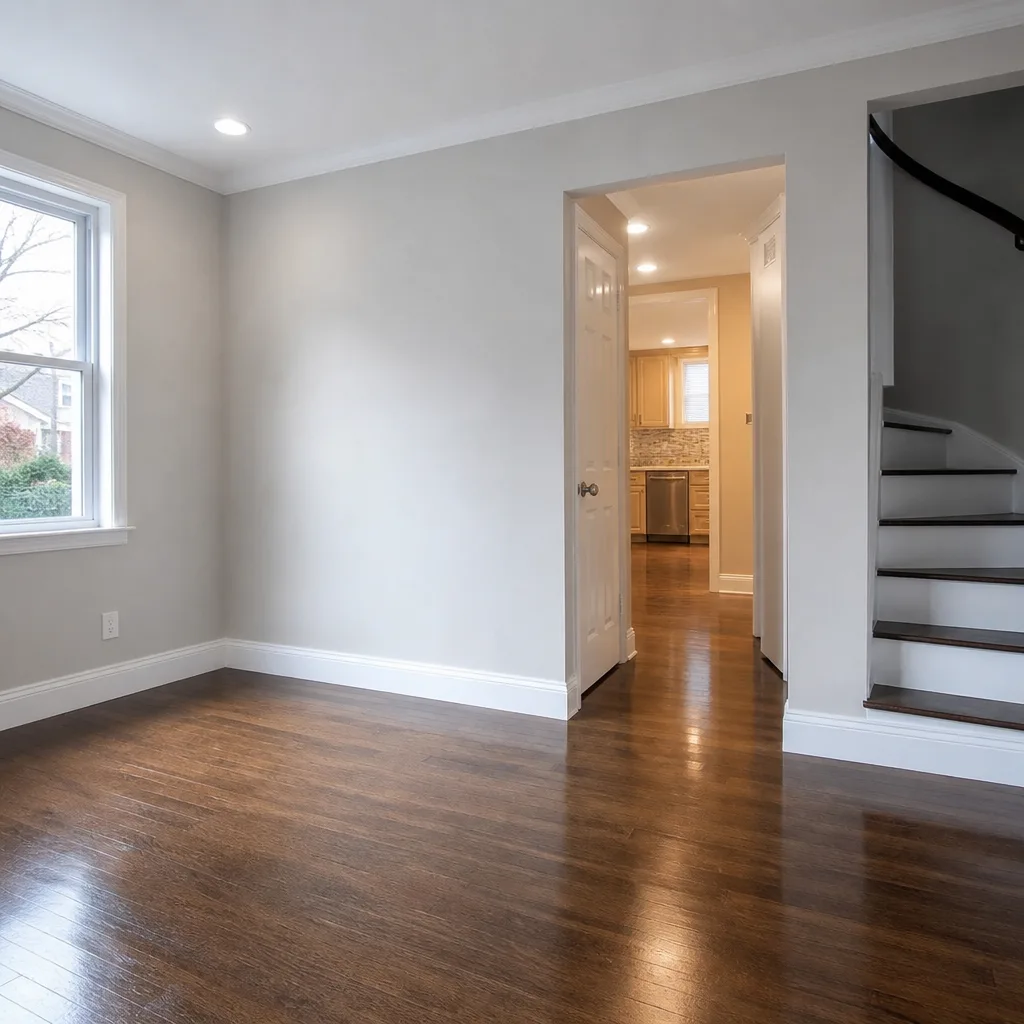 After
After24/7 Emergency Water Damage Restoration in Whitestone
Water damage restoration in Whitestone typically costs $450-$2,800 depending on how far the water traveled and how long it sat, and it usually starts with a call answered by a live person. Floodline Restoration Co. answers the phone at (518) 872-6111 around the clock, every day. When water is moving through a Whitestone basement or seeping behind 1950s brick, the first hour decides whether you’re drying floors or replacing framing. We dispatch certified crews to Whitestone neighborhoods from Flushing Bay up to 14th Avenue, with extraction running the same visit. The free visual inspection tells you what is actually wet, what can be saved, and what the written scope will look like before any money changes hands.
Done right, and backed in writing. That is the standard we bring to every Whitestone water job.
Understanding Water Damage Restoration Severity in Whitestone Properties
We classify water three ways before we touch anything. Category 1 is clean water from a supply line or tub overflow. Category 2 carries contaminants, like washing machine discharge or sump overflow. Category 3 is unsanitary water: sewage, seawater, or ground flooding. Whitestone sees all three, but the waterfront blocks and FEMA flood zones deal with Category 3 more than most of Queens. East River storm surge is not clean water. It carries salt, silt, and whatever the bay collected on its way in.
Salt changes the drying equation. Whitestone’s solid brick colonials and Cape Cods, most built between the 1940s and 1970s, hold moisture inside wall cavities where surface readings look dry. Our techs use thermal imaging and calibrated moisture meters to read what is behind the drywall, not just what is on it. Structural drying in these older masonry homes requires opening the right cavities, not just running air movers and hoping. Hidden moisture behind a Whitestone brick facade becomes hidden mold, and hidden mold becomes a recurring problem every spring thaw.
Why Whitestone Property Owners Choose Floodline Restoration Co.
- 45-minute response commitment across Whitestone, from Bayside border streets north to the water. A Floodline tech is on the road the same call, not the next morning.
- A real person answers at 2 a.m. Our dispatch desk is live, 24/7/365. No automated tree, no voicemail hop.
- IICRC-certified crews trained to WRT and ASD standards, plus RIA and IFA certifications on every team. Uniformed and background-checked.
- Free visual inspection before any work is scoped. You see what we see, in writing, before you approve a dollar.
- Direct insurance billing. We bill your carrier directly and keep the paperwork moving while you keep living in your home.
- One team from extraction to reconstruction. No mid-job handoff, no second crew that has to guess what the first crew found.
Our Water Damage Restoration Process
Inspection & Assessment
We walk the wet areas with thermal imaging and moisture meters before we pull a single baseboard. The goal is to know exactly how far water traveled and what category we are handling. You receive a written scope on the spot.
Extraction & Stabilization
Standing water comes out first with truck-mounted extraction equipment or submersible pumps for Whitestone basements. We pull carpet and pad if it cannot be saved and stabilize saturated drywall so it does not collapse before drying starts.
Drying & Dehumidification
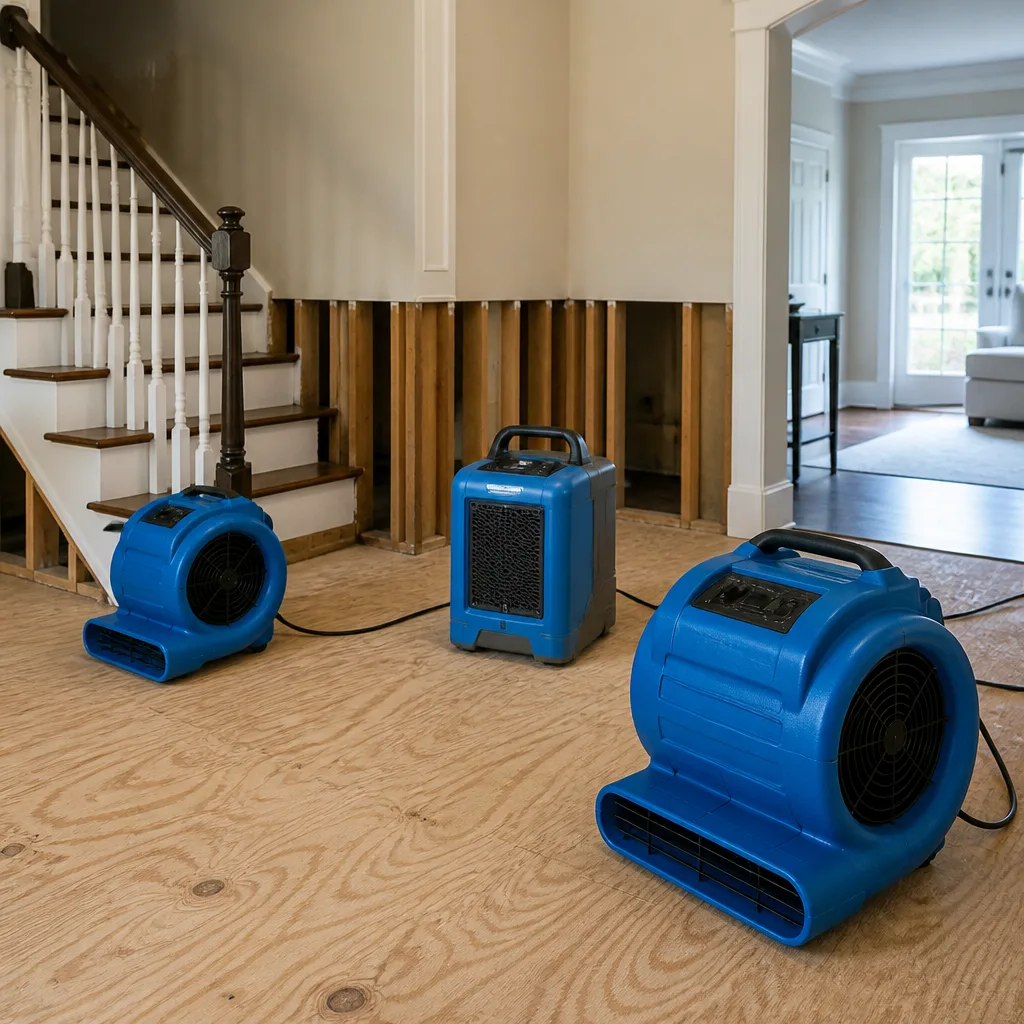
Professional-grade Dri-Eaz and Phoenix air movers plus low-grain refrigerant dehumidifiers go in the same day. On brick cavities we open access points, place Injectidry drying mats, and monitor daily until moisture readings drop below acceptable standards.
Cleaning & Sanitization
Category 3 water from storm surge or sewage means antimicrobial treatment and sanitization. We follow IICRC protocols, scrub affected surfaces, and document every step for your insurance file.
Specialty Treatment for Whitestone Conditions
Salt-laden air and masonry construction require what we call Whitestone-specific drying: calibration for humidity-driven condensation on brick, treated cavities, and anti-microbial sealing where the East River air will keep testing the wall.
Repairs & Restoration
We rebuild what we opened. Drywall hung, taped and finished, paint matched, floors reinstalled. The same crew that read the moisture map on day one handles the finish. Then we hand you a final moisture log and our 90-Day Done Right Promise, in writing.
Need Emergency Water Damage Restoration in Whitestone Now?
Crews minutes away, answering live 24 hours a day. The sooner we start, the less it costs.
Working With Your Insurance Company
Insurance is in the room on nearly every Whitestone water loss, and our job is to make sure the carrier sees the full picture. We document from hour one: photos of every affected room, initial moisture readings, the water source, the category of water, and the damage path. We then produce a detailed, line-item scope using industry-standard estimating software your adjuster already recognizes.
Floodline Restoration Co. communicates directly with your adjuster so you are not the one running messages between a restoration crew and a claims desk. If the adjuster has questions, we answer them. If the carrier needs supplemental documentation, we provide it. Our finishing crews also fill in the gap between what insurance covers and what the home actually needs to be fully restored, and we tell you the difference in plain English before any work is approved.
What We Provide Your Insurer
- Thorough documentation of the loss
- Photos of all damage, room by room
- Moisture readings and drying logs
- A detailed, line-item scope of work
- Direct coordination with your carrier
Built for Whitestone’s Loss Calendar
Whitestone water damage does not follow a single schedule. It follows the map. The low-lying peninsula between the East River and Flushing Bay takes on water in patterns that repeat year after year. January and February bring the freeze-thaw cycle that stresses aging galvanized supply lines in 1950s and 1960s colonials, splitting pipes in uninsulated basement walls. March and April push snowmelt and spring rain against foundations already saturated by winter, and finished basements at or near sea level take the seepage.
August and September are the nor’easter and tropical storm months. When storm surge pushes up into the FEMA Special Flood Hazard Areas east of 149th Street and along the waterfront blocks, the water is Category 3 and it arrives fast. The homes hit by Hurricane Sandy and the nor’easters since are often the same homes, dealing with compounding moisture that was never fully dried the first time. We plan our dispatch and equipment staging around this calendar because Whitestone homeowners have lived it for decades.
Water Damage Restoration Across Whitestone’s Neighborhoods
Whitestone is not one housing stock, and the damage pattern shifts block by block. In Whitestone Estates, the solid brick colonials from the 1950s and 1960s dominate, and our crews know that inside those walls, water hides. A finished basement in Whitestone Estates that took on water during a nor’easter often has moisture behind the finished walls that no amount of surface drying will reach. We open, we dry, we rebuild.
Over by the Beechhurst edge and the western blocks near the East River, the waterfront homes see storm surge first and repeatedly. These are the properties where Category 3 seawater requires containment, removal of flood-soaked materials, and antimicrobial treatment, not just a mop and fans. Around 14th Avenue and the commercial corridor, split-level ranches and Capes built on slabs have different failure modes, broken cast-iron drain lines and slab seepage are common. And along Clintonville Street and the blocks near Francis Lewis Park, the older pre-war masonry homes need careful moisture mapping before any drying plan is written. One neighborhood, one loss pattern. Same team, same standard.
Specialized Water Damage Restoration Services We Offer in Whitestone
Emergency Water Extraction
Standing water in a Whitestone basement or ground floor has to come out immediately. We bring truck-mounted extraction equipment that pulls hundreds of gallons per hour, and we start the same visit. The longer water sits against 1950s framing and brick, the deeper the damage travels.
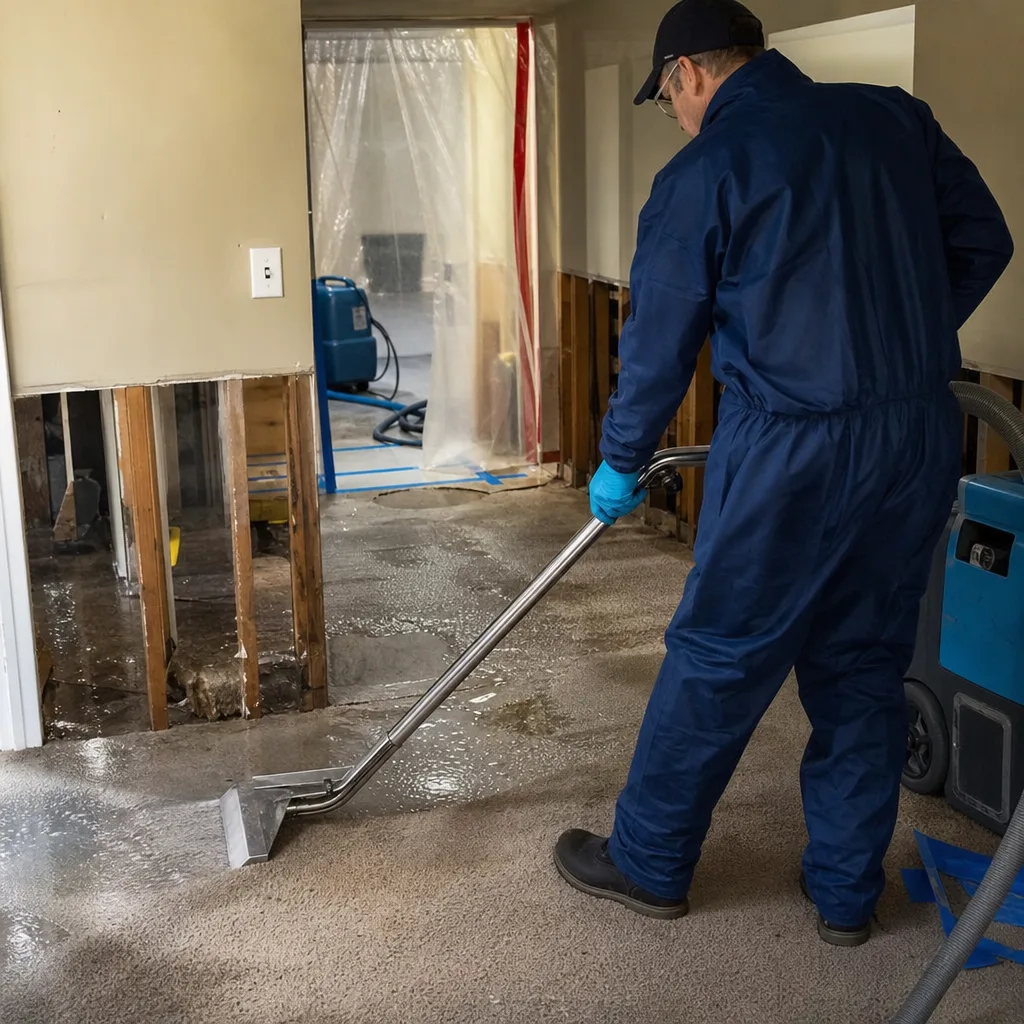
Structural Drying & Dehumidification
Whitestone’s brick construction traps moisture in ways that drywall over wood framing does not. We deploy Dri-Eaz and Phoenix air movers, low-grain refrigerant dehumidifiers, and Injectidry systems for wall cavities and under hardwood. Daily moisture logs document the dry standard from start to finish. This is the work that separates a one-time fix from a recurring mold problem.
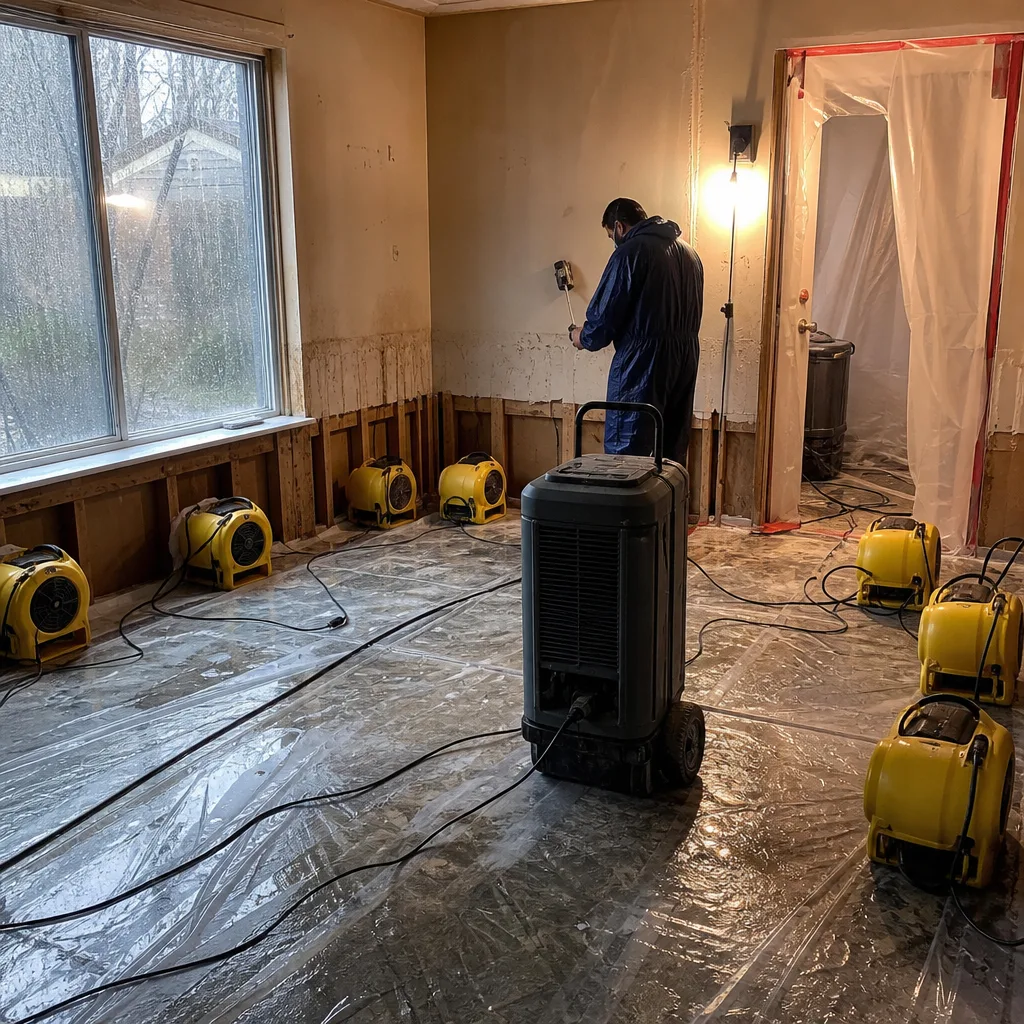
Flood Cleanup
Flood cleanup in Whitestone often means Category 3 water from East River or Flushing Bay surge. This requires containment and full removal of saturated porous materials, not just cleaning. We remove, sanitize, and dry, then rebuild to pre-loss condition. The smell of seawater in your basement is not something to cover up. It is something to remove.
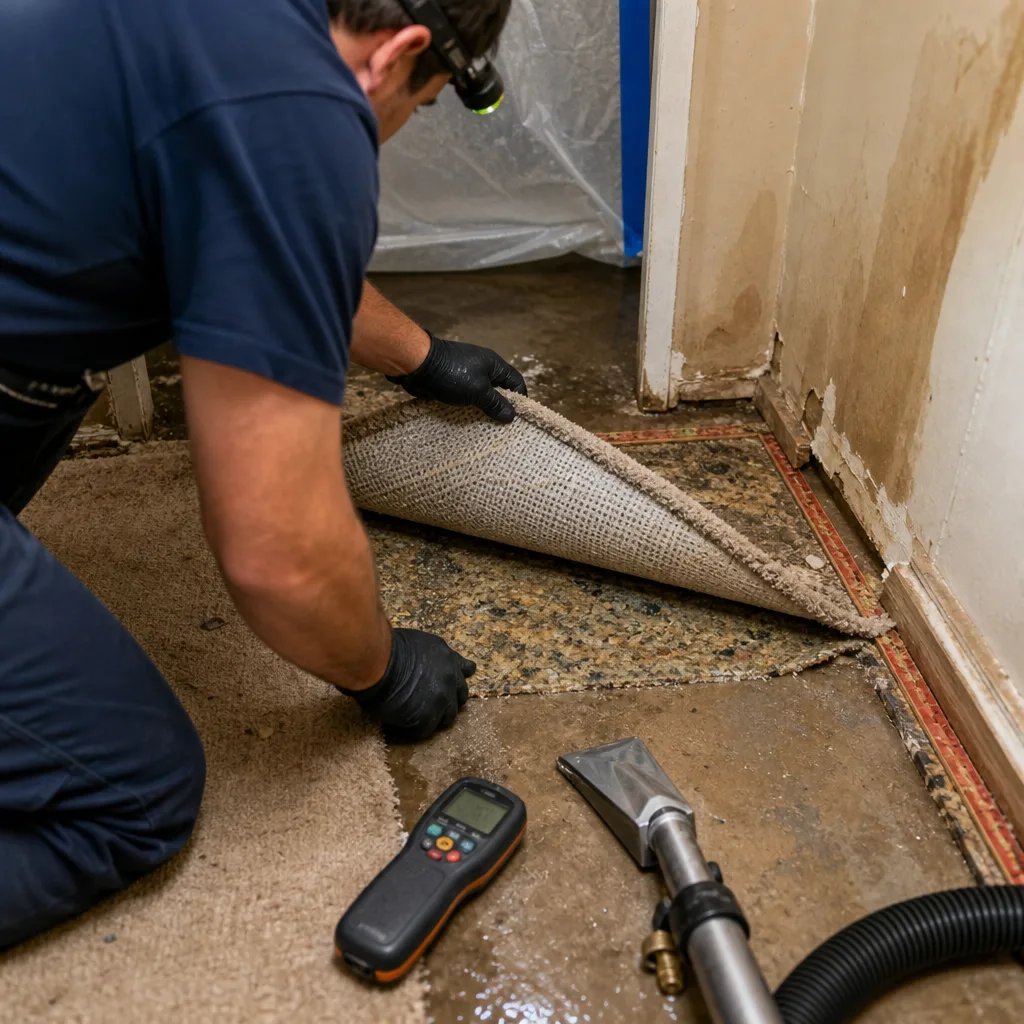
Burst Pipe Restoration
A frozen supply line in an uninsulated Whitestone basement wall is a Category 1 or 2 event, but the water still travels. We repair the source, extract the water, dry the affected area, and restore what was opened. We also document everything for your carrier, including the pipe condition and the freeze point.
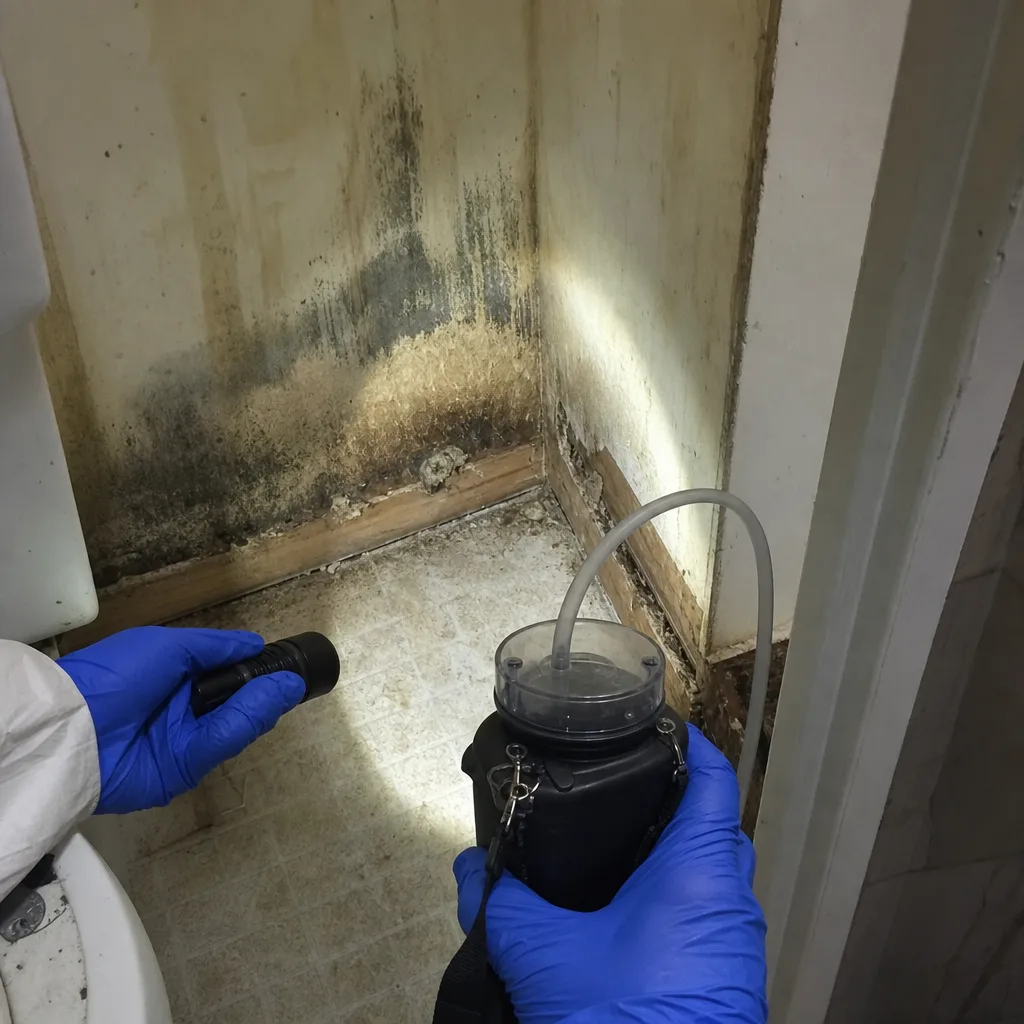
Basement Water Removal
Finished basements in Whitestone’s split-levels and colonials take on water from sump failures, foundation seepage, and tidal surge. We pump, extract, remove damaged drywall and flooring, dry the structure, and rebuild. If your sump pump worked but the water came anyway, that is a red flag we are trained to read. The answer is usually outside the sump pit, not inside it.
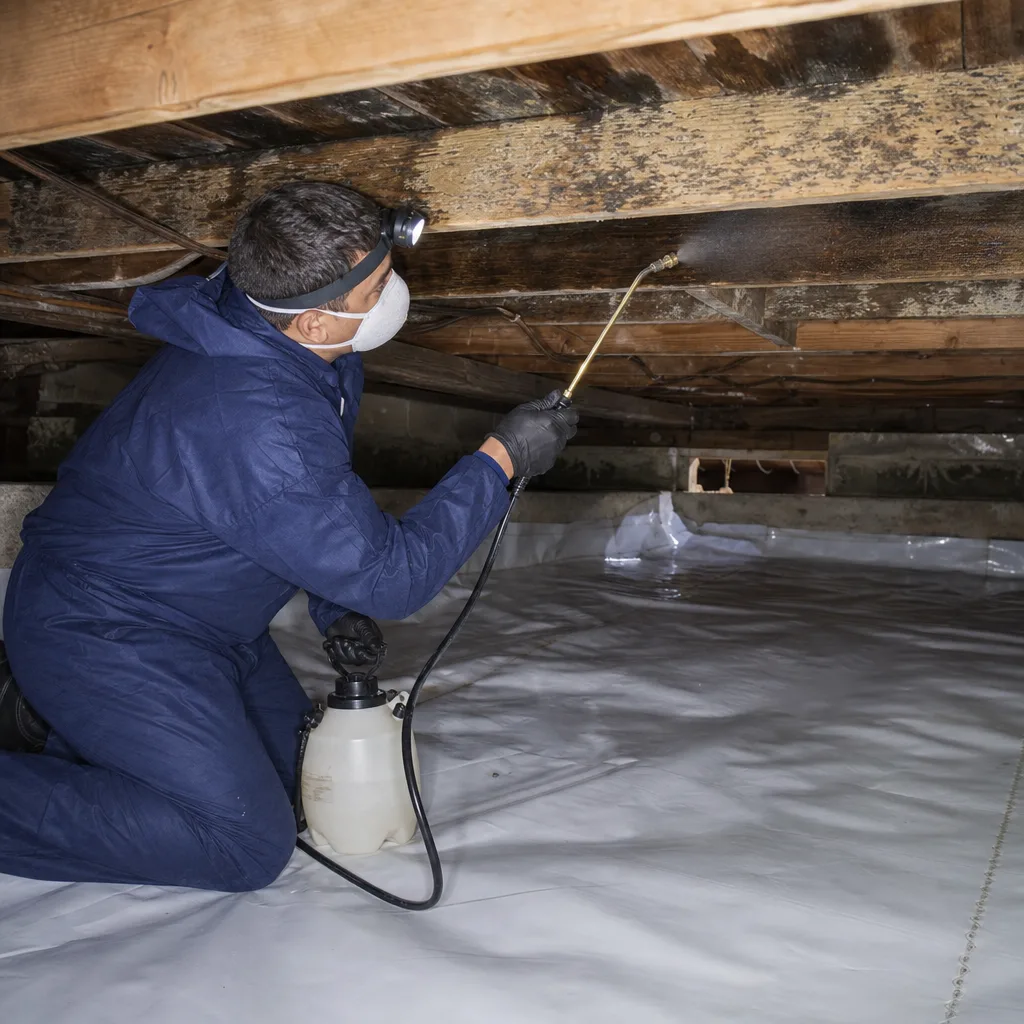
What happens when you call
- 1
A real person answersNo phone trees - you reach a local pro.
- 2
You get an upfront price rangeHonest numbers before anyone is dispatched.
- 3
A background-checked tech heads outLicensed & insured, dispatched right away.
- 4
You approve before work beginsNothing starts until you say go.
Water Damage Restoration Costs in Whitestone, NY
A typical emergency water extraction in Whitestone runs $450-$900 for a contained loss under 150 square feet. A finished basement with structural drying, wall cavity treatment, and rebuild often falls between $2,000 and $4,500 depending on how far water climbed and whether Category 3 contamination is present. Flood cleanup from storm surge, with containment and full material removal, commonly runs $3,500-$8,000 on Whitestone’s waterfront properties.
What moves the price is water category, how long it sat, and what the walls are made of. A 1950s brick colonial that hid moisture behind drywall costs more to dry properly than a modern stud wall. Most Whitestone homeowner policies cover sudden and accidental water damage, including burst pipes and storm surge where flood coverage exists. The surest path to a firm number is the free visual inspection. We walk the damage, we write the scope, and you approve it before the work begins. Call (518) 872-6111 for a free estimate.
We Also Serve Cities Near Whitestone
Floodline Restoration Co. runs Water Damage Restoration crews across the surrounding Queens communities. We serve Whitestone and dispatch locally to Flushing, Bayside, College Point, and Fresh Meadows whenever water is moving and you need someone on the road now.
Serving Whitestone, NY - Our Local Coverage Area
We’re based in the Whitestone area and know this community well. Use the map below to see our service coverage - if you’re nearby, we can almost certainly help.
Whitestone Water Damage Restoration Questions, Answered
Why does my Whitestone basement keep getting water after every nor’easter even when the sump pump works?
Your sump pump handles groundwater, but Whitestone’s nor’easters push tidal surge up from Flushing Bay and the East River, not down from the water table. That surge enters through cove joints, foundation cracks, and weeping tile that was not built for saltwater or standing surge. A working pump is not the same as a sealed and properly drained foundation. If your Whitestone basement floods every nor’easter, the source is almost never the pump. Call (518) 872-6111 and we will trace the water path during the free inspection.
My Whitestone colonial was ‘remediated’ after Sandy but now smells musty again-what happened?
What happened is what we see on waterfront blocks all the time. The Sandy-era crew dried the surface, sprayed antimicrobial, and patched the drywall without opening the brick cavities behind it. In a 1950s Whitestone colonial, those cavities held moisture for years. Now the mold is blooming behind the patch. Proper remediation means opening the wall, removing affected materials, drying the masonry itself, and only then rebuilding. Surface sprays do not reach what is inside the wall. Call (518) 872-6111 for an honest assessment of what was left behind.
What’s the difference between category 1, 2, and 3 water for a Whitestone basement flood?
Category 1 is clean water from a supply line or tub. Category 2 carries some contamination, like washing machine discharge or sump overflow. Category 3 is unsanitary water: sewage, seawater, or ground flooding. In Whitestone, nor’easter surge and Flushing Bay overflows are Category 3. That means the water is carrying whatever the bay and the streets collected, and porous materials like carpet, drywall, and insulation must be removed, not just dried. Call (518) 872-6111 to find out what category you are dealing with.
Why does my Whitestone brick ranch get mold behind the drywall every spring even with no visible leaks?
Whitestone’s brick construction breathes differently than framed walls. Warm indoor air meets cold brick in winter, condensation forms inside the cavity, and spring thaw adds ground moisture. The result is a damp, dark space behind the drywall that mold loves. This is a chronic condition in Whitestone’s 1940s-to-1970s masonry homes, not a one-time leak. The fix is proper cavity drying, vapor barrier correction, and sometimes insulation before the drywall goes back. Call (518) 872-6111 and we will show you what is actually behind that wall.
Can you dry out a Whitestone finished basement in one trip?
We can start drying in one trip, and often finish extraction and equipment placement the same visit. Completing structural drying takes days, not hours, if you want it done right. Brick takes longer to dry than the drywall in front of it, and rushing the job leaves hidden moisture that shows up as mold next spring. Most Whitestone basements we handle are dried to a documented standard in three to five days, depending on how far water climbed and what materials are involved. Call (518) 872-6111 for an exact estimate.
How fast can someone actually get to my Whitestone house?
We commit to a 45-minute response across Whitestone, from the Bayside border to the waterfront. Our dispatch is live 24/7, so a real person takes your call and a crew is on the road the same call. Water damage gets worse by the hour, and in a 1950s brick colonial it gets worse faster. Call (518) 872-6111 and the truck is moving.
Will my insurance cover water damage restoration in Whitestone?
Most Whitestone homeowner policies cover sudden and accidental water damage like burst pipes, appliance failures, and storm-related intrusion where flood coverage exists. The key is documentation and a scope the carrier recognizes. Floodline Restoration Co. documents everything from hour one, writes industry-standard estimates, and communicates directly with your adjuster. You are not left to argue your claim alone. Call (518) 872-6111 and we will handle the paperwork with you.
What should I do in the first 30 minutes after discovering water damage in Whitestone?
Shut off the water source if it is safe to do so. Kill power to the affected area if water is near outlets or appliances. Move what you can to dry ground. Then call (518) 872-6111. Do not wait to see if it dries on its own. In a Whitestone brick home, moisture that sits for even a day is already working its way into places you cannot see.
Written by Curt Bowman, Owner at Floodline Restoration Co., serving Whitestone and the surrounding Queens communities. Curt founded Floodline in 2010 and has spent the years since building a restoration company that answers the phone with a person, does the job right, and puts the guarantee in writing.