

Free visual inspection and a written scope of work before any mitigation begins - photos, moisture readings, and drying logs go in your claim file
The scope we write is the scope we bill. Anything new gets shown to you, in writing, before we touch it.
Storm responseSewage cleanup
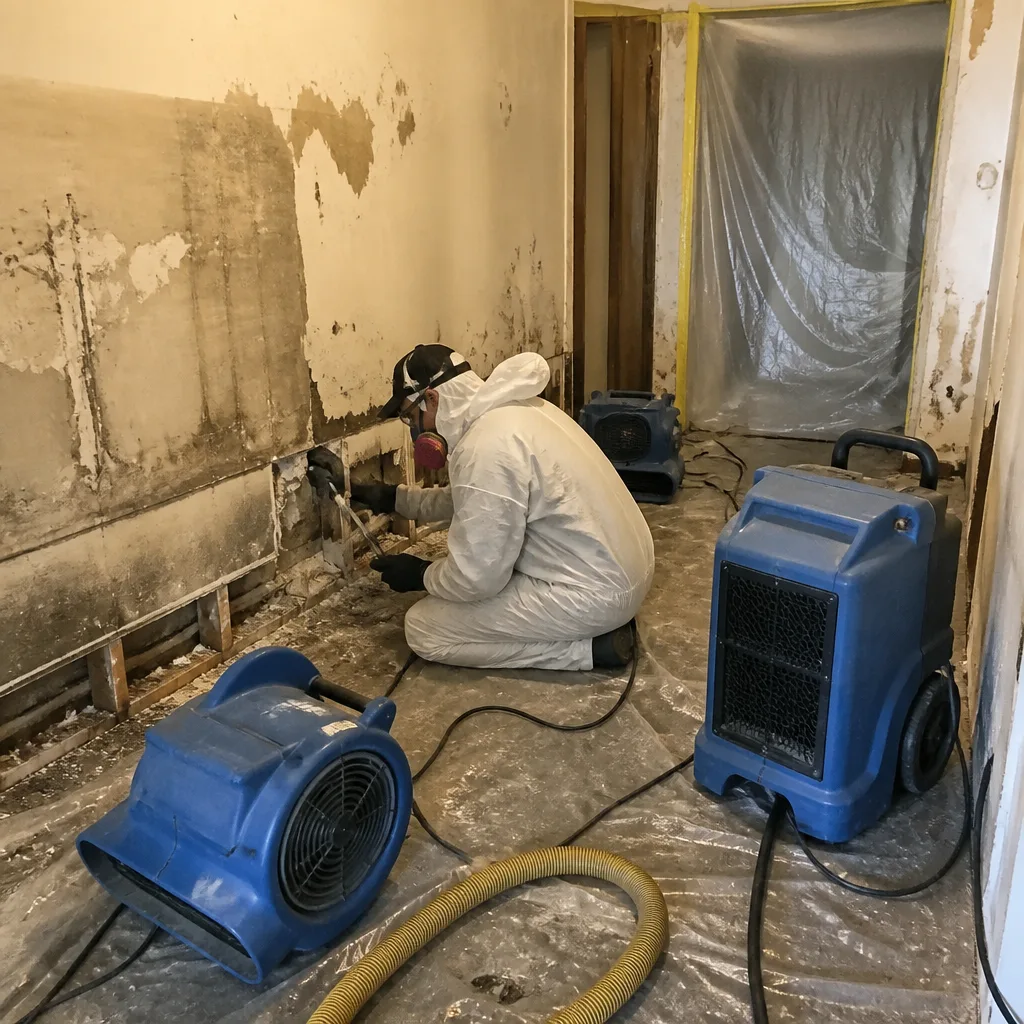 Before
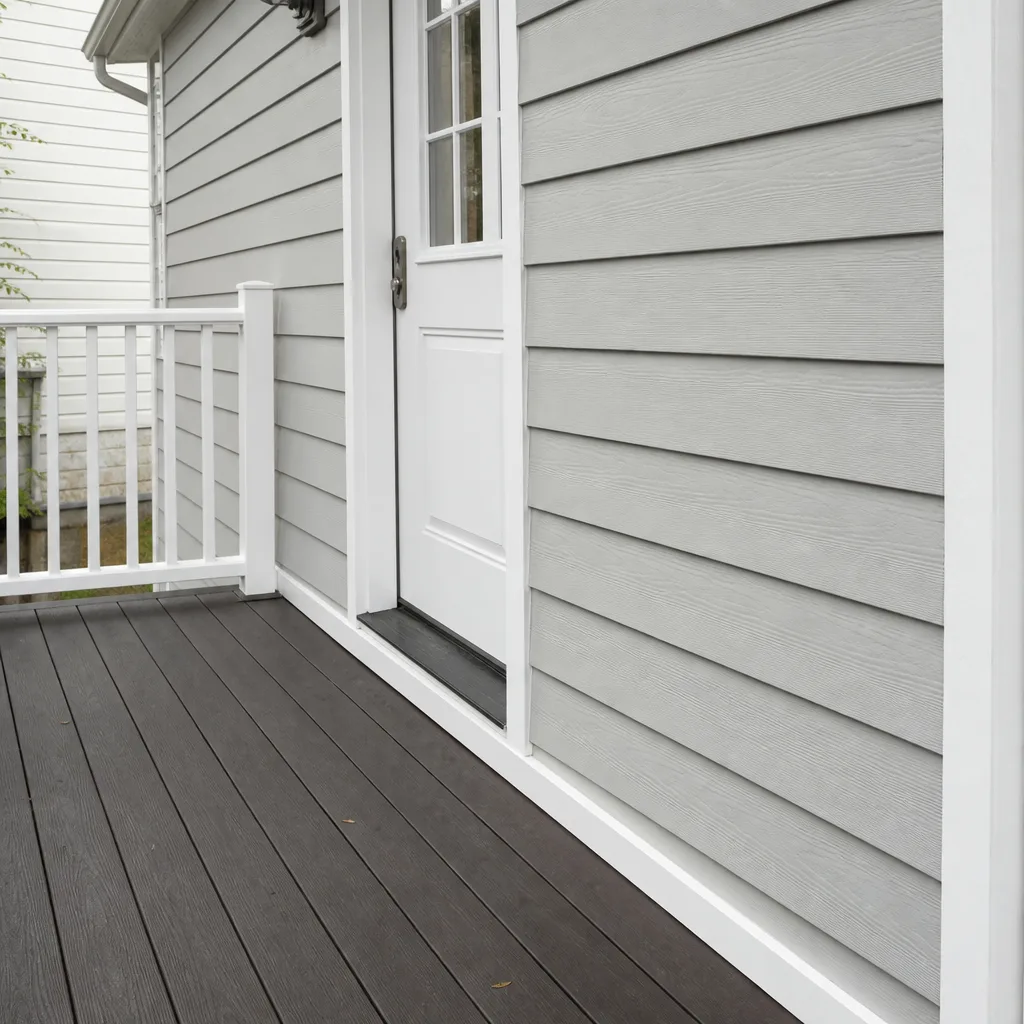 After
After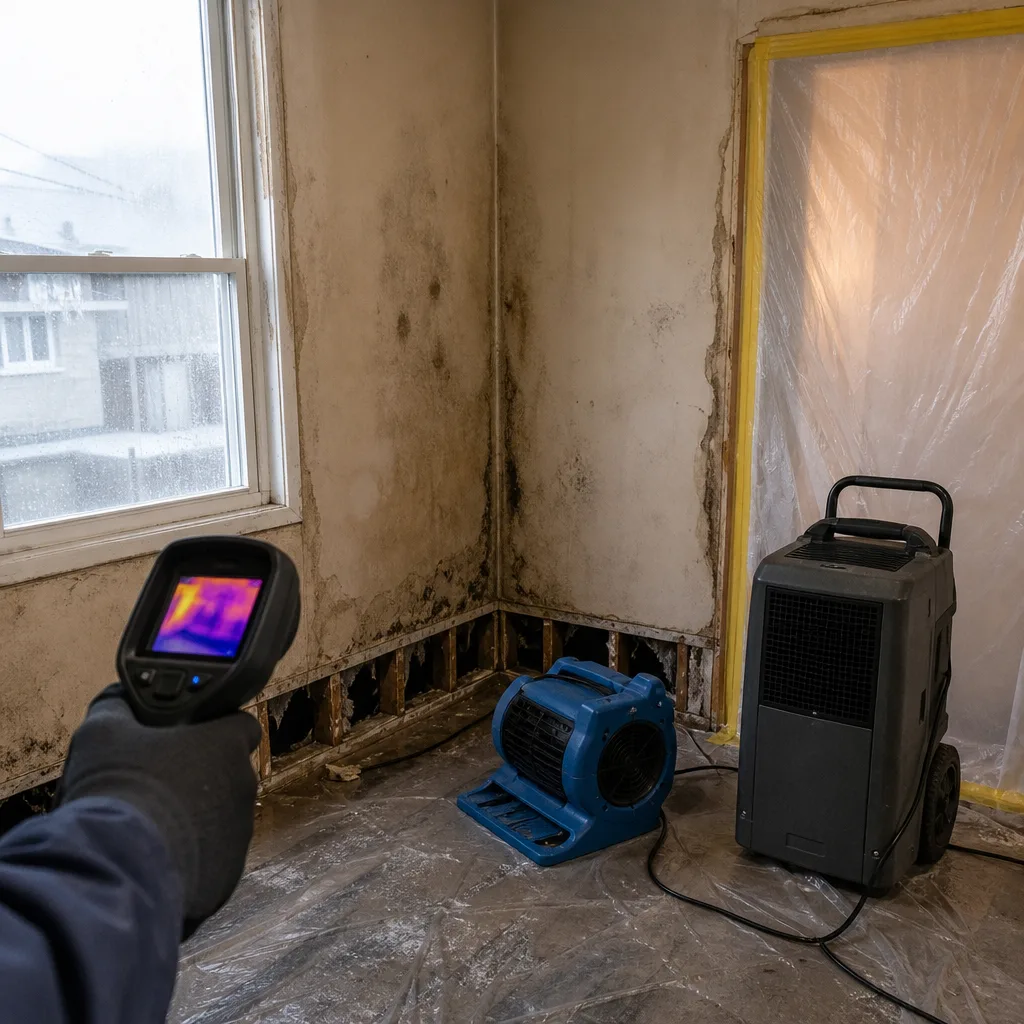 Before
 After
After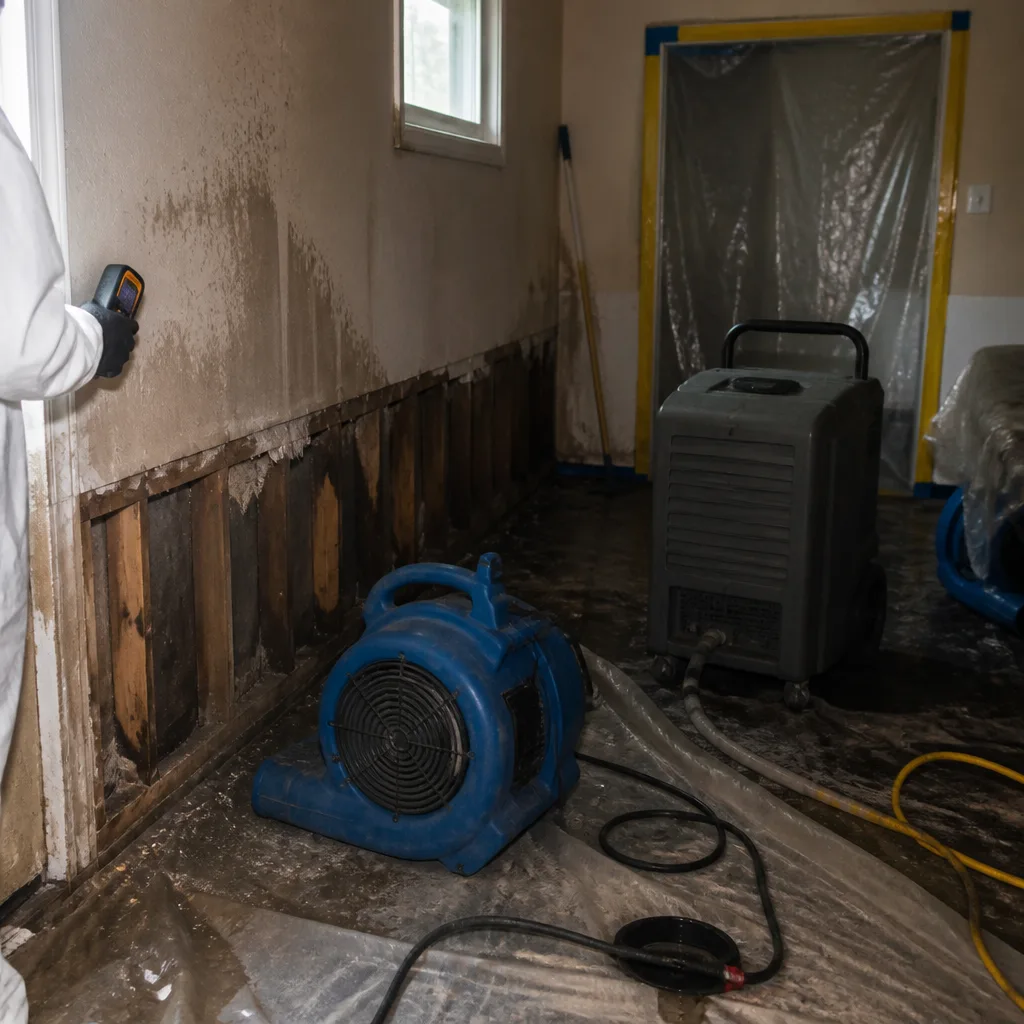 Before
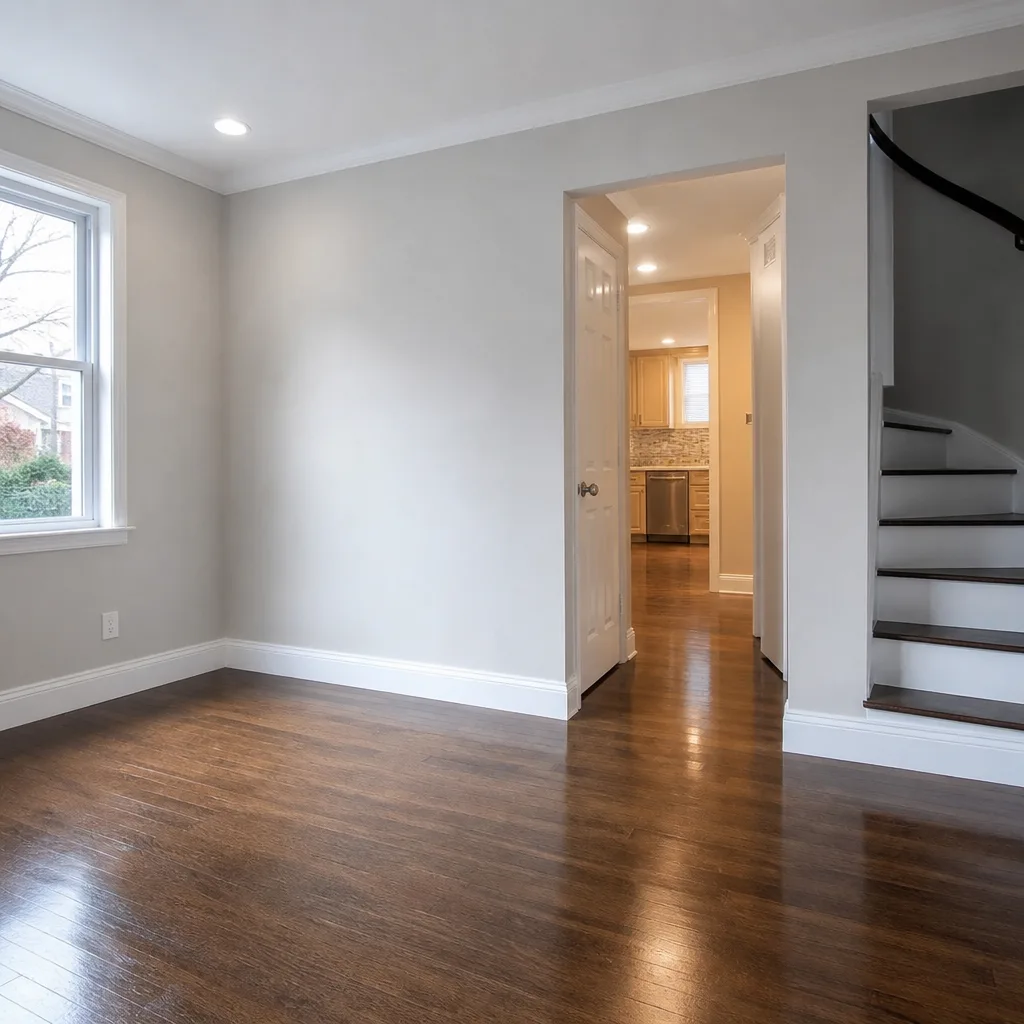 After
After24/7 Emergency Reconstruction & Cleanup in Whitestone
Reconstruction and cleanup in Whitestone after a flood, storm surge, or fire typically runs $4,200 to $28,000 depending on how far the damage spread and whether structural framing is involved. Most full-basement rebuilds on the peninsula land between $9,500 and $18,000 when Category 3 water is in play. You can reach a live dispatcher at (518) 872-6111 any hour, and we’ll have a certified crew on the road to your block within 45 minutes.
When the East River tops its banks or a nor’easter pushes water through a basement door on 149th Street, the first hour dictates how much framing you lose. Salt water starts wicking up drywall within minutes. By hour six, insulation is saturated and mold spores are already colonizing the back side of the gypsum. We answer the phone with a person at 2 a.m., not a recording, and we arrive with moisture meters and containment equipment on the same visit. Free visual inspection, no dispatch fee, and a written scope before any work begins.
Understanding Reconstruction & Cleanup Severity in Whitestone Properties
The severity of a reconstruction job in Whitestone comes down to water category, migration depth, and what the house is made of. Category 1 is clean supply-line water, the kind you get from a burst copper pipe in a 1954 Cape Cod. Category 2 is gray water from washing machines or sump failures. Category 3 is what Whitestone sees more than almost any neighborhood in Queens: storm surge, East River tidal flooding, and sewage-tainted groundwater, all of which carry bacteria, salt, and silt into the building envelope.
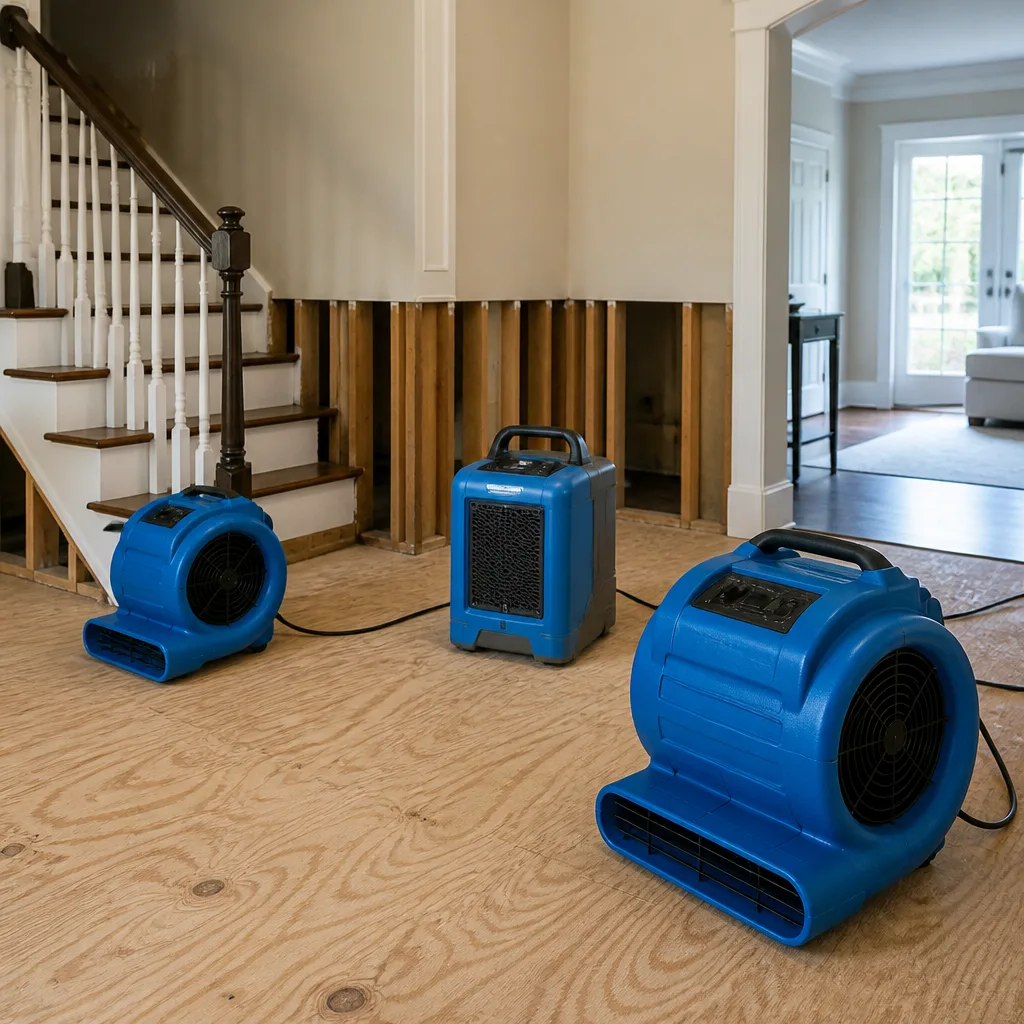
Those mid-century brick colonials and ranches that line streets off the Cross Island Parkway are deceptively hard to dry. The brick wythes absorb water and hold it, and the finished basements, many sitting at or barely above sea level, give that moisture nowhere to go. We use thermal imaging and penetrating moisture meters to map how far water traveled behind baseboards and inside wall cavities, because what you can see from the room side is usually half the story. If the drywall is saturated above the flood line, it comes out. If the framing is wet, it gets structural drying with Injectidry systems before any patching happens. Skipping that step is exactly why so many Sandy-era “fixes” in Whitestone are failing now.
Why Whitestone Property Owners Choose Floodline Restoration Co.
- 45-minute response commitment. We dispatch from the metro office and keep crews positioned near the Whitestone Expressway corridor, so when a pump fails on 147th Street we’re already close.
- A real person answers, every time. No automated attendant at 2 a.m. You get a live dispatcher who can authorize a crew immediately.
- IICRC-certified crews. Our technicians carry WRT, ASD, and AMRT certifications, and they’ve handled bone-dry rebuilds and full gut-outs on this peninsula for years.
- Free visual inspection. We assess the damage before you commit to anything. No charge to walk the basement with you and say what’s actually needed.
- Direct insurance billing. We document, we photograph, we bill your carrier directly. You don’t play messenger between us and an adjuster.
- One team, start to finish. The same crew that extracts and dries is the crew that hangs new drywall and lays new flooring. No mid-job handoff, no subcontractor roulette.
Our Reconstruction & Cleanup Process
Inspection & Assessment
We arrive with thermal cameras and hygrometers, map the damage, and document everything. You get a firm, written scope of work before a single wall is opened. That scope is your protection against overselling.
Extraction & Stabilization
Standing water comes out with truck-mounted extraction units and XPOWER submersibles. We remove saturated furniture and contents to a staging area where they’re inventoried and assessed for pack-out.
Structural Drying & Dehumidification
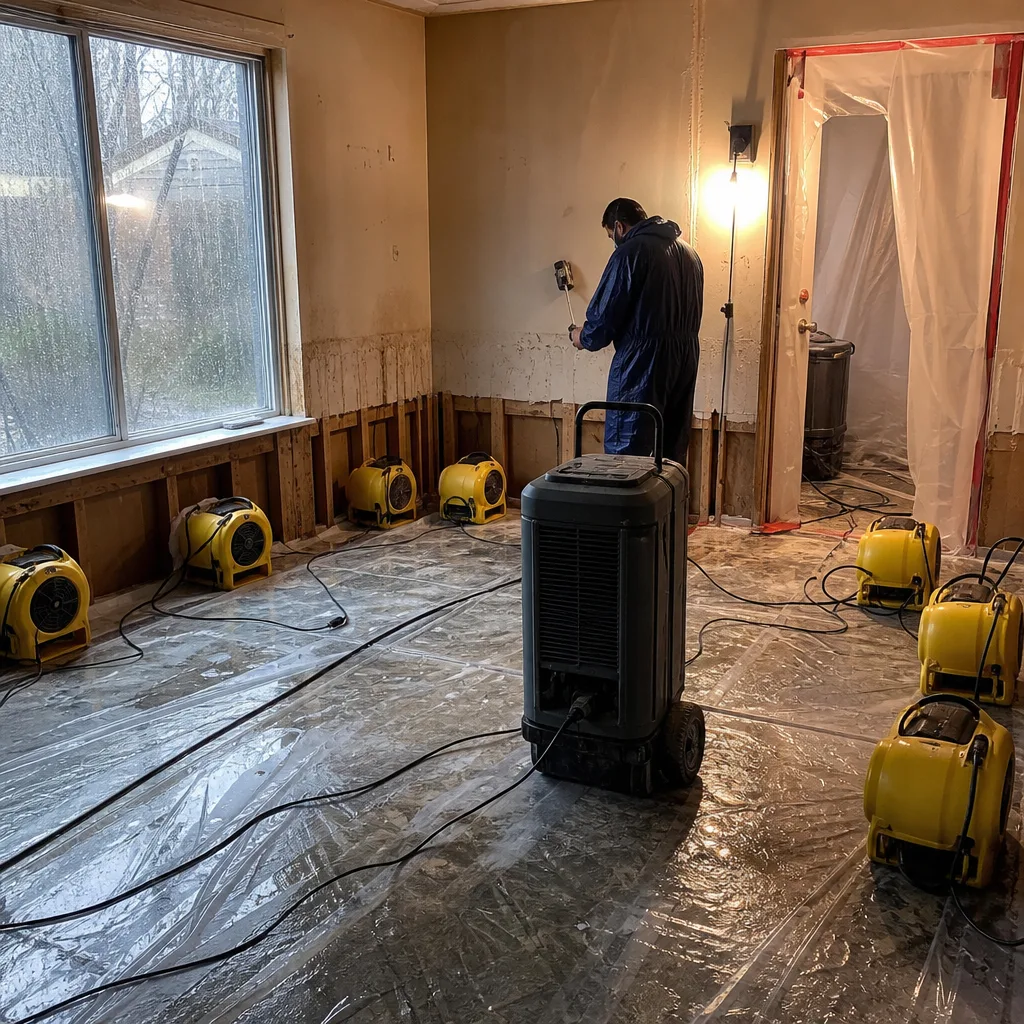
Injectidry systems and Phoenix dehumidifiers pull moisture from inside wall cavities and masonry cores. We log readings daily until the dry standard is met, and we hand you the log. This step is non-negotiable in Whitestone’s brick construction.
Cleaning & Sanitization
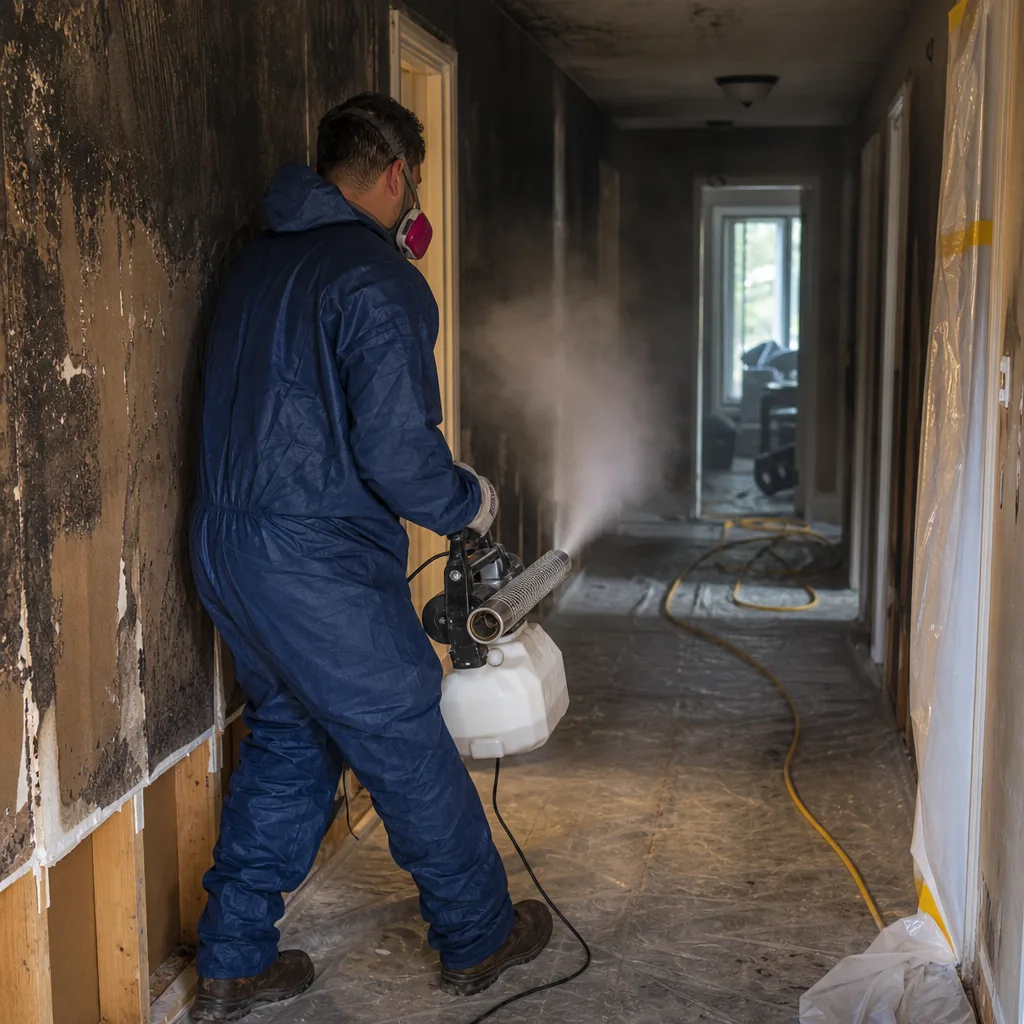
Category 3 water means antimicrobial treatment on every affected surface. We contain the work area with 6-mil poly and run HEPA air scrubbers so whatever we stir up doesn’t migrate through the house.
Contents Restoration & Pack-Out
If your basement is a full gut, we pack out belongings, transport furniture to a climate-controlled facility, clean and restore what’s salvageable, and return it when the rebuild is done. You get an itemized inventory.
Repairs & Full Reconstruction
New drywall, trim, flooring, paint, and any structural work needed to get your Whitestone home back to pre-loss condition or better. We handle the permit paperwork when required and the final walkthrough together.
Need Emergency Reconstruction & Cleanup in Whitestone Now?
Crews minutes away, answering live 24 hours a day. The sooner we start, the less it costs.
Working With Your Insurance Company
Insurance claims in Whitestone’s FEMA flood zones are a different animal than a standard sewer backup. Flood coverage is often a separate NFIP policy, and the documentation bar is higher. We build the file from hour one: photos of the standing water level on the wall, room-by-room damage logs, moisture readings from the day we arrive through the day the structure hits dry standard, and a line-item scope that matches industry-standard estimating software.
Curt Bowman founded Floodline Restoration Co. in 2010 to get away from exactly the mess property owners describe after a bad experience: the adjuster wants one thing, the contractor says another, and the homeowner is stuck in the middle. We talk to your adjuster directly. We show them the data, answer their questions, and bill the carrier when the scope is approved. You get copies of everything.
What We Provide Your Insurer
- Thorough documentation of the loss from the first hour
- Photos of all damage, room by room, with scale references
- Moisture readings and daily drying logs
- A detailed, line-item scope of work with labor and materials
- Direct coordination with your adjuster and carrier
Built for Whitestone’s Loss Calendar
Whitestone’s reconstruction work follows a rhythm the rest of Queens doesn’t quite share. Late summer and early fall bring hurricane remnants and tropical systems that push storm surge up the East River and over the bulkheads near Francis Lewis Park and Powell’s Cove. Those are the calls where basements on 5th Avenue and 3rd Avenue take three feet of brackish water and need full gut-outs. October through December is nor’easter season, and those storms are often worse for Whitestone than a hurricane because they sit over the coast for days, driving repeat surge cycles into the same low blocks each high tide.
January and February are when aging galvanized supply lines in 1950s ranchers let go during deep freezes. A burst pipe in an uninsulated basement off 154th Street is a Category 1 job, but it’s also a building that’s been fighting moisture for sixty years. March and April bring the thaw, and that’s when we see the chronic seepage calls: water working through freeze-thaw-cracked masonry, hydrostatic pressure pushing up through slab floors, and the first mold blooms of spring. If you’ve had a wet basement in Whitestone before, you know the smell. We know the floor plan.
Reconstruction & Cleanup Across Whitestone’s Neighborhoods
The blocks around Francis Lewis Park and the East River waterfront are where we see the most structural work: full basement rebuilds after surge events, failed Sandy-era patches opened up and properly remediated, and masonry repairs on homes that have taken salt spray for fifty years. These properties need more than drywall. They need framing assessment, sill plate replacement in places, and real moisture management.
Along the Cross Island Parkway corridor and around Whitestone Village, the losses skew toward aging residential infrastructure: corroded cast-iron waste lines, failing sump pumps, and finished basement recreation rooms that flood during heavy summer thunderstorms when the storm drains can’t keep up. Over by Francis Lewis Boulevard and the areas near 20th Avenue, we see the classic post-war brick colonials with basement-to-attic renovations, where a top-floor supply line rupture migrates water through three finished levels before anyone notices the ceiling stain. Whitestone’s varied housing stock means no two reconstruction jobs look the same, which is why our Reconstruction & Cleanup team carries the full equipment load on every truck.
Specialized Reconstruction & Cleanup Services We Offer in Whitestone
Full-Service Reconstruction
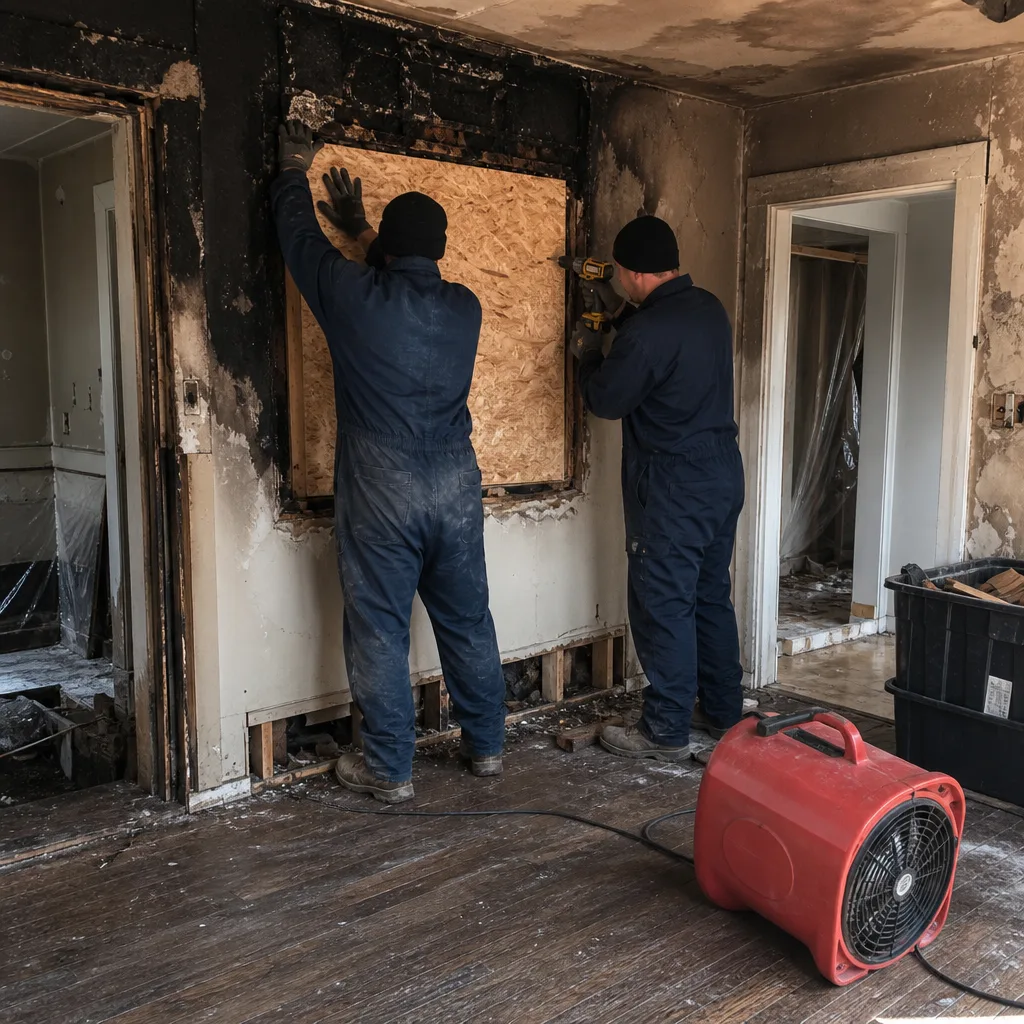
From structural framing repairs to finished baseboards, we rebuild what the water or fire took. In Whitestone’s older brick homes, that often means replacing rotted sill plates, reframing interior partition walls, and leveling floors that shifted after repeated flood cycles. We pull permits when the scope requires them, and the work carries our 90-Day Done Right Promise in writing.
Drywall & Flooring Repair
When we cut out saturated drywall at the correct height, typically four feet for Category 3 water, we replace it with new board, tape, and finish to match. For flooded basements in Whitestone, we recommend vinyl plank or tile over carpet below grade, because the next surge isn’t a question of if. If you want carpet back, we’ll install it. But you should know what the peninsula does to carpet.
Contents Restoration & Pack-Out
Whole-basement floods mean everything comes out: holiday decorations, tools, furniture, the boxes you haven’t opened since the kids moved out. We inventory each item, pack it properly, and transport it to a climate-controlled facility for cleaning and restoration. What can’t be saved gets documented for your claim, with photos and a written line-item list. You never wonder what happened to something.
Carpet & Upholstery Cleaning
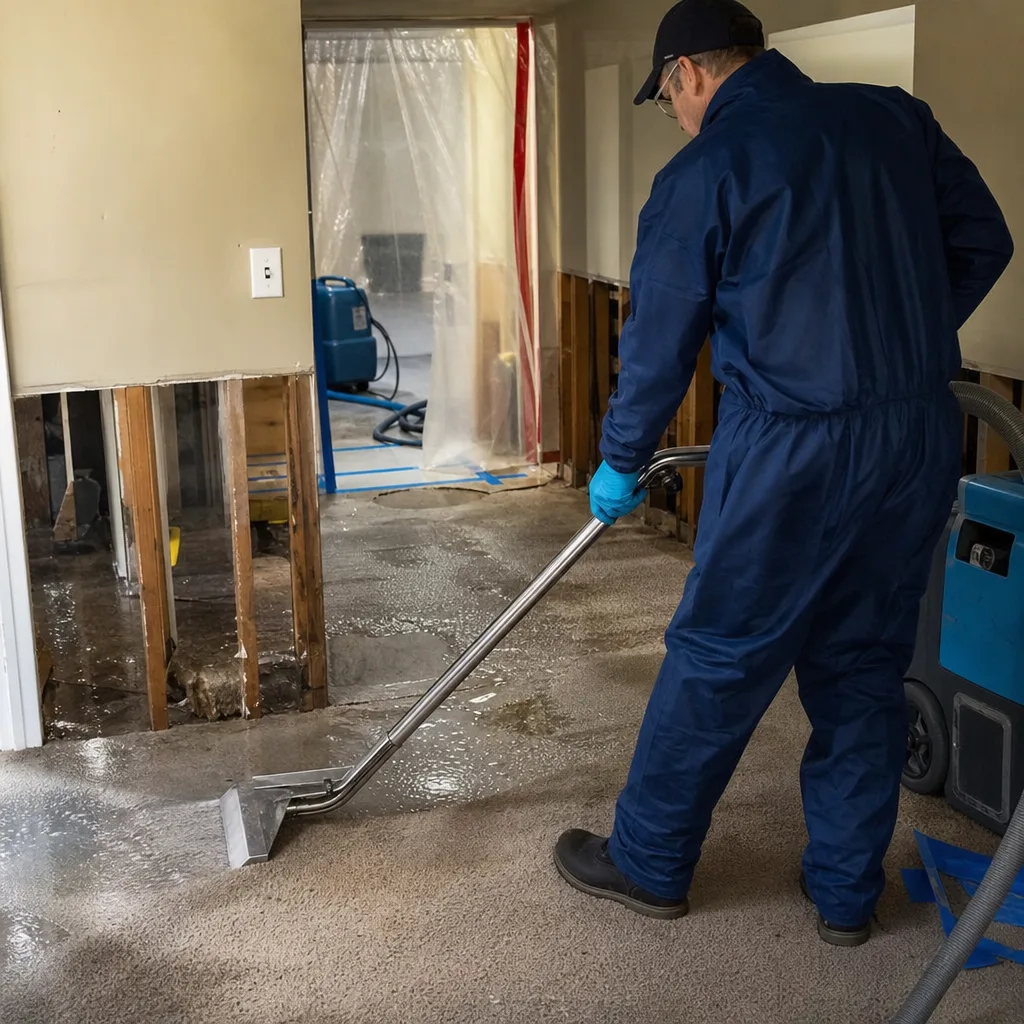
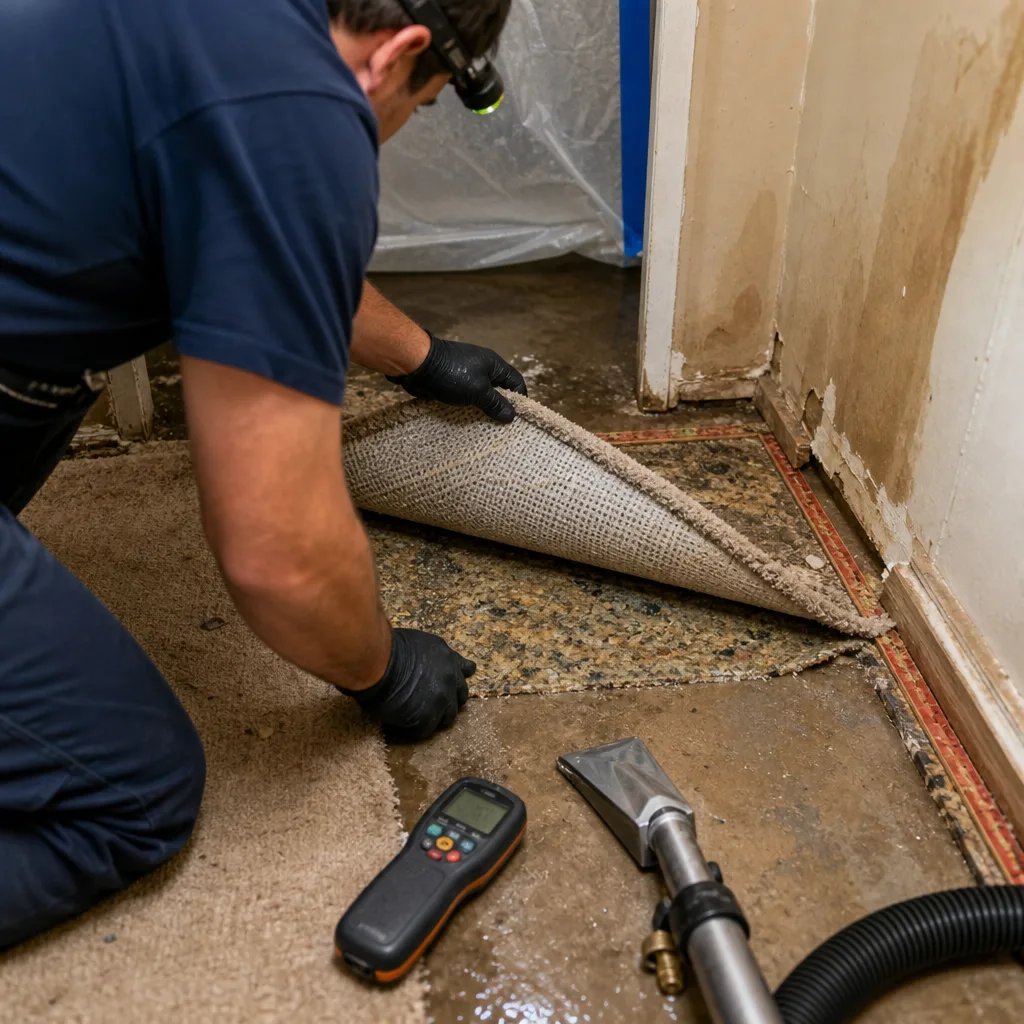
After a Category 1 or 2 loss, salvageable carpet and furniture need professional extraction and drying within hours, not days. We use truck-mounted hot water extraction units and B-Air axial fans to get textiles dry before mold pressure builds. For Whitestone homes, salt residue is the invisible enemy; we flush it, not just dry it.
Post-Construction Cleanup
Rebuilding a finished basement throws dust through the whole house. We run HEPA air scrubbers during the build and do a full site clean when the work is done: swept, vacuumed, surfaces wiped, the air cleared. You shouldn’t have to clean up after the crew that was paid to rebuild your house. You won’t.
What happens when you call
- 1
A real person answersNo phone trees - you reach a local pro.
- 2
You get an upfront price rangeHonest numbers before anyone is dispatched.
- 3
A background-checked tech heads outLicensed & insured, dispatched right away.
- 4
You approve before work beginsNothing starts until you say go.
Reconstruction & Cleanup Costs in Whitestone, NY
A straight Category 1 basement dry-out with some drywall replacement and paint in Whitestone runs $3,800 to $7,500. A Category 3 surge event that requires a full basement gut, masonry drying, framing repair, and rebuild typically lands between $9,500 and $18,000 for a finished basement in a 1950s colonial. Whole-home losses from a top-floor pipe rupture can reach $28,000 to $45,000 when three levels need flooring, drywall, and contents work.
What moves the number in Whitestone specifically is the masonry. Brick walls hold water and they don’t give it back quickly, so drying phases run longer than in a timber-frame house. That means more equipment days, more monitoring visits, and more labor hours. Salt contamination is the second Whitestone variable: it corrodes fasteners, kills drywall faster than fresh water, and means more material is condemned than in an inland flood. If the work is covered by flood insurance or homeowners insurance, we bill the carrier directly and you pay your deductible. If it’s out of pocket, you get the same line-item scope before work starts. Call (518) 872-6111 for a free visual inspection, and you’ll get a firm number in writing before we move a single tool.
We Also Serve Cities Near Whitestone
Floodline Restoration Co. runs crews through Whitestone daily and serves the surrounding Queens communities just as regularly. If you’re in Flushing, Bayside, College Point, or Fresh Meadows, the same live dispatch line and the same certified crews cover your block. Call (518) 872-6111 and a real person routes the nearest team to you, wherever the water got in.
Serving Whitestone, NY - Our Local Coverage Area
We’re based in the Whitestone area and know this community well. Use the map below to see our service coverage - if you’re nearby, we can almost certainly help.
Whitestone Reconstruction & Cleanup Questions, Answered
Why do Whitestone brick Colonials hide mold years after a flood that was ‘fixed’?
Because the brick itself stays wet for months after surface drywall was patched and painted over. In a masonry cavity wall, water from a storm surge gets trapped between the brick wythe and the interior finish. If nobody opened the wall, removed the saturated insulation, and dried the cavity with an Injectidry-style system, the mold just kept growing behind the paint. We see this every week on Whitestone’s waterfront blocks. The fix is invasive, but it’s the only one that holds.
Does storm surge from the East River count as Category 3 water for reconstruction?
Yes. East River surge water carries salt, silt, sewage, and whatever the tide picked up along the waterfront. It’s classified as Category 3, which means saturated drywall, insulation, carpet, and pad must be removed, not dried in place. The framing underneath gets treated and dried to standard before rebuild. Call (518) 872-6111 and we’ll confirm what category you’re dealing with on the first visit.
Can you do reconstruction and cleanup in one trip for Whitestone ranch homes with finished basements?
Most single-visit jobs are Category 1 or 2 events where drying moves fast and the rebuild is limited to one room. For a finished basement in a Whitestone ranch that took surge water, the drying phase alone takes five to eight days with daily monitoring. The reconstruction follows. We schedule the whole thing as one continuous job with one crew, so you’re not waiting on a second company to show up. Most wet jobs are stabilized on the first visit, and crews return on a clear schedule until the house is whole.
How do you document reconstruction for flood insurance claims in Whitestone’s FEMA flood zones?
We photograph the standing water line against walls and stairs, log moisture readings from day one through the dry standard, itemize every damaged material and piece of contents, and write the scope with line-item labor and materials. That file goes directly to your adjuster. We talk to them on your behalf. If you’re in an NFIP policy, the documentation requirements are stricter, and we build the file to their standard from the first hour.
What happens to our contents during a whole-basement reconstruction after a Whitestone nor’easter?
We pack out everything that’s salvageable and transport it to a climate-controlled facility for cleaning and evaluation. Anything beyond saving gets photographed and listed for your claim adjustment. You get a written inventory with every item accounted for, and the goods come back when the rebuild is finished. Nothing disappears, and nothing gets thrown away without your sign-off.
How fast can you actually get to Whitestone after a flood or fire?
We commit to 45 minutes from your call to crew arrival on site. Whitestone is served by the metro dispatch office, and our trucks stage along the Whitestone Expressway and Cross Island Parkway corridors so response is fast even at 3 a.m. A live dispatcher answers, takes your address, and routes the nearest certified crew. No callbacks. No voicemail.
Will insurance cover reconstruction after a storm surge, or is that separate flood insurance?
Standard homeowners insurance does not cover storm surge. You need flood insurance, usually an NFIP policy or a private flood carrier, to cover surge-related losses. What we do is document the loss precisely, separate surge damage from any covered cause of loss, and work with your adjuster to make sure every covered item is claimed. We bill the carrier directly once the scope is approved and you pay your deductible. Call (518) 872-6111 and we’ll walk you through what your policy covers before you spend a nickel.
What should we do in the first 30 minutes after water gets into our Whitestone basement?
Turn off electricity to the affected area if you can reach the panel safely, and move valuables upstairs if it’s safe to walk in the water. Don’t enter standing water if it could be energized or contaminated. Then call (518) 872-6111. We’ll get a crew moving while you’re still on the phone, and we’ll talk you through what to do until the truck arrives. Speed matters more in a brick Whitestone basement than almost anywhere else, because once water wicks into those masonry walls, every hour adds drying time and cost.
Written by Curt Bowman, Owner at Floodline Restoration Co., serving Whitestone and the surrounding Queens communities.